
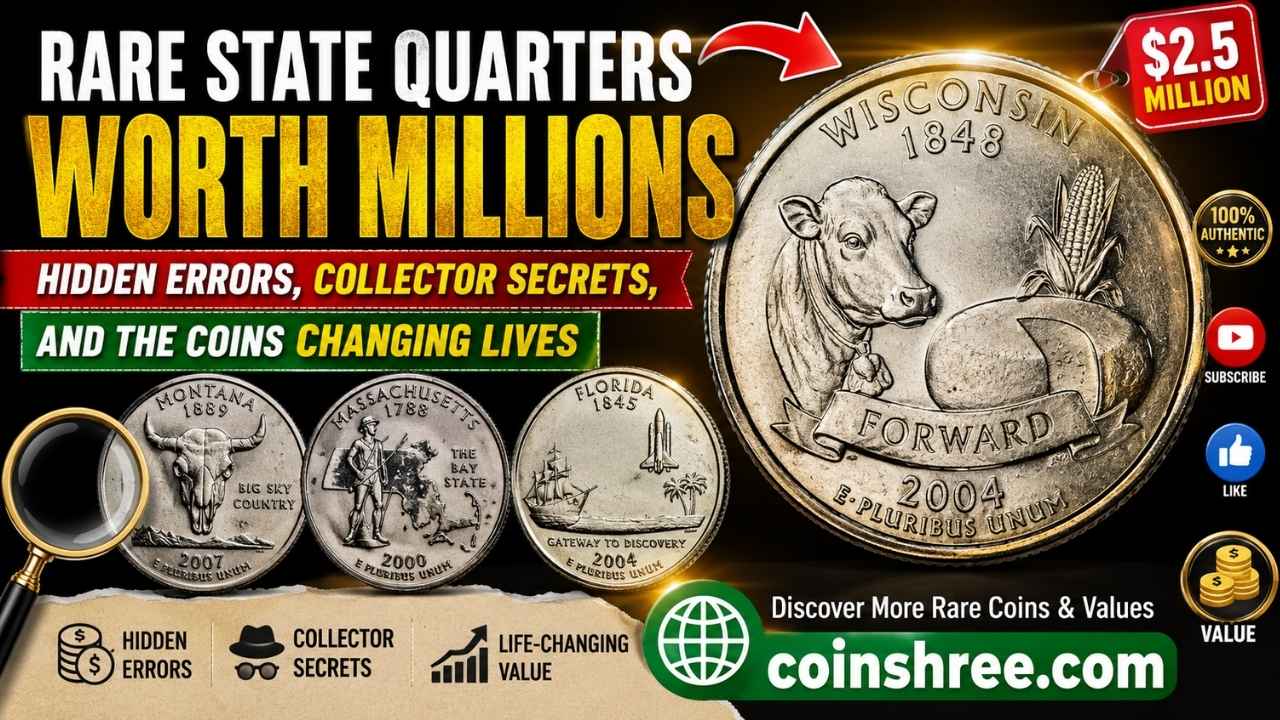
The State Quarters Program remains one of the most successful coin series ever released in the United States. Between 1999 and 2008, millions of Americans collected these unique 25 cent coins featuring all 50 states. While most quarters are still worth only face value, a few rare versions with minting mistakes, limited production runs, and historical significance have become incredibly valuable in the collector market.
Some rare state quarters have sold for thousands of dollars, while a handful of extraordinary error coins are believed to be worth close to a million dollars due to their rarity and demand among collectors. These hidden treasures may still be sitting in old jars, piggy banks, wallets, or family coin collections.
If you have old state quarters at home, this guide explains which coins are valuable, why collectors are paying huge amounts for them, and how to identify rare error coins before spending them accidentally.
Why Certain State Quarters Are So Valuable
Most state quarters were produced in massive numbers, but coin value depends on much more than age. A quarter becomes valuable when it contains a rare minting error, has extremely low circulation quality, or belongs to a limited production batch.
Collectors often search for coins with unusual mistakes because they are considered unique. The rarer the error, the higher the demand becomes. Some quarters also gain value due to historical popularity, high grading scores, or accidental design flaws during production.
Coins certified in near perfect condition by professional grading services can command astonishing prices at auctions.
The 2004 Wisconsin Extra Leaf Quarter
One of the most famous error coins in the State Quarters series is the 2004 Wisconsin quarter. This coin became legendary because some versions feature an extra leaf on the corn stalk design.
Collectors discovered two major variations:
- Extra Leaf High
- Extra Leaf Low
Experts believe these extra leaves were created accidentally during the minting process. Because only a limited number entered circulation, these coins became highly desirable.
A standard Wisconsin quarter may be worth 25 cents, but an authenticated Extra Leaf error quarter in excellent condition can sell for hundreds or even thousands of dollars.
The 1999 Delaware Spitting Horse Quarter
The 1999 Delaware quarter was the first coin released in the State Quarters Program. Some versions show a crack line extending from the horse’s mouth, creating what collectors call the “Spitting Horse” error.
Although the mistake looks small, collectors love this coin because it belongs to the first release in the series. High grade examples often attract strong prices in auctions and online marketplaces.

The popularity of this quarter continues to grow among beginner and experienced collectors alike.
The 2005 Minnesota Doubled Die Quarter
Another famous collectible is the 2005 Minnesota quarter with a doubled die error. This minting issue creates the appearance of extra trees in the background design.
The doubling effect occurred when the coin die shifted during manufacturing. Several variations exist, making the coin even more interesting for collectors.
Some doubled die Minnesota quarters sell for hundreds of dollars depending on condition and visibility of the error.
The 2000 South Carolina Off Center Strike
Off center strike errors happen when a coin is not properly aligned during minting. The result is a visibly shifted design with missing portions around the edges.
The 2000 South Carolina quarter is known for examples featuring dramatic off center errors. These unusual coins are considered rare because severe minting mistakes usually get caught before entering circulation.
Collectors often pay premium prices for highly visible off center strikes.
Rare Quarters Found in Everyday Change
One of the biggest reasons state quarters remain exciting is that valuable coins can still appear in circulation today. People continue finding rare quarters in cash transactions, old collections, and inherited coin jars.
Coin experts recommend checking for:
• Double designs
• Missing letters
• Off center images
• Extra design elements
• Unusual coloring
• Proof coin surfaces
• Mint marks from limited production runs
Even small details can dramatically increase a coin’s value.
What Makes a Quarter Worth Thousands or Millions
The highest valued state quarters usually combine several important factors together.
Rarity plays the biggest role. If only a few error coins exist, collectors compete aggressively to own them.
Condition is equally important. Coins with little or no wear are far more valuable than damaged examples. Professionally graded coins often receive higher market prices because authenticity and quality are verified.
Historical importance also matters. Coins connected to major minting stories or famous discoveries tend to gain long term value.
In some cases, collectors are willing to spend extraordinary amounts simply because a coin is considered one of a kind.
How to Check if Your Quarter Is Valuable
Start by examining the coin carefully under bright light. A magnifying glass can help reveal hidden details or minting mistakes.
Look for the year, mint mark, and any unusual features. Compare the design with standard quarter images to identify differences.
If you believe your quarter may be rare, avoid cleaning it. Cleaning can damage the surface and reduce collector value significantly.
Professional coin grading companies can authenticate rare quarters and provide official condition ratings.
State Quarters That Collectors Watch Closely
Several state quarters continue attracting strong collector demand:
• 1999 Delaware
• 2004 Wisconsin
• 2005 Minnesota
• 2000 South Carolina
• 1999 Pennsylvania experimental planchet errors
• 2003 Maine proof errors
• 2008 Alaska doubled die varieties
While not every version is valuable, rare error variations from these releases can command impressive prices.
The Growing Popularity of Coin Collecting
Coin collecting has seen a major revival in recent years thanks to social media, online marketplaces, and viral stories about valuable coins discovered in everyday change.

Many young collectors are entering the hobby after hearing stories of rare quarters selling for huge amounts. The accessibility of state quarters makes them especially appealing because almost everyone has handled them at some point.
This growing interest continues increasing demand for rare and unusual coins.
Official U.S. Mint Resource
Collectors who want official information about State Quarters, mint history, and coin programs can visit the official U.S. Mint website here:
United States Mint Official Website
FAQ
Are all state quarters valuable?
No. Most state quarters are worth only 25 cents. Only rare error coins, limited varieties, or high grade examples carry significant value.
What is the rarest state quarter?
The 2004 Wisconsin Extra Leaf quarter is considered one of the most famous and valuable state quarter errors.
Can valuable quarters still be found in circulation?
Yes. Many collectors continue finding rare quarters in pocket change, old jars, and family collections.
Should I clean old quarters before selling them?
No. Cleaning coins can damage their surfaces and lower collector value.
How can I know if my quarter is authentic?
Professional grading services can inspect, authenticate, and grade coins for accuracy and market value.
Final Thoughts
State quarters are more than ordinary pocket change. They represent American history, rare minting mistakes, and the thrill of hidden treasure hunting. While most quarters remain common, a few extraordinary examples have become highly valuable collector items worth thousands and potentially even millions.
The next time you receive change from a store or open an old coin jar, take a closer look. A tiny minting error or overlooked detail could turn an ordinary quarter into one of the most exciting discoveries of your life.