
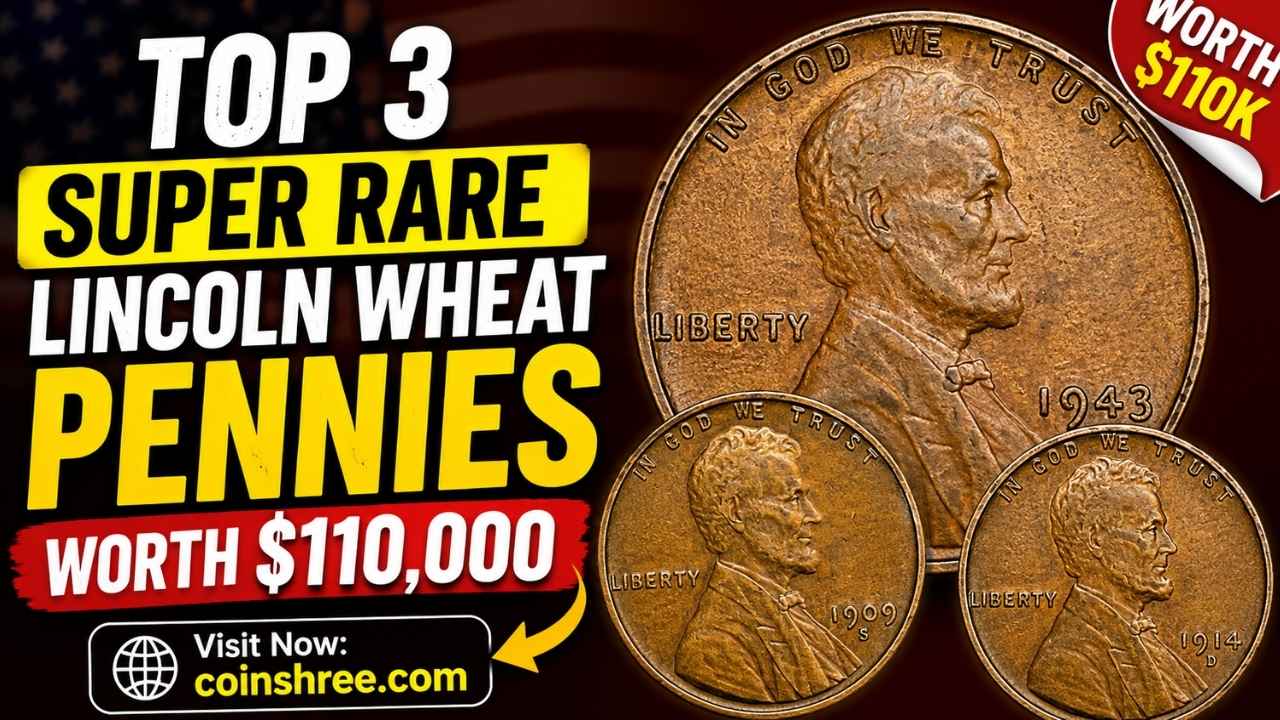
If you’re a coin collector or even someone who occasionally finds old pennies in jars or drawers, you might be sitting on a small fortune. Lincoln Wheat pennies are not just nostalgic—they can be extremely valuable, especially the rarest ones. Some collectors have paid over $100,000 for just one coin, making these pennies a true treasure. In this guide, we’ll cover the top three Lincoln Wheat pennies worth a staggering $110,000, along with everything you need to know about identifying, preserving, and potentially selling these rare coins.
What Are Lincoln Wheat Pennies?
Lincoln Wheat pennies were first minted in 1909 to commemorate the 100th birthday of Abraham Lincoln. Unlike modern pennies, the reverse side of these coins features two wheat stalks, which is how they got their nickname. They were minted until 1958, after which the Lincoln Memorial design replaced the wheat design. While most wheat pennies are worth only a few cents to a few dollars, some rare dates and minting errors make certain coins incredibly valuable. Collectors look for scarcity, condition, and mint marks when determining a penny’s worth.
Why Some Wheat Pennies Are Worth $110,000
The value of a Lincoln Wheat penny depends on several factors. The most important are rarity, condition, and minting errors. Coins that were minted in small quantities or have unusual errors can fetch astronomical prices. Coins in uncirculated or near-mint condition are particularly prized by collectors and investors alike. The $110,000 price tag is not arbitrary; it reflects both historical significance and extreme rarity. Some of these coins were minted in specific years or at specific mints, making them nearly impossible to find today.
1909-S VDB Lincoln Wheat Penny
The 1909-S VDB penny is perhaps the most famous of all Lincoln Wheat pennies. The “S” stands for the San Francisco Mint, and “VDB” represents Victor David Brenner, the coin’s designer. Only 484,000 of these coins were minted, which is an incredibly small number for a coin that is over a century old. The 1909-S VDB in excellent condition can easily sell for $100,000 or more at auctions. Key identification markers include the “VDB” initials on the reverse bottom and the San Francisco mint mark below the date. This coin is extremely sought after by collectors and is considered a crown jewel for any serious coin collection.
1914-D Lincoln Wheat Penny
The 1914-D penny is another gem that collectors dream of owning. The “D” denotes the Denver Mint, and this coin is rare due to its low mintage of just 1,193,000 coins. While that may sound like a lot, many of these coins were lost or damaged over the years, making surviving examples in pristine condition extremely rare. A 1914-D penny in top condition can fetch between $50,000 to $110,000, depending on the quality and certification. Look for sharp, clean details, including the wheat stalks on the reverse side and clear letters on the obverse.
1931-S Lincoln Wheat Penny
The 1931-S penny is another high-value coin in the Lincoln Wheat series. With only 866,000 minted, it’s one of the rarest San Francisco-minted pennies. Collectors particularly value this coin when it is in mint state or has minimal wear. A 1931-S penny in perfect condition can easily exceed $100,000 at auctions. Identification requires examining the coin closely for its mint mark and overall condition. Coins with scratches, corrosion, or cleaning marks lose significant value, so handling and storage are critical.
How to Identify Rare Lincoln Wheat Pennies
Identifying a rare Lincoln Wheat penny requires a keen eye. Start by checking the date and mint mark on the obverse of the coin. Look for letters like “S” for San Francisco, “D” for Denver, or no mint mark for Philadelphia. Next, check for designer initials, such as “VDB” on the 1909 penny. Condition is equally important—coins with scratches, discoloration, or cleaning damage are worth much less. Investing in a magnifying glass and proper lighting can help spot fine details that may indicate rarity. For serious collectors, professional grading services like PCGS or NGC can certify a coin’s authenticity and condition, boosting its value even further.
How to Preserve Lincoln Wheat Pennies
Preserving the value of your Lincoln Wheat pennies requires careful handling and storage. Always hold coins by the edges to avoid fingerprints and oils from your skin. Store them in acid-free coin holders or airtight capsules to prevent corrosion. Avoid cleaning your coins, as this can significantly decrease their value. Keep coins in a cool, dry environment away from direct sunlight and humidity. Proper storage ensures that your coins maintain their condition over decades, preserving their potential market value.
Selling Rare Lincoln Wheat Pennies
Selling a rare Lincoln Wheat penny can be as exciting as finding one. First, get your coin professionally graded to verify its authenticity and condition. High-grade coins can fetch much higher prices at auctions. Next, research reputable coin dealers or auction houses specializing in rare coins. Online platforms also offer opportunities to reach a global audience. Be patient and strategic—rare coins often sell for more than expected if marketed correctly. Remember, knowing the exact rarity and historical significance of your coin can significantly boost buyer interest.
Frequently Asked Questions
What makes a Lincoln Wheat penny valuable?
Rarity, mint marks, date, condition, and errors determine a wheat penny’s value.
How can I identify a rare penny?
Check the date, mint mark, and any designer initials. Compare with rarity guides and consider professional grading.
Are all 1909 pennies rare?
No, only specific varieties like the 1909-S VDB are considered highly valuable.
Can I clean my coins to increase their value?
No, cleaning can damage the coin and significantly reduce its value.
Where can I sell rare pennies?
Use reputable coin dealers, auction houses, or certified online platforms specializing in rare coins.
Conclusion
Lincoln Wheat pennies are more than just small pieces of copper—they are pieces of history that can be worth life-changing sums of money. The 1909-S VDB, 1914-D, and 1931-S pennies are some of the rarest and most valuable, with prices reaching up to $110,000. Proper identification, preservation, and professional grading are essential steps to maximize the value of these coins. Whether you are a collector or a casual finders of coins, knowing what to look for can turn a simple penny into a priceless treasure.

For official guidance on coin grading and historical coin information, you can visit the official U.S. Mint website.