
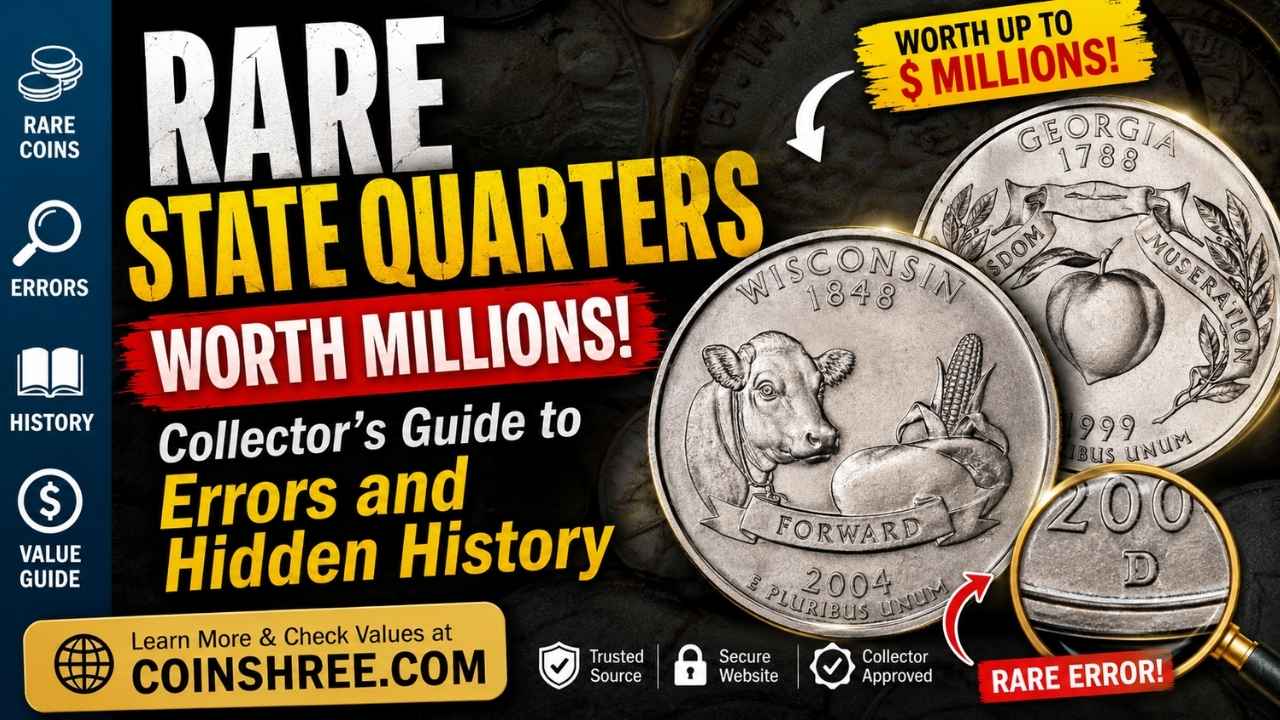
The 50 State Quarters Program remains one of the most successful coin programs ever released in the United States. Between 1999 and 2008, millions of Americans began checking their pocket change more carefully than ever before. While most state quarters are only worth 25 cents, a few rare versions with minting errors, low production details, or historical significance have become incredibly valuable to collectors.
Some rare state quarters have sold for thousands of dollars, while experts believe a handful of unique examples could eventually reach million dollar status because of rarity and demand. Hidden inside ordinary looking coins are printing mistakes, die cracks, off center strikes, and experimental mint errors that make collectors willing to pay huge amounts.
If you have old jars of coins sitting at home, now may be the perfect time to inspect them carefully. You might unknowingly own one of the rarest state quarters ever produced.
Why State Quarters Became So Valuable
The State Quarters Program was launched by the United States Mint in 1999. Each state received its own unique coin design released in the order that states joined the Union. This created a nationwide collecting craze.
What makes some quarters valuable is not age alone. Rare value usually comes from:
- Minting errors
- Limited production numbers
- Experimental planchets
- High grade condition
- Historical uniqueness
- Collector demand
Most state quarters were heavily circulated, meaning truly flawless examples are difficult to find today. Coins graded MS68 or higher by professional grading services can command surprisingly high prices.
The 2004 Wisconsin Extra Leaf Quarter
One of the most famous and valuable state quarter errors is the 2004 Wisconsin quarter featuring an extra leaf on the corn stalk.
There are two known varieties:
- Extra Leaf High
- Extra Leaf Low
Collectors believe the error may have resulted from accidental die damage during production at the Denver Mint. These coins immediately attracted attention once discovered in circulation.
High quality examples have sold for several thousand dollars, and rare uncirculated versions continue increasing in value. Many collectors still search bank rolls hoping to find one.
To identify this coin, examine the corn leaf carefully on the reverse side of the quarter. If an extra leaf appears near the corn husk, you may have a rare variety.
The 1999 Delaware Spitting Horse Error
The Delaware quarter was the first coin released in the State Quarters Program. A famous mint error known as the “Spitting Horse” became highly collectible shortly afterward.
This error appears as a die crack extending from the horse’s mouth, making it look like the horse is spitting.
Although many examples exist, coins in excellent condition remain highly desirable. Some professionally graded versions have sold for hundreds or even thousands of dollars depending on rarity and preservation.

Since Delaware quarters were widely circulated, finding a clean error example today is much harder than many collectors realize.
The 2005 Minnesota Doubled Die Quarter
The Minnesota quarter gained popularity because of a unique doubled die error visible in the trees near the state outline.
On some coins, extra tree shapes appear due to doubling during the die manufacturing process. Certain variations are rarer than others, which significantly impacts value.
Collectors often use magnifying glasses or microscopes to verify the doubling effect. Strong examples in mint condition can sell for impressive amounts at auctions.
This quarter demonstrates how tiny production flaws can turn ordinary change into collectible treasure.
Experimental Planchet State Quarters
Some of the most valuable state quarters were accidentally struck on experimental planchets intended for different coin compositions.
During the transition testing phase for future coin metals, a few state quarters were mistakenly produced using experimental blanks. These coins are exceptionally rare because they were never meant to enter circulation.
Collectors highly prize these unusual pieces because they represent a unique moment in minting history. Depending on rarity and condition, experimental quarters can reach extremely high auction prices.
Experts recommend weighing suspicious quarters because experimental planchets often differ slightly from normal coin weight.
Errors That Increase Quarter Value
Not every unusual coin is valuable, but several common error types can dramatically increase worth.
Look for these features:
- Off center strikes
- Double dies
- Die cracks
- Missing clad layers
- Broadstrikes
- Wrong planchet errors
- Clipped planchets
- Rotated dies
Coins with multiple errors are especially valuable because they are significantly rarer.
Condition also matters enormously. A rare quarter with sharp details, original mint luster, and no scratches will always command a higher price than heavily worn examples.
How to Check If Your Quarter Is Rare
Many collectors make the mistake of ignoring small details. Rare coin identification requires patience and careful observation.
Follow these steps:
- Check the coin date and mint mark
- Inspect both sides under bright light
- Use magnification for tiny errors
- Compare the coin with verified examples
- Weigh the quarter if possible
- Avoid cleaning the coin
Cleaning old coins can permanently reduce value because collectors prefer original surfaces.
If you believe your quarter may be rare, consider having it authenticated by a professional coin grading service.
Hidden History Behind State Quarters
Beyond financial value, state quarters also preserve American history in miniature form. Each design celebrates important themes connected to individual states.
Examples include:
- Delaware honoring Caesar Rodney’s historic horseback ride
- South Carolina featuring state symbols and heritage
- Alaska showcasing wildlife and natural beauty
- Hawaii celebrating King Kamehameha I
Because of these designs, many people who never previously collected coins became interested in American history and numismatics.
The emotional connection attached to these coins continues fueling collector demand today.
Could a State Quarter Really Be Worth Millions?
While most valuable state quarters sell in the thousands rather than millions, experts believe certain one of a kind mint errors could eventually achieve extraordinary auction prices.
The coin market has repeatedly shown that rarity drives value. If a unique state quarter error emerged with only one known example, collector competition could push the price dramatically higher.
Historical significance also matters. Since the State Quarters Program transformed modern coin collecting, elite examples from the series may become even more valuable in future decades.
Many coins once considered ordinary are now worth fortunes because collectors overlooked them for years.
Best Places to Find Rare State Quarters
Collectors still discover valuable quarters in surprising places.
Common sources include:
- Old coin jars
- Bank rolls
- Estate sales
- Flea markets
- Pocket change
- Family collections
Searching through rolls from local banks remains one of the most affordable ways to hunt for rare errors.

Patience is essential because valuable discoveries are uncommon, but they still happen regularly enough to keep collectors excited.
Official Source for Coin Information
For accurate and official information about United States coins and mint history, visit the U.S. Mint website:
United States Mint Official Website
Final Thoughts
Rare state quarters continue fascinating collectors because they combine history, rarity, and the thrill of discovery. What appears to be ordinary spare change could actually contain hidden treasure worth hundreds, thousands, or potentially far more in the future.
The most valuable examples usually feature mint errors, exceptional condition, or unusual production characteristics. As interest in coin collecting grows online, demand for rare state quarters is expected to remain strong.
Before spending old quarters casually, take a closer look. Tiny details could make a massive difference in value.
FAQ
What is the rarest state quarter?
The 2004 Wisconsin Extra Leaf quarter is considered one of the rarest and most famous error state quarters.
How do I know if my state quarter is valuable?
Check for mint errors, unusual markings, off center strikes, doubled images, and overall condition. Rare combinations can increase value significantly.
Are state quarters still in circulation?
Yes, many state quarters are still found in everyday circulation, though rare error versions are difficult to locate.
Should I clean old quarters before selling?
No. Cleaning coins can damage surfaces and reduce collector value.
Where can I sell rare state quarters?
Rare quarters are commonly sold through coin dealers, auctions, online marketplaces, and professional grading services.
Can modern quarters really become expensive?
Yes. Modern coins with rare minting errors or extremely high grades can become highly valuable over time.