
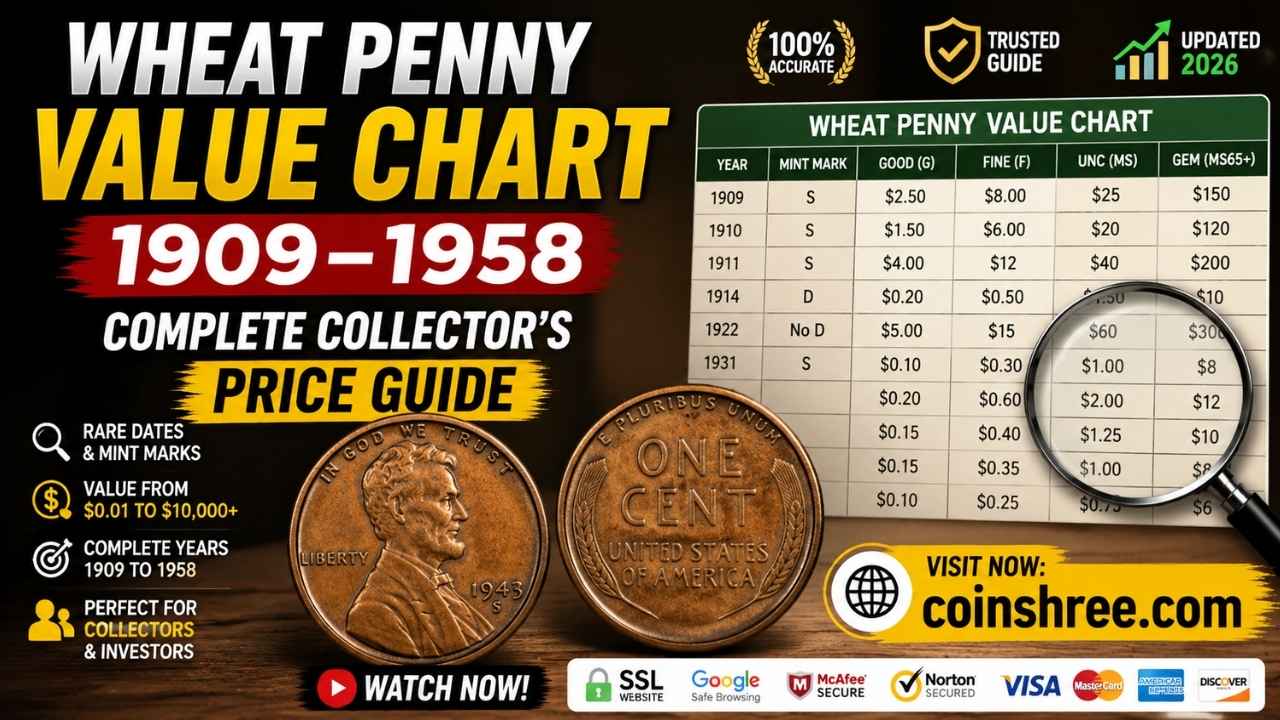
Wheat pennies are among the most loved and collected coins in American history. These iconic one cent coins were minted from 1909 to 1958 and are easily recognized by the two wheat stalks on the reverse side. While many people still find them in old jars, piggy banks, or inherited coin collections, some rare wheat pennies can be worth hundreds or even thousands of dollars today.
Collectors are constantly searching for valuable dates, mint errors, and high grade examples that can increase in value over time. Whether you are a beginner or an experienced collector, understanding the wheat penny value chart can help you identify rare coins and avoid selling valuable pieces for only face value.
History of the Wheat Penny
The wheat penny was first introduced in 1909 to celebrate the 100th birthday of Abraham Lincoln. It became the first regular United States coin to feature a real historical figure instead of symbolic artwork.
Designed by Victor David Brenner, the front of the coin features Abraham Lincoln’s portrait, while the back displays two wheat ears surrounding the words “ONE CENT.”
The coin remained in circulation until 1958 before being replaced by the Lincoln Memorial penny in 1959.
Today, wheat pennies are popular because of their historical importance, beautiful design, and collectible rarity.
Wheat Penny Value Chart 1909–1958
Here is a simplified wheat penny value chart based on average circulated condition.
| Year | Estimated Value |
|---|---|
| 1909 VDB | $10 to $50 |
| 1909 S VDB | $700 to $2500+ |
| 1910 to 1915 | $1 to $20 |
| 1914 D | $200 to $5000+ |
| 1922 No D | $500 to $12000+ |
| 1931 S | $80 to $300 |
| 1943 Steel Penny | $0.20 to $10 |
| 1943 Copper Penny | $100000+ |
| 1944 Steel Penny | $75000+ |
| 1955 Doubled Die | $1000 to $15000+ |
| 1958 Doubled Die | $50000+ |
Values depend heavily on condition, mint mark, rarity, and market demand.
Most Valuable Wheat Pennies
Several wheat pennies stand out because of low mintage numbers or minting errors. These coins are highly desirable among collectors.
The 1909 S VDB penny is one of the most famous rare coins in the United States. Only a limited number were produced before the designer’s initials were removed from the coin.
The 1914 D penny is another key date because of its low production numbers. Even worn examples are worth significant money.
The 1922 No D penny became famous due to a minting mistake where the Denver mint mark disappeared completely.
The 1943 copper penny is considered the holy grail of Lincoln cents. During World War II, pennies were supposed to be made from steel to save copper for military use. A few copper blanks accidentally entered production, creating one of the rarest American coins ever discovered.

How Mint Marks Affect Value
Mint marks play a major role in determining wheat penny value.
Coins minted in Philadelphia usually have no mint mark. Denver coins carry a “D” mint mark, while San Francisco coins display an “S.”
In many years, San Francisco and Denver mintages were much lower than Philadelphia mintages, making those coins rarer and more valuable.
Collectors should always inspect the area below the date carefully to identify the mint mark.
Wheat Penny Errors That Are Worth Money
Error coins can be extremely valuable because they are unique and harder to find.
One of the most famous examples is the 1955 Doubled Die penny. The date and lettering appear doubled because of a die alignment mistake during production.
Off center strikes, clipped planchets, repunched mint marks, and die cracks can also increase value significantly.
Even small minting errors can attract strong interest from collectors, especially if the error is visually obvious.
How Coin Condition Changes Value
Condition is one of the biggest factors affecting wheat penny prices.
Coins are graded on a scale ranging from Poor to Mint State. A heavily worn penny may only be worth a few cents, while the same coin in uncirculated condition could sell for hundreds or thousands of dollars.
Collectors prefer coins with sharp details, original color, and minimal scratches.
Professional grading services can certify valuable coins and help buyers trust authenticity and condition.
Rare Wheat Pennies Still Found in Circulation
Believe it or not, people still occasionally discover wheat pennies in circulation, coin rolls, or old collections.

Older family coin jars and inherited boxes often contain forgotten treasures. Estate sales, flea markets, and garage sales are also popular places where collectors search for rare finds.
While finding a six figure coin is extremely rare, many people still uncover wheat pennies worth $10, $50, or more.
Checking dates carefully before spending old coins is always a smart idea.
Tips for New Wheat Penny Collectors
Starting a wheat penny collection does not require a huge budget. Many collectors begin by sorting through pocket change or buying inexpensive coin lots online.
Using a magnifying glass can help identify mint marks and possible errors. Coin albums are useful for organizing collections by year and mint location.
Beginners should also learn basic coin grading skills because condition greatly impacts market value.
Avoid cleaning old coins. Cleaning can damage the surface and lower collector value dramatically.
Researching recent auction prices can also help collectors understand current market demand.
Why Wheat Pennies Remain Popular
Wheat pennies continue to attract collectors because they combine affordability, history, and treasure hunting excitement.
Unlike many modern coins, each wheat penny carries historical significance tied to different periods of American history, including the Great Depression and World War II.
Their classic design and wide range of rare varieties keep collectors interested generation after generation.
Even casual collectors enjoy searching for key dates and rare errors hidden among ordinary coins.
Official Source for Coin Information
Collectors looking for official coin information can visit the United States Mint website:

United States Mint Official Website
The website provides educational resources, coin history, and updates related to U.S. currency and collectible coins.
FAQ
Are all wheat pennies valuable?
No. Many common wheat pennies are worth only a few cents above face value. However, rare dates, mint marks, and error coins can be worth significant money.
How can I tell if my wheat penny is rare?
Check the date, mint mark, and overall condition. Rare coins like the 1909 S VDB, 1914 D, and 1955 Doubled Die are highly valuable.
Is a 1943 steel penny worth money?
Yes. Most 1943 steel pennies are worth a small premium, especially in excellent condition. Rare copper versions from 1943 are worth extremely high amounts.
Should I clean my wheat pennies?
No. Cleaning coins can reduce their collector value because it damages the original surface and appearance.
Where can I sell valuable wheat pennies?
Collectors often sell coins through coin dealers, auctions, coin shows, and online marketplaces specializing in collectibles.
Final Thoughts
Wheat pennies remain one of the most exciting areas of coin collecting because valuable discoveries are still possible today. From rare key dates to fascinating mint errors, these small copper coins continue to attract attention from collectors around the world.
Understanding the wheat penny value chart can help you identify hidden treasures and build a meaningful collection over time. Whether you are collecting for fun, investment, or historical interest, wheat pennies offer a unique connection to America’s past and an enjoyable hobby for all ages.