
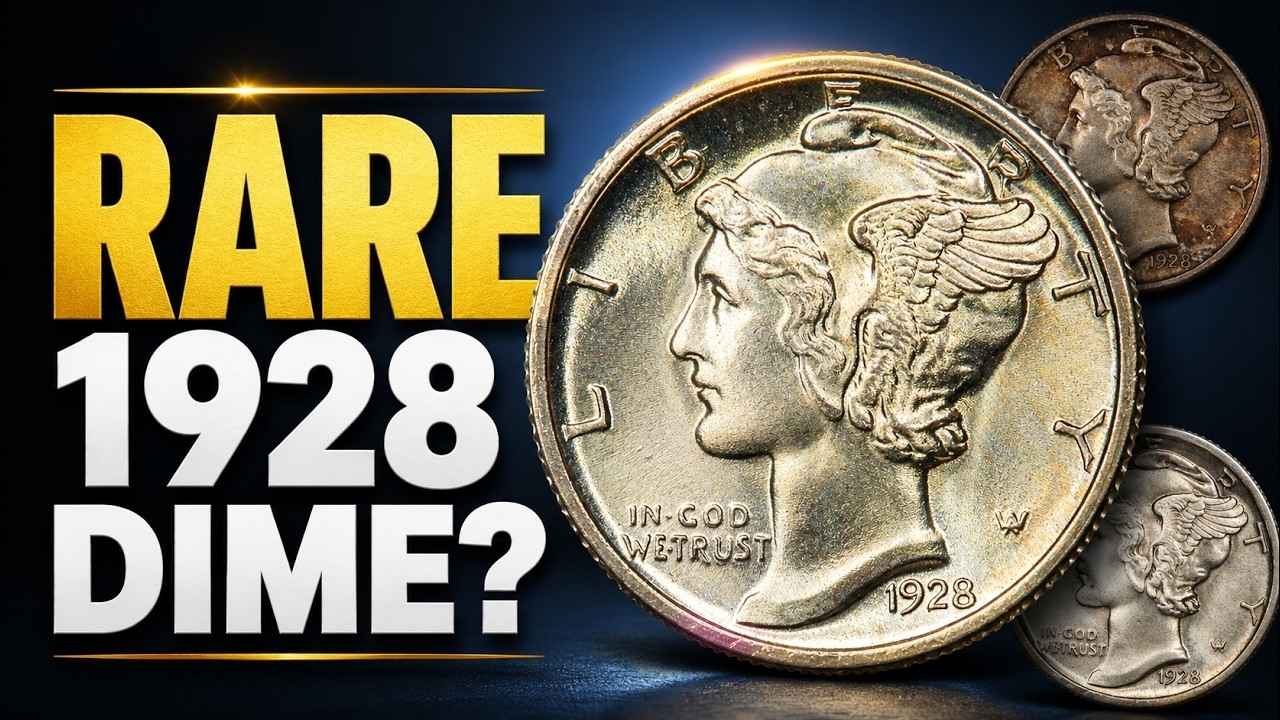
A small silver coin from 1928 may look ordinary at first glance, but some 1928 dimes have become highly desirable treasures among collectors. The value of these coins can range from a modest amount for common circulated examples to impressive prices for rare varieties, high grade specimens, and coins with exceptional historical importance.
The 1928 Mercury dime is part of one of the most admired coin series in United States history. Officially known as the Winged Liberty Head dime, this coin has attracted generations of collectors because of its beautiful design, silver content, and connection to early 20th century American coinage.
Many people discover old dimes in inherited collections, coin albums, antique boxes, or family keepsakes. While most 1928 dimes are not extremely rare, certain examples can be worth significantly more depending on factors such as mint mark, condition, originality, and collector demand.
Understanding what makes a 1928 dime valuable is the first step toward recognizing a possible hidden treasure. A coin that has survived nearly a century with strong details and excellent preservation can be far more valuable than a heavily worn example.
This guide explains everything collectors need to know about 1928 dime values, including mint marks, rarity factors, grading, errors, identification tips, and how to determine whether your coin may be worth more than its face value.
The History Behind the 1928 Mercury Dime
The 1928 Mercury dime was produced during a fascinating period in American coin history. The series began in 1916 and continued until 1945, becoming one of the most collected dime designs ever created.
Although many people call it the “Mercury dime,” the figure on the front of the coin is actually a representation of Liberty wearing a winged cap. The design was created by renowned sculptor Adolph A. Weinman, who also designed the famous Walking Liberty half dollar.
The winged cap on Liberty’s head was intended to symbolize freedom of thought. Over time, the public associated the image with the Roman messenger god Mercury, which led to the popular nickname “Mercury dime.”
The reverse side features a fasces, an ancient symbol representing unity and authority, along with an olive branch representing peace. These design elements made the coin visually meaningful and helped establish its popularity among collectors.
In 1928, Mercury dimes were produced using 90% silver and 10% copper. Because of their silver composition, these coins have intrinsic metal value in addition to their collectible value.
However, not every 1928 dime is automatically rare. The true value depends on several important characteristics that collectors carefully examine.
What Makes a 1928 Dime Valuable?
Several factors determine whether a 1928 Mercury dime is considered common or highly valuable. Collectors usually look at a combination of rarity, condition, demand, and historical significance.
The first factor is the mint location. Dimes produced at different United States Mint facilities can have different production numbers. Some issues are easier to find, while others are more challenging for collectors.
The second major factor is condition. A coin that has sharp details, original surfaces, and minimal wear can be worth much more than the same coin with heavy circulation damage.
Important condition features include:
The amount of wear on Liberty’s hair and facial details
The sharpness of the lettering
The clarity of the wing details
The condition of the reverse design
The presence of scratches, cleaning, or damage
Another important factor is originality. Collectors prefer coins that have not been cleaned, polished, or artificially altered. Natural surfaces often carry more appeal in the collector market.
Demand also affects value. Some coins become more popular because they are important parts of completing a collection. When more collectors search for a particular coin, prices can increase.
1928 Mercury Dime Mint Marks Explained
One of the most important details to check on a 1928 dime is the mint mark. This small letter tells collectors where the coin was produced.
The mint mark is located on the reverse side of the coin near the bottom, close to the lower area of the fasces design.
The possible 1928 Mercury dime issues include:
1928 Philadelphia Mint dime with no mint mark
1928-D Denver Mint dime
1928-S San Francisco Mint dime
Each version has different production numbers and collector interest.
A coin’s mint mark alone does not determine its value. It must be considered together with the date, condition, and overall rarity.
For example, a lower mintage coin in poor condition may be less valuable than a more common issue preserved in exceptional condition. Professional collectors always evaluate the complete picture before determining a coin’s market value.
1928 No Mint Mark Mercury Dime: Philadelphia Issue
The 1928 Mercury dime produced at the Philadelphia Mint does not have a mint mark. This was common for coins produced at Philadelphia during this period.
Because Philadelphia produced large quantities of many coins, the 1928 no mint mark dime is generally considered the more common issue compared with some other 1928 varieties.
However, common does not mean worthless.
A well preserved 1928 Philadelphia Mercury dime can still attract collector interest, especially if it has strong details and excellent original condition.
Coins with higher grades may become desirable because many examples were heavily circulated during the decades after their release. Finding a nearly preserved example from 1928 is much more difficult than finding a worn coin.
Collectors examining a 1928 Philadelphia dime should look carefully at:
The date clarity

Liberty’s design details
The wing definition
The reverse fasces details
Overall surface quality
A professional evaluation may be worthwhile if the coin appears unusually well preserved.
1928-D Mercury Dime: Denver Mint Rarity
The 1928-D Mercury dime was produced at the Denver Mint and is one of the issues collectors pay close attention to.
Coins from the Denver Mint often receive strong collector interest because certain years had lower production compared with Philadelphia issues.
The small “D” mint mark on the reverse identifies this variety. Because mint marks can sometimes be difficult to read on worn coins, careful examination is important.
The value of a 1928-D Mercury dime depends heavily on condition. A circulated example may have a more moderate value, while a high grade example with strong original details can attract serious collector attention.
When examining a possible 1928-D Mercury dime, avoid cleaning the coin or attempting to improve its appearance. Original surfaces are highly valued by collectors.
1928-S Mercury Dime: San Francisco Collectible Issue
The 1928-S Mercury dime was produced at the San Francisco Mint and is another important variety for collectors.
San Francisco issues from the Mercury dime series often have dedicated collector interest because certain dates can be more challenging to locate in attractive condition.
The “S” mint mark is found on the reverse side of the coin. Collectors carefully check this area because identifying the correct mint mark is essential when determining value.
Like all collectible coins, the 1928-S Mercury dime’s value depends on:
Authenticity
Condition
Original appearance
Collector demand
Market activity
A worn example and a high grade example can have very different values, even if they are from the same year and mint.
For anyone searching through older coin collections, checking the mint mark is one of the most important steps in identifying valuable 1928 dimes.
1928 Dime Values: Common Coins to Extremely Valuable Rare Treasures
How Condition Affects 1928 Dime Values
The condition of a 1928 Mercury dime is one of the biggest factors that determines its value. Two coins from the same year and mint can have very different prices because one may be heavily worn while the other has been carefully preserved for nearly a century.
Collectors use professional grading standards to evaluate a coin’s condition. A coin with sharp details, clean surfaces, and strong original appearance is usually more desirable than one with scratches, damage, or significant wear.
Important areas collectors examine on a 1928 Mercury dime include:
Liberty’s hair details above the forehead
The wing design on the cap
The lettering around the edge
The date visibility
The fasces and olive branch on the reverse
The overall quality of the coin’s surface
A circulated 1928 dime may show signs of everyday use from decades in circulation. These coins can still be collectible, especially if they are from a desirable mint. However, coins with very little wear are much harder to find and often receive stronger interest from collectors.
A coin’s grade does not only describe how it looks. It also provides a standard way for collectors and buyers to compare coins in the marketplace.
Understanding 1928 Dime Grading and Collector Demand
Coin grading plays an important role in the world of rare coins. Professional grading companies examine coins and assign grades based on their condition, authenticity, and preservation.
Generally, coins fall into several broad categories:
Heavily circulated coins show noticeable wear and loss of detail.
Moderately circulated coins retain more design features but still show signs of use.
Lightly circulated coins maintain strong details with limited wear.
Uncirculated coins have little to no evidence of circulation.
High quality examples may display strong original surfaces and exceptional eye appeal.
A 1928 Mercury dime in a higher grade can become much more valuable because many coins from this era spent decades in circulation. Finding one that still looks close to its original condition is uncommon.
Collectors also consider “eye appeal.” This refers to how attractive the coin looks overall. A coin with excellent strike quality, natural color, and clean surfaces may attract more attention than another coin of the same grade.
Rare 1928 Dime Errors and Varieties to Look For
Error coins are among the most interesting discoveries in coin collecting. A mistake during the minting process can create unusual features that make a coin more desirable.
Although not every unusual looking 1928 dime is a valuable error, collectors carefully search for genuine minting mistakes.
Possible characteristics collectors examine include:
Doubled design elements
Unusual lettering or numbers
Off center strikes
Striking problems
Missing or unusual details
It is important to understand the difference between a true mint error and damage that occurred after the coin left the mint. Scratches, dents, and wear caused by circulation usually do not increase value.
If you believe your 1928 dime has an unusual feature, avoid altering the coin. A professional opinion can help determine whether the characteristic is a genuine mint error.
How to Identify an Authentic 1928 Mercury Dime
Because valuable old coins can attract counterfeit attempts, authentication is an important part of collecting.
A genuine 1928 Mercury dime should have consistent design details, proper weight, and correct metal composition. Collectors often examine several features before accepting a coin as authentic.
Important areas to check include:
The accuracy of the date
The shape and position of the mint mark
The details of Liberty’s portrait
The reverse design elements
The overall appearance and weight
Some counterfeit coins may appear convincing at first glance, especially to inexperienced collectors. This is why rare or expensive coins should be evaluated by qualified experts.
Authentication becomes especially important when a coin appears to be a rare date, high grade example, or unusual variety.
Common Mistakes People Make When Valuing 1928 Dimes
Many people find an old coin and immediately search for extremely high price examples online. While some rare coins can be valuable, it is important to understand that internet price claims often represent exceptional examples.
Several common mistakes include:
Assuming every 1928 dime is rare
Ignoring the importance of condition
Cleaning the coin to make it look newer
Comparing an average coin with a top graded auction example
Selling without proper research
The biggest mistake is cleaning the coin. Many collectors prefer original surfaces, and cleaning can permanently reduce a coin’s desirability.
Another mistake is focusing only on age. A coin being nearly 100 years old does not automatically make it rare. Millions of older coins exist, but only certain examples become highly valuable.
Careful research and professional evaluation are the best ways to understand a coin’s true potential.
Where 1928 Mercury Dimes Are Found Today
Finding a 1928 Mercury dime today can be an exciting experience. These coins are usually discovered in collections rather than everyday pocket change because they were removed from circulation by collectors over the years.
Common places where people discover old Mercury dimes include:
Inherited coin collections
Old family albums
Estate collections

Antique boxes
Long stored coin jars
Dealer collections
Many collectors enjoy searching through older coins because every discovery has a connection to history. A 1928 dime is not just a piece of silver; it represents a period of American coin production nearly a century ago.
Even if a coin is not extremely valuable, owning a historic piece of currency can still be meaningful.
Should You Clean a 1928 Dime?
Cleaning a collectible coin is usually not recommended. Many people think polishing an old coin will improve its appearance, but this can actually harm its value.
Professional collectors prefer coins in their natural state. Original surfaces provide important information about the coin’s history and preservation.
Avoid:
Using silver polish
Scrubbing the surface
Applying chemicals
Removing natural toning
Trying to make the coin look new
If you discover a 1928 Mercury dime, handle it carefully. Hold it by the edges and store it in a protective holder to prevent additional damage.
Preserving the coin’s original condition is one of the most important steps a collector can take.
How to Get a 1928 Dime Professionally Graded
If your 1928 Mercury dime appears valuable, professional grading can provide important information about its authenticity and condition.
A professional grading service can evaluate:
Whether the coin is genuine
The condition grade
The quality of preservation
The overall collector appeal
A certified coin often receives more attention from serious collectors because buyers have greater confidence in professionally evaluated pieces.
Before submitting a coin, research the grading process and understand the fees involved. Professional grading is usually most beneficial for coins that have the potential to be valuable.
How Much Can a 1928 Dime Really Be Worth?
The value of a 1928 Mercury dime can vary widely. Some examples are valued mainly for their silver content and collector interest, while rare and exceptional examples can command much higher prices.
The biggest factors affecting value include:
Mint mark
Condition
Rarity
Authentication
Collector demand
Current market trends
A common circulated 1928 dime will usually have a different value compared with a rare mint issue in excellent condition.
Collectors should be cautious about online claims that suggest every old dime is worth thousands of dollars. The highest prices usually apply only to rare coins with outstanding characteristics.
The best way to understand the value of your coin is through careful examination, reliable research, and professional evaluation when necessary.