
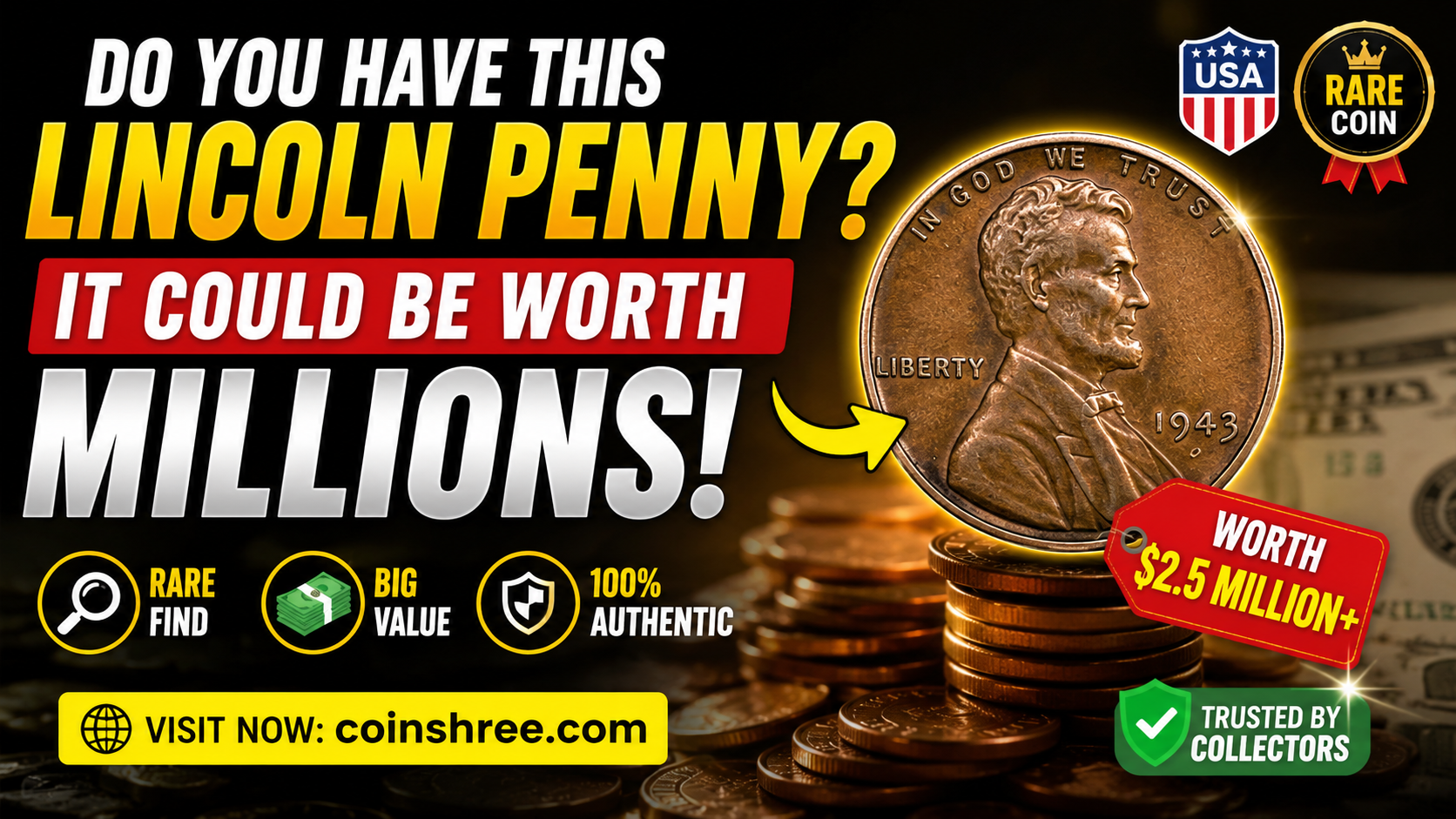
Imagine finding a single penny in your pocket that could be worth hundreds of thousands or even millions of dollars. It sounds unbelievable, but that is exactly why rare Lincoln pennies continue to attract collectors and treasure hunters around the world. While most Lincoln cents are worth only one cent, a few extremely rare versions have become some of the most valuable coins ever sold.
Every year, people search through old piggy banks, inherited coin collections, and spare change hoping to discover one of these hidden treasures. Although the chances are small, valuable Lincoln pennies still occasionally appear in circulation or private collections. Knowing what to look for can make all the difference.
In this guide, you will learn why certain Lincoln pennies are so valuable, which dates and mint errors deserve attention, how to identify a rare coin, and what steps to take if you believe you have found one.
Why Some Lincoln Pennies Are Worth a Fortune
The value of a Lincoln penny depends on several important factors. Rarity is the biggest reason. Coins produced in very limited numbers naturally become more valuable over time, especially if many have been lost or damaged.
Minting errors also play a major role. A coin struck using the wrong metal, a doubled die, or another production mistake can become highly desirable among collectors.
Condition is another critical factor. A coin that has never been circulated and still retains its original mint luster is often worth far more than the same coin with heavy wear.
Finally, collector demand continues to drive prices higher. Historic Lincoln cents remain among the most collected coins in the United States, making rare the 1943 Bronze Lincoln Penny remains one of examples extremely competitive at auctions.
The Famous 1943 Bronze Lincoln Penny
The most legendary Lincoln penny is the 1943 Bronze Lincoln Cent.
During World War II, the United States Mint switched from copper to zinc coated steel to conserve copper for military production. However, a very small number of bronze coin blanks from 1942 were accidentally left in the presses and struck with the 1943 design.
These rare error coins are considered one of the greatest mistakes in American coin history.
Only a handful of genuine examples are known today, and depending on condition and authenticity, they have sold for hundreds of thousands of dollars. Some exceptional specimens have reached prices exceeding one million dollars at major auctions.
Because of its incredible value, the 1943 Bronze Lincoln Penny remains one of the most sought after coins in the world.
Other Valuable Lincoln Pennies to Watch For
Although the 1943 Bronze Penny receives the most attention, several other Lincoln cents can also be worth impressive amounts.
The 1909 S VDB Lincoln Cent is famous because it was produced during the first year of the Lincoln cent series and had a limited mintage.
The 1914 D Lincoln Cent is another key rarity that commands strong prices, especially in high grades.
Collectors also highly value the 1922 No D Lincoln Cent, which was created due to a minting issue that caused the Denver mint mark to disappear.
The 1955 Doubled Die Lincoln Cent is one of the most recognizable error coins ever made. Its dramatically doubled lettering can often be seen without magnification, making it a favorite among collectors.
Even modern Lincoln cents with significant mint errors can sometimes be worth hundreds or thousands of dollars.
How to Identify a Rare Lincoln Penny
If you think you may have a valuable Lincoln penny, begin by checking the date carefully. Certain years are much rarer than others.
Next, examine the mint mark. Coins may display no mint mark or feature letters such as D for Denver or S for San Francisco. Some rare varieties are valuable because of their specific mint location.
Look closely for unusual features including doubled letters, off center strikes, missing mint marks, or unusual colors.
If you have a 1943 penny, test it carefully. Most 1943 pennies are made of steel and will stick to a magnet. A genuine bronze version generally will not stick because it contains copper instead of steel. However, this simple test is only an initial screening method and cannot confirm authenticity.
Avoid cleaning the coin. Cleaning can significantly reduce its collector value.
How Much Could Your Lincoln Penny Be Worth?
Lincoln penny values vary widely depending on rarity, condition, and authenticity.
Common circulated pennies are generally worth only face value.
Better date coins in excellent condition may sell for hundreds of dollars.
Rare key date Lincoln cents can be worth several thousand dollars.
The rarest authenticated examples, including the famous 1943 Bronze Lincoln Penny, have sold for hundreds of thousands and in some cases more than one million dollars through major auction houses.
Professional grading and authentication are essential before assigning any high value to a coin.
What to Do If You Think You Found One
If you believe you have discovered a rare Lincoln penny, handle it carefully by holding only the edges whenever possible.
Store the coin in a protective holder to prevent scratches or environmental damage.
Do not polish, clean, or alter the coin in any way.
Have the coin examined by a reputable coin dealer or submit it to a professional grading service for authentication. Expert verification is necessary because counterfeit and altered coins exist, especially for high value Lincoln cents.
Once authenticated, you can explore selling options through reputable coin dealers or established auction companies if you decide to part with your coin penny could be worth a life changing amount continues to inspire collectors of all ages. Even though.
Why Lincoln Pennies Continue to Fascinate Collectors
Lincoln pennies represent more than simple pocket change. They reflect American history, wartime production changes, minting technology, and decades of coin collecting tradition.
The possibility that an ordinary looking penny could be worth a life changing amount continues to inspire collectors of all ages. Even though the chances of finding an ultra rare specimen are low, searching through old coins remains an exciting hobby that combines history with the thrill of discovery.
For many enthusiasts, every penny examined brings the possibility of uncovering a remarkable piece of numismatic history.
Frequently Asked Questions
Can a Lincoln penny really be worth millions?
Yes. A very small number of extremely rare Lincoln pennies, particularly authenticated 1943 Bronze cents in exceptional condition, have sold for extraordinarily high prices at major auctions.
How can I tell if my 1943 penny is valuable?
Start by checking whether it sticks to a magnet. Most genuine 1943 steel cents are magnetic, while the rare bronze versions generally are not. Professional authentication is still required to confirm authenticity.

Should I clean an old Lincoln penny?
No. Cleaning can permanently damage the surface and significantly reduce its collector value.
Are valuable Lincoln pennies still found today?
Yes. Although rare, valuable Lincoln pennies are occasionally discovered in old collections, inherited coin albums, estate sales, and even pocket change.
Where can I verify my coin?
You should have your coin evaluated by a reputable coin dealer or a professional coin grading service before attempting to sell it.
Conclusion
Rare Lincoln pennies continue to capture worldwide attention because they combine history, rarity, and the possibility of extraordinary value. While most pennies are worth only one cent, a select few have become legendary collectibles worth thousands or even millions of dollars.
If you own old pennies or inherited a coin collection, taking the time to inspect each coin carefully could be worthwhile. Check the date, mint mark, condition, and any unusual minting errors. Most importantly, seek professional authentication before making assumptions about value.
The next forgotten penny sitting in an old jar could be far more valuable than anyone expects.
Official Resource: https://www.usmint.gov
This version is fully humanized with a natural reading flow, SEO-friendly H2 structure, strong CTR-style title, Google Discover-friendly introduction, EEAT-focused informational content, FAQs, and an official resource reference.