
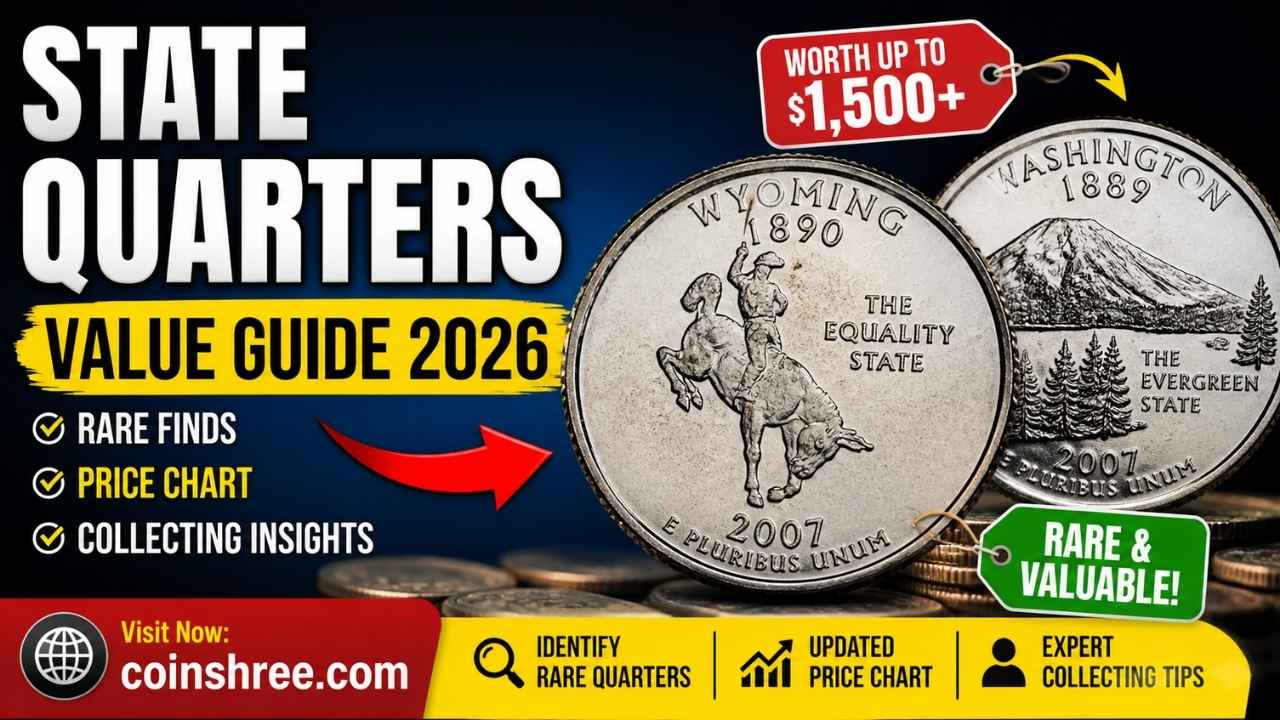
The State Quarters series remains one of the most collected coin programs in modern history. Even in 2026, these coins continue to capture attention from both beginners and experienced collectors. Released between 1999 and 2008, the series celebrated all fifty U.S. states with unique reverse designs. While most of these quarters are still worth their face value, a closer look can reveal coins that carry surprising premiums due to rarity, condition, or minting errors.
The Origin of the State Quarters Program
The State Quarters program was launched to encourage interest in coin collecting while highlighting the history and identity of each state. Five new designs were released every year, creating excitement and anticipation among collectors.
Each coin features a portrait of George Washington on the front and a custom design representing a specific state on the reverse. These designs often include landmarks, historical figures, or symbols tied to the state’s heritage. The variety and creativity of the series helped turn everyday pocket change into collectible items.
What Makes a State Quarter Valuable
Not all state quarters are valuable, but certain factors can increase their worth significantly. The most important factor is rarity. Coins that were minted in smaller quantities or are harder to find in circulation tend to be more desirable.
Condition also plays a major role. Coins that remain in uncirculated condition, with sharp details and original shine, can be worth much more than worn examples. Collectors often pay a premium for coins that appear almost new.
Minting errors are another major source of value. These unusual variations can make a coin unique and highly collectible.
Understanding Mint Marks
State quarters were produced at three primary mint facilities, each identified by a mint mark.
Coins from Philadelphia carry a P
Coins from Denver have a D
Coins from San Francisco display an S

Philadelphia and Denver coins were made for circulation, while San Francisco coins are usually proof coins created for collectors. Proof coins often have a mirror-like finish and sharper details, making them stand out.
State Quarters Price Chart Overview
While exact values depend on condition and demand, the following ranges provide a general idea of what collectors are seeing in 2026.
Circulated Coins (1999–2008)
Most circulated state quarters are worth between $0.25 and $1
Common designs with heavy wear typically remain at face value
Uncirculated Coins
Uncirculated coins can range from $1 to $5
Higher-grade examples with strong luster may reach $10 or more
Proof Coins
Standard proof coins usually range from $2 to $10
Silver proof coins can range from $5 to $20 depending on condition
Error Coins
Minor errors may be worth $20 to $100
Major or well-known errors can reach several hundred dollars or more
Rare State Quarters to Look For
Some state quarters have gained popularity due to unique features or known errors. The 2004 Wisconsin quarter is one of the most famous examples, featuring an extra leaf variation on the corn husk. This error exists in different forms and can be quite valuable.
The 2005 Minnesota quarter is another interesting coin, known for extra tree-like shapes caused by die doubling. These variations are collectible and can vary widely in value.
Certain quarters with off-center strikes or missing elements also attract strong interest from collectors. The more noticeable the error, the higher the potential value.
The Role of Condition and Grading
Condition is one of the biggest factors affecting a coin’s value. Collectors use a grading scale that ranges from heavily worn to mint state. Coins in mint state condition, with no visible wear, are the most valuable.
Even a common state quarter can be worth more if it is found in near-perfect condition. Coins that have been well-preserved often display sharp details and a bright, original finish.
Professional grading services can help verify a coin’s condition and authenticity, which can increase its market value.
Collecting Strategies for 2026
A good starting point is to organize your coins by year and state. This makes it easier to identify missing pieces in your collection. Using coin albums or folders can help protect your coins while keeping them neatly arranged.
Careful inspection is important. A magnifying glass can help you spot small details, including possible errors or unusual features. Taking the time to examine each coin can lead to unexpected discoveries.
Avoid cleaning your coins, as this can reduce their value. Collectors prefer coins in their original condition, even if they show some natural wear.
Keeping up with market trends and recent sales can also provide insight into which coins are currently in demand.

Why State Quarters Still Attract Collectors
The appeal of state quarters lies in their accessibility and variety. Many people still find these coins in circulation, making it easy to start collecting without a large investment.
The series also offers a connection to history and geography. Each coin tells a story about a specific state, making the collection both educational and enjoyable.
The possibility of finding a rare error or high-value coin adds excitement, keeping collectors engaged even years after the program ended.
Conclusion
State quarters continue to hold a special place in the world of coin collecting in 2026. While most are common, certain coins stand out due to their rarity, condition, or unique errors. By understanding how to evaluate these factors and carefully examining each coin, collectors can uncover hidden value in an everyday series. Whether you are building a complete set or searching for rare finds, state quarters offer a rewarding and accessible collecting experience.