
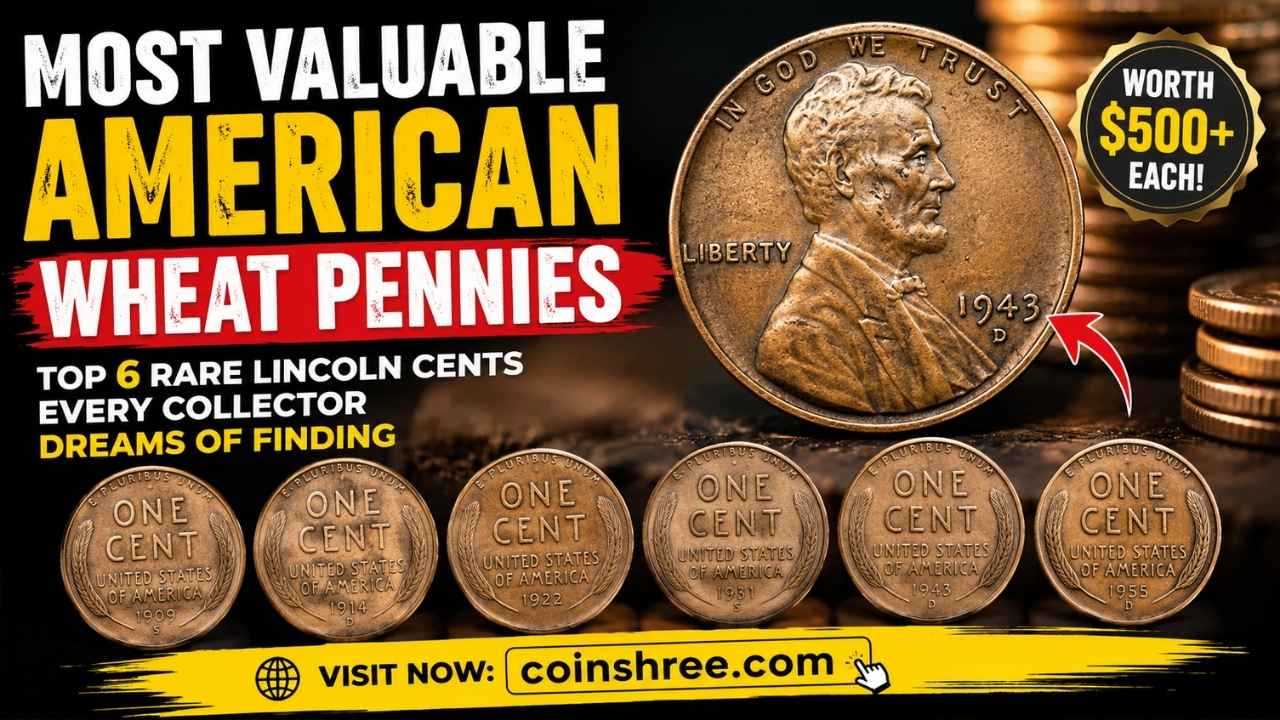
American Wheat Pennies are among the most loved coins in the world of coin collecting. These historic Lincoln cents were produced from 1909 to 1958 and remain highly valuable because of their age, rarity, minting errors, and historical significance. Many collectors still search through old coin jars and pocket change hoping to discover one of these rare treasures.
Some Wheat Pennies are worth just a few cents, while others can sell for thousands or even millions of dollars at auctions. The exciting part is that a few of these rare coins are still believed to exist in circulation or private collections.
If you are a beginner collector or an experienced numismatist, learning about the rarest Wheat Pennies can help you identify valuable coins that may be hiding in plain sight.
What Makes Wheat Pennies Valuable
Several factors decide the value of a Wheat Penny. The most important are rarity, minting errors, historical importance, and condition. Coins with low mintage numbers or unusual production mistakes are usually the most valuable.
Collectors also pay premium prices for coins that remain in excellent condition. Coins with clear details, original shine, and minimal wear often attract the highest bids at auctions.
Mint marks also play a major role. Wheat Pennies were minted in Philadelphia, Denver, and San Francisco. Coins from certain mints and years are significantly rarer than others.
1909 S VDB Lincoln Wheat Penny
The 1909 S VDB Lincoln cent is considered one of the most famous American coins ever produced. It was the first year of the Lincoln cent series, designed by Victor David Brenner. His initials “VDB” appeared prominently on the reverse side of the coin.
Only around 484,000 of these coins were minted in San Francisco before the initials were removed due to public criticism. Because of the low mintage and historical significance, this coin became instantly collectible.
A circulated 1909 S VDB penny can easily sell for over $1,000, while high grade examples may fetch tens of thousands of dollars. This coin is often called the king of Wheat Pennies.
1914 D Lincoln Wheat Penny
Another legendary coin among collectors is the 1914 D Wheat Penny. Minted in Denver, this coin had a relatively low production number compared to other Lincoln cents of the era.
Many of these coins were heavily circulated, making high quality examples extremely difficult to find today. Counterfeit versions also exist because of the coin’s popularity and high value.

Even a worn 1914 D penny can be worth hundreds or thousands of dollars. Uncirculated examples regularly command premium auction prices and remain one of the top targets for serious collectors.
1922 No D Wheat Penny
The 1922 No D Wheat Penny is one of the most fascinating mint error coins in American history. In 1922, Lincoln cents were only produced at the Denver Mint, meaning every coin should have carried a “D” mint mark.
However, due to excessive die polishing and worn dies, some coins were struck without the visible mint mark. These error coins became highly desirable among collectors.
Authentic 1922 No D pennies are extremely valuable, especially those with strong details and clear date visibility. Depending on condition, these coins can sell from several hundred dollars to over $20,000.
1931 S Lincoln Wheat Penny
The Great Depression greatly affected coin production in the early 1930s. Because of low demand, the San Francisco Mint produced only a limited number of 1931 S Wheat Pennies.
With a mintage of just 866,000 coins, this penny quickly became a collector favorite. Many people saved them once they realized their rarity, which means some high quality examples still exist today.
Even though many were preserved, demand remains extremely strong. A well preserved 1931 S Wheat Penny can bring impressive prices in today’s collector market.
1943 Bronze Wheat Penny
The 1943 Bronze Wheat Penny is perhaps the most valuable Lincoln cent ever discovered. During World War II, the US Mint switched from copper to steel pennies to conserve copper for military use.
However, a few bronze planchets from 1942 accidentally remained in the minting machines and were struck with the 1943 design. These rare mistakes created one of the most legendary error coins in American history.
Only a small number of authentic 1943 bronze pennies are known to exist. One example sold for more than a million dollars at auction. If someone finds a genuine 1943 bronze penny today, it could change their life financially.
Collectors should remember that many fake versions exist. A real 1943 bronze penny does not stick to a magnet, unlike the common steel version.
1955 Doubled Die Lincoln Penny
The 1955 Doubled Die penny is one of the most dramatic and famous error coins ever produced by the US Mint. This coin shows clear doubling on the date and lettering, especially in the words “LIBERTY” and “IN GOD WE TRUST.”
The mistake happened during the die creation process and thousands of coins entered circulation before the issue was noticed. Because the doubling is easy to see without magnification, this coin became incredibly popular among collectors.
Values for authentic 1955 Doubled Die pennies vary based on condition, but even circulated examples can sell for thousands of dollars.
How To Identify Valuable Wheat Pennies
Finding a valuable Wheat Penny requires careful observation and attention to detail. Always check the date and mint mark first. Rare years like 1909, 1914, 1922, 1931, 1943, and 1955 deserve extra attention.
Use a magnifying glass to inspect for errors such as doubling, missing mint marks, or unusual color. Copper coins from 1943 should be tested with a magnet because genuine bronze examples will not stick.
Condition also matters greatly. Coins with minimal scratches, strong lettering, and original surfaces are usually worth more.
If you believe you found a rare Wheat Penny, consider getting it professionally authenticated and graded by a reputable coin grading service.
Why Wheat Pennies Continue To Attract Collectors
Lincoln Wheat Pennies remain popular because they combine history, rarity, affordability, and the excitement of treasure hunting. Many collectors started their hobby after discovering an old Wheat Penny in spare change.
These coins also represent important moments in American history, including World War II and the Great Depression. Their historical connection adds emotional value beyond their market price.
The possibility of finding a rare and valuable penny keeps collectors interested generation after generation.
Official US Mint Resource
Collectors who want official information about American coins can visit the United States Mint website here:

United States Mint Official Website
FAQ
Which Wheat Penny is worth the most?
The 1943 Bronze Wheat Penny is generally considered the most valuable. Some examples have sold for more than one million dollars at auction.
How can I tell if my 1943 penny is valuable?
Use a magnet test. Common 1943 steel pennies stick to magnets, while rare bronze versions do not. Professional authentication is recommended.
Are all Wheat Pennies valuable?
Not all Wheat Pennies are rare, but many are worth more than face value because of their age and collector demand.
What does the “S” mint mark mean?
The “S” mint mark indicates the coin was produced at the San Francisco Mint.
Can valuable Wheat Pennies still be found in circulation?
Yes, although rare, collectors occasionally discover valuable Wheat Pennies in old collections, bank rolls, estate sales, and pocket change.
Should I clean old pennies before selling them?
No. Cleaning coins can reduce their value significantly. Collectors prefer coins with original surfaces.
Final Thoughts
Rare Lincoln Wheat Pennies continue to capture the imagination of collectors across America and around the world. Whether it is the legendary 1909 S VDB, the mysterious 1922 No D, or the million dollar 1943 Bronze cent, these coins represent some of the greatest treasures in numismatic history.
Checking old jars, inherited collections, or forgotten coin boxes could lead to an incredible discovery. Even today, valuable Wheat Pennies still surface unexpectedly, proving that hidden treasures may be closer than most people think.