
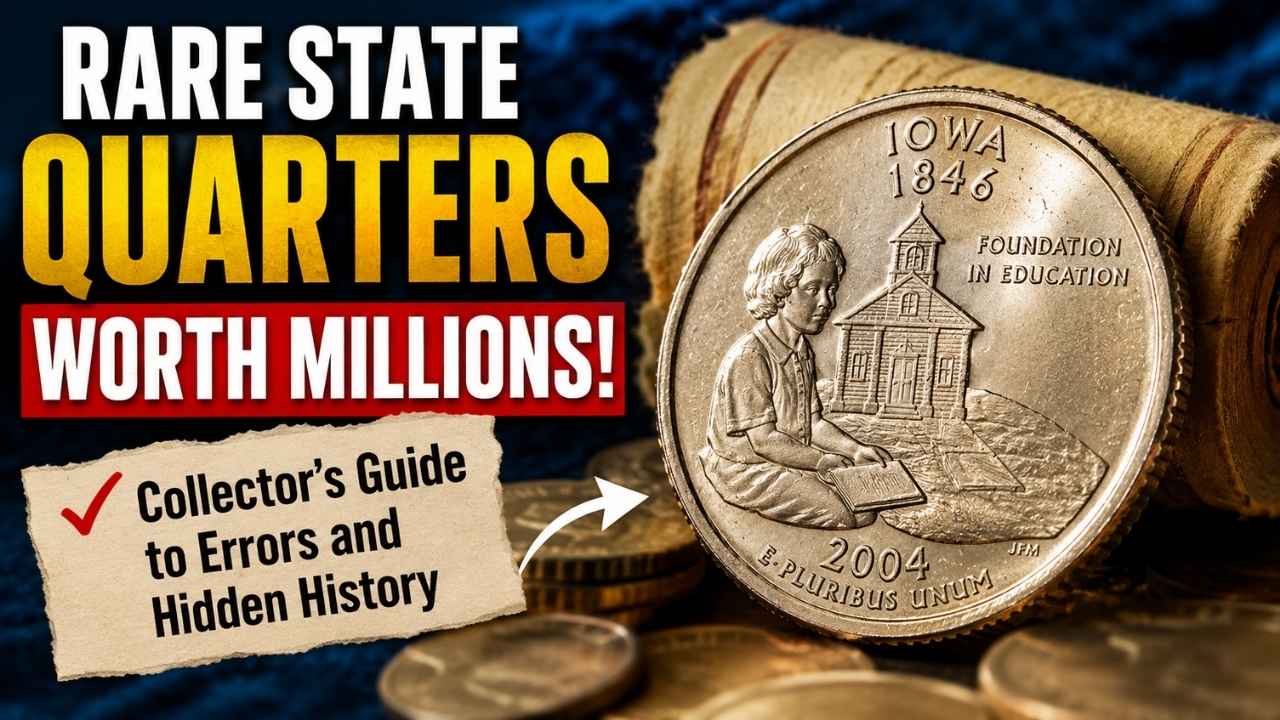
The State Quarters program remains one of the most successful coin collections ever released in the United States. Between 1999 and 2008, millions of Americans began checking their pocket change more carefully after hearing stories about rare state quarters selling for shocking prices. While most state quarters are worth only 25 cents, a few rare versions with minting errors, low production numbers, or unusual historical significance have become highly valuable among collectors.
Today, coin experts and collectors continue searching through jars, wallets, and old collections hoping to discover a hidden treasure. Some rare quarters have sold for thousands of dollars, while a few exceptional examples are believed to be worth much more because of their rarity and condition.
If you are interested in coin collecting or simply want to know whether your spare change could be valuable, this guide explains everything you need to know about rare state quarters, minting errors, hidden history, grading, and how to identify coins that could be worth serious money.
Why State Quarters Became So Popular
The 50 State Quarters Program was launched by the United States Mint in 1999. Each U.S. state received its own quarter design released in the order the states joined the Union. The program ended in 2008 after all 50 states had been honored.
The project became a nationwide phenomenon because each coin featured unique artwork representing state history, landmarks, culture, or famous symbols. Millions of Americans started collecting the coins as a hobby, and many children learned about U.S. geography and history through the series.
The official information about the State Quarters Program can still be found on United States Mint.
What Makes a State Quarter Valuable
Not every old quarter is valuable. A coin becomes valuable because of a combination of rarity, condition, demand, and minting mistakes.
Collectors usually pay high prices for:
H2 coins with mint errors
H2 low mintage coins
H2 quarters in near perfect condition
H2 proof coins accidentally released into circulation
H2 coins with historical significance
The condition of the coin is extremely important. A quarter that looks brand new can sell for far more than a damaged version of the same coin.
Professional grading companies also influence market value because certified coins are trusted by collectors and investors.
Rare State Quarters Collectors Search For
Several state quarters are especially famous among collectors because of rare minting mistakes and unusual production issues.
1999 Delaware Spitting Horse Quarter
The Delaware quarter was the first coin released in the State Quarters series. One famous error version shows a line extending from the horse’s mouth, making it appear as though the horse is spitting.
This happened because of a die crack during production. While many examples are only moderately valuable, high quality versions in excellent condition can attract strong collector interest.
Because it was the first state quarter ever released, demand for this coin remains very high.
2004 Wisconsin Extra Leaf Quarter
The Wisconsin state quarter is one of the most talked about error coins in modern U.S. coin history. Some quarters show an extra leaf on the corn stalk design.
Collectors discovered two different versions:
H2 Extra Leaf High

H2 Extra Leaf Low
These unusual errors are believed to have resulted from accidental die modifications during minting. Depending on condition, these quarters can sell for hundreds or even thousands of dollars.
Many collectors still search bank rolls hoping to find one in circulation.
2005 Minnesota Doubled Die Quarter
The Minnesota quarter became famous because of doubled tree images visible near the forest section of the design.
This doubling effect happened due to die production errors. Some examples display dramatic doubling that can easily be seen without advanced tools.
Rare versions with strong visible doubling are highly collectible and can command impressive prices at auction.
2000 South Carolina Off Center Error
Off center quarters are among the most visually striking mint errors. Some South Carolina quarters were struck incorrectly, causing part of the design to shift away from the center.
The more dramatic the error, the more valuable the coin becomes. Collectors especially love coins where the date remains visible despite the off center strike.
1999 Georgia Experimental Planchet Quarter
One of the rarest state quarter discoveries involved experimental metal planchets used during testing for future coin compositions.
A few Georgia quarters were mistakenly struck on these unusual planchets, creating a coin with different coloration and weight characteristics.
These rare mint mistakes are considered major discoveries in the coin collecting world and are extremely valuable when authenticated.
Hidden History Behind State Quarters
The State Quarters Program was more than just a coin series. It represented American identity, state pride, and historical storytelling.
Each design was carefully selected through state level discussions and public involvement. Governors submitted design concepts, and artists worked closely with the U.S. Mint to finalize each coin.
For example:
H2 New York featured the Statue of Liberty and state outline
H2 California honored naturalist John Muir and Yosemite Valley
H2 Texas displayed the famous Lone Star
H2 Alaska showcased a grizzly bear catching salmon
The quarters became miniature history lessons carried daily in people’s pockets.
How to Check If Your Quarter Is Valuable
Many people unknowingly own collectible quarters but fail to recognize important details. Here are the main things to examine.
Check the Mint Mark
Look near George Washington’s ponytail for a small letter.
H2 P means Philadelphia Mint
H2 D means Denver Mint
H2 S means San Francisco Mint
Some mint marks are rarer than others depending on yearly production totals.
Look for Errors
Use a magnifying glass or coin loupe to inspect the coin closely. Search for:
H2 doubled letters or images
H2 missing design details
H2 extra lines or shapes
H2 off center strikes
H2 unusual coloring
H2 cracks or die breaks
Even small differences can significantly increase value.
Preserve the Coin Properly
Never clean old coins because cleaning can damage surfaces and reduce value dramatically.
Store collectible coins in protective holders or albums away from moisture and direct sunlight.
Get Professional Grading
If you believe your quarter may be rare, professional grading can confirm authenticity and condition.
Certified coins usually attract higher prices because buyers trust professionally evaluated pieces.
Can State Quarters Really Be Worth Millions
Most state quarters are not worth millions, but a few exceptional modern coins have achieved astonishing values due to rarity and collector demand.
Perfect condition coins with unique mint errors can become extraordinarily valuable over time. Rare discoveries continue to surprise collectors because new errors are still being identified years after release.
The possibility of finding a valuable coin in circulation is exactly what keeps the hobby exciting.
Even if you never discover a million dollar quarter, collecting state quarters remains a fascinating way to explore American history while potentially building a valuable collection.
Tips for New Coin Collectors
If you want to begin collecting state quarters seriously, follow these simple tips:
H2 search through bank rolls regularly
H2 learn basic coin grading skills

H2 join online collector communities
H2 study known mint errors carefully
H2 store coins safely
H2 track market trends and auction prices
Patience and knowledge are often more important than luck in the coin collecting world.
Future Value of Rare State Quarters
Coin experts believe interest in rare state quarters may continue growing because the series introduced an entire generation to collecting.
As fewer high quality examples remain available, demand for rare error coins could increase further. Historical importance also adds long term appeal.
Collectors especially value coins connected to famous mint mistakes because they represent unique moments in U.S. minting history.
For many people, the excitement comes from the possibility that a simple quarter could turn into a valuable collectible years later.
FAQ
Are all state quarters valuable?
No. Most state quarters are only worth face value unless they contain rare errors, low mintage numbers, or exceptional condition.
Which state quarter is considered the rarest?
The 2004 Wisconsin Extra Leaf quarter and certain experimental planchet quarters are among the rarest and most desirable.
How can I tell if my quarter has an error?
Look for doubled images, missing details, unusual shapes, off center designs, or extra markings using magnification.
Should I clean rare coins?
No. Cleaning coins can damage surfaces and lower collector value significantly.
Where can I verify a rare quarter?
Professional grading services and experienced coin dealers can help authenticate valuable coins.
Can valuable quarters still be found in circulation?
Yes. Collectors occasionally discover rare state quarters in pocket change, bank rolls, and old coin jars.
Conclusion
Rare state quarters continue to capture attention because they combine history, mystery, and the thrill of discovery. While most quarters remain ordinary currency, a few rare examples with minting errors or historical significance have become highly sought after collectibles.
Whether you are an experienced collector or someone casually checking spare change, understanding the hidden details behind these coins can open the door to an exciting and potentially profitable hobby.
The next valuable quarter could already be sitting unnoticed in a drawer, wallet, or coin jar waiting to be discovered.