
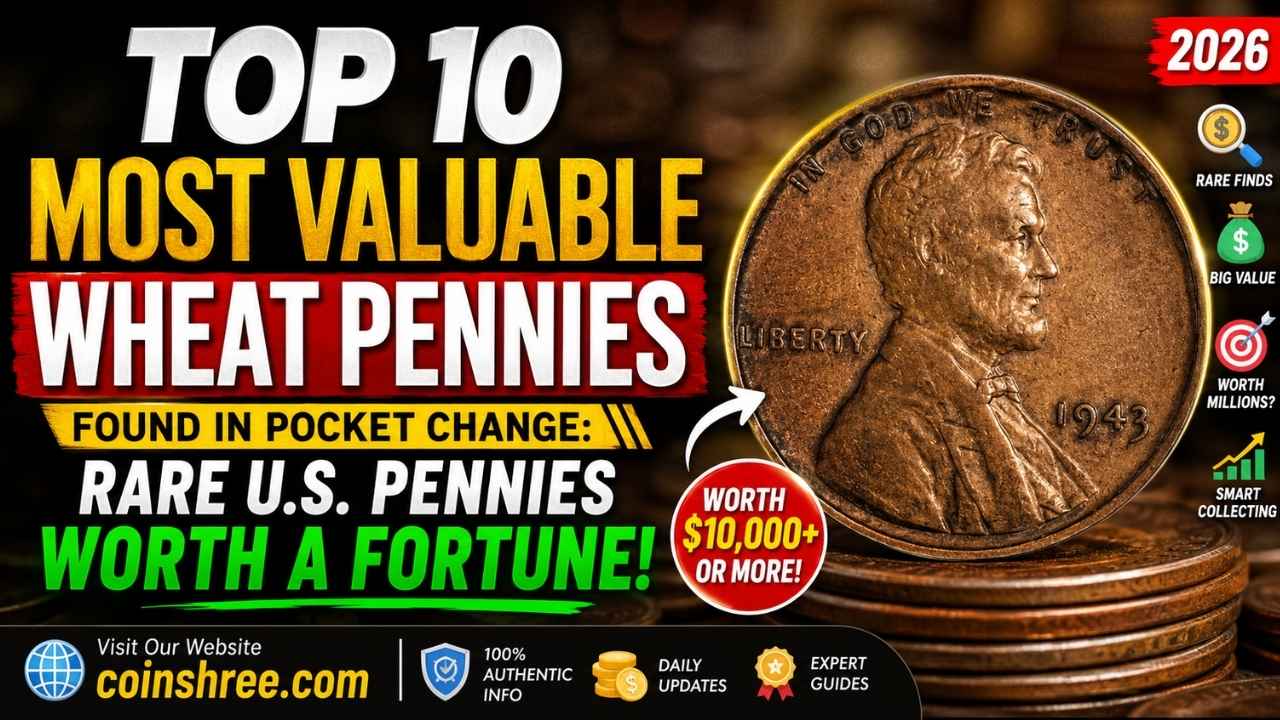
Wheat Pennies are among the most famous and widely collected coins in American history. Even though these small copper coins were once worth only one cent, certain rare Wheat Pennies are now valued at hundreds, thousands, or even millions of dollars. What makes them even more exciting is the fact that some valuable examples are still occasionally found in pocket change, old piggy banks, family collections, and coin jars.
First introduced in 1909, the Lincoln Wheat Penny features Abraham Lincoln on the front and two wheat stalks on the reverse side. The design remained in circulation until 1958, making it one of the longest running coin designs in United States history.
Collectors and treasure hunters continue searching for rare Wheat Pennies because a single coin can sometimes change someone’s financial future overnight. If you enjoy coin collecting or checking your spare change, these are the top 10 most valuable Wheat Pennies you should know about.
1909 S VDB Wheat Penny
The 1909 S VDB Wheat Penny is considered the king of Lincoln cents. This coin was produced during the first year of the Lincoln Penny series and features the initials “VDB” of designer Victor David Brenner on the reverse side.
Only a small number were minted at the San Francisco Mint before the initials were removed due to public criticism.
Because of its low mintage and historical significance, the 1909 S VDB Penny remains one of the most valuable and desired Wheat Pennies ever made. Even heavily worn examples can sell for thousands of dollars, while top condition specimens may reach six figure prices.
1914 D Wheat Penny
The 1914 D Wheat Penny from the Denver Mint is another legendary key date coin.
Many of these pennies circulated heavily during the early twentieth century, making well preserved examples extremely difficult to find today.
Collectors building complete Lincoln cent sets often pay huge premiums for genuine 1914 D coins. Counterfeits are common, so professional authentication is strongly recommended.
High grade versions regularly sell for tens of thousands of dollars at auctions.
1922 No D Wheat Penny
The 1922 No D Penny is one of the most famous error coins in United States numismatics.
During production at the Denver Mint, excessive die polishing caused the “D” mintmark to disappear on certain coins.
Because all 1922 pennies were supposed to carry a Denver mintmark, these missing mintmark coins became highly collectible.
Strong reverse details and clear surfaces can dramatically increase value.
1931 S Wheat Penny
The 1931 S Wheat Penny was produced during the Great Depression, resulting in a relatively low mintage.

Although many collectors saved examples early, finding coins in pristine condition remains challenging today.
This penny is considered an important semi key date in the Wheat Penny series and continues attracting strong collector demand.
1943 Copper Wheat Penny
The 1943 Copper Penny is one of the most famous and valuable coins in American history.
During World War II, the United States Mint switched from copper to zinc coated steel pennies to conserve copper for wartime needs. However, a small number of leftover copper planchets from 1942 were accidentally struck in 1943.
These rare copper pennies became legendary among collectors.
Authentic examples have sold for hundreds of thousands and even more than one million dollars depending on condition and mintmark.
1944 Steel Wheat Penny
After producing steel pennies in 1943, the Mint returned to copper coins in 1944. However, a few leftover steel blanks accidentally entered production.
The result was the extremely rare 1944 Steel Wheat Penny.
These coins are among the rarest Lincoln cent errors ever discovered. Because so few examples exist, values can easily reach tens or hundreds of thousands of dollars.
1955 Doubled Die Wheat Penny
The 1955 Doubled Die Penny is one of the most recognizable error coins ever made.
This coin displays dramatic doubling on the date and lettering on the front side. The doubling is so strong that it can often be seen without magnification.
Because of its popularity and visibility, collectors actively search for this famous error coin today.
Well preserved examples can command enormous premiums in the collectors market.
1943 D Bronze Wheat Penny
The 1943 D Bronze Penny is even rarer than many other famous Wheat Penny errors.
Only a tiny number are known to exist, making this coin one of the most valuable Lincoln cents ever produced.
One authenticated example sold for an extraordinary amount at auction, turning this small one cent coin into a legendary rarity.
1909 S Wheat Penny
The 1909 S Wheat Penny without the VDB initials is also highly collectible.
Although less rare than the VDB version, its low mintage and first year status make it an important coin for collectors.
Many examples show heavy wear because they circulated extensively during the early 1900s.
1911 S Wheat Penny
The 1911 S Wheat Penny is another scarce early issue from the San Francisco Mint.
Finding coins with sharp details and minimal wear is difficult because many examples entered circulation immediately after production.
Collectors continue paying strong prices for attractive high grade specimens.
How to Identify Valuable Wheat Pennies
Checking Wheat Pennies carefully can help you identify potentially valuable coins. Here are some important features collectors watch for:
Rare dates and mintmarks
Doubled lettering or numbers
Missing mintmarks
Unusual metal composition
Coins with strong original detail
High grade uncirculated condition
Using magnification and proper lighting can help reveal important differences.

Why Wheat Pennies Remain So Popular
Wheat Pennies remain one of the most loved coin series in the United States because they combine history, affordability, and treasure hunting excitement.
Many collectors started their hobby by searching through penny jars for old Wheat Pennies. The possibility of discovering a coin worth thousands or even millions keeps interest alive today.
Social media and online auction platforms have also increased awareness of rare coin values, bringing new collectors into the hobby every year.
Tips Before Selling Rare Pennies
If you believe you have discovered a valuable Wheat Penny, avoid cleaning it under any circumstances.
Cleaning can scratch the surface and lower collector value significantly.
Store coins in protective holders and consider professional grading for rare dates or unusual errors. Authentication from trusted grading companies can help maximize resale value and buyer confidence.
Official Coin Information Source
For official United States coin history and mint information, visit
U.S. Mint Official Website
FAQ
What is the rarest Wheat Penny?
The 1943 Copper Wheat Penny is considered one of the rarest and most valuable Wheat Pennies ever discovered.
Are Wheat Pennies still found in circulation?
Yes. Although uncommon, Wheat Pennies are still occasionally found in pocket change, coin rolls, and old collections.
How can I tell if my 1943 penny is valuable?
Most 1943 pennies are steel. If your coin appears copper colored and does not stick to a magnet, it may be valuable and should be professionally authenticated.
Why is the 1955 Doubled Die Penny famous?
The coin features dramatic doubling on the front lettering and date, making it one of the most recognizable error coins in American history.
Should I clean old Wheat Pennies?
No. Cleaning coins can reduce their value significantly because collectors prefer original surfaces.
Final Thoughts
Rare Wheat Pennies continue fascinating collectors because ordinary looking coins can sometimes be worth life changing amounts of money. From the legendary 1909 S VDB Penny to the famous 1943 Copper cent, these small coins represent some of the most exciting treasures in American numismatics.
Checking your spare change and old penny jars carefully could uncover a hidden fortune sitting unnoticed for years. For coin collectors and treasure hunters alike, Wheat Pennies remain one of the most rewarding discoveries in the hobby.