
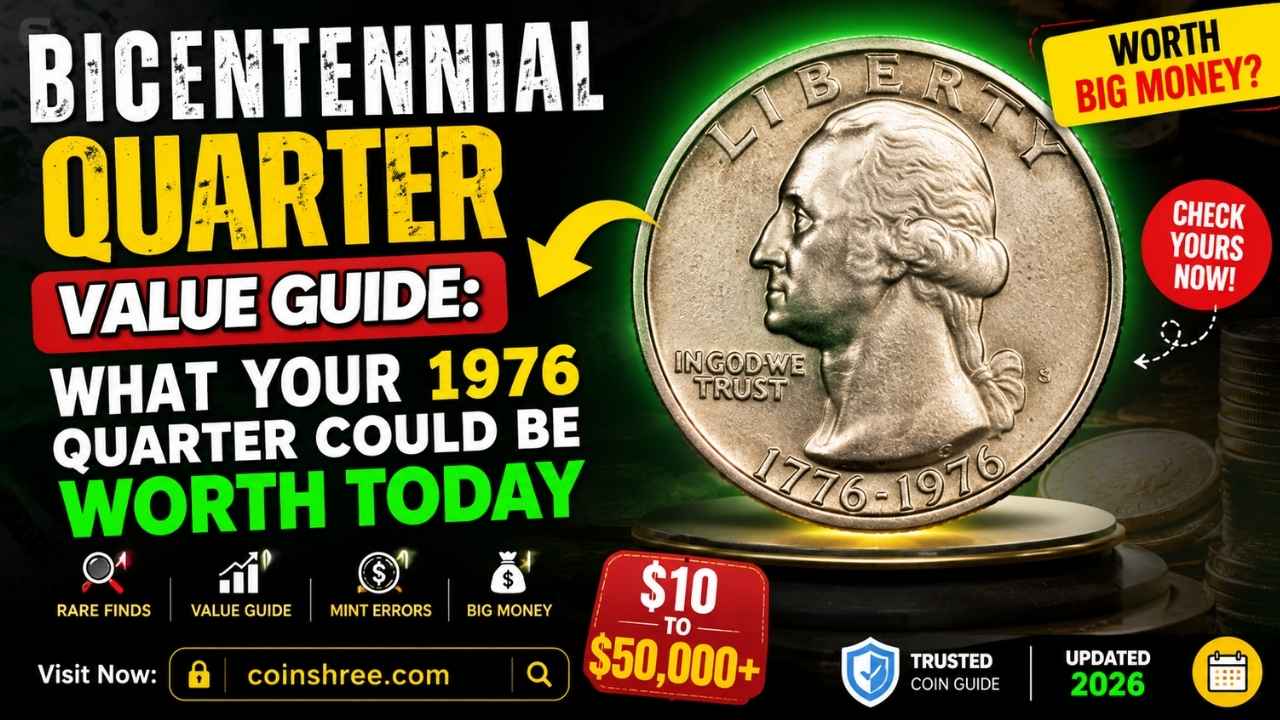
The 1976 Bicentennial Quarter is one of the most recognizable coins in American history. Even decades after its release, millions of people still search through old piggy banks, coin jars, and family collections hoping to find a rare version worth serious money. While most Bicentennial Quarters are only worth face value, a few special varieties and high grade examples can sell for hundreds or even thousands of dollars.
Collectors continue to show strong interest in these coins because of their unique design, historical importance, and the possibility of discovering a hidden treasure in everyday change. If you own a 1976 quarter, this complete value guide will help you understand what makes certain coins valuable and how to identify the rarest versions.
Why the 1976 Bicentennial Quarter Was Created
The Bicentennial Quarter was released to celebrate the 200th anniversary of American independence. Instead of the traditional eagle design on the reverse side, the coin featured a Colonial drummer along with a victory torch surrounded by thirteen stars. The front still displayed George Washington, but the date was changed to “1776 to 1976” to honor the bicentennial celebration.
These quarters were minted in huge numbers during 1975 and 1976. Interestingly, no quarters dated 1975 were produced because the U.S. Mint switched entirely to the dual dated Bicentennial design during that period.
The coin quickly became popular with the public, and many Americans saved them as keepsakes. Today, that nostalgic appeal continues to drive collector demand.
How to Identify a Bicentennial Quarter
Every Bicentennial Quarter carries the dual date “1776 to 1976” on the obverse side. The reverse side features the famous drummer boy design created by Jack L. Ahr.
You can also identify the mint location by checking the small mint mark near Washington’s ponytail:
• No mint mark means Philadelphia Mint
• D means Denver Mint
• S means San Francisco Mint
San Francisco coins are especially important because many were struck as proof or silver collector editions.
Are Bicentennial Quarters Rare?
Most Bicentennial Quarters are extremely common because over 1.6 billion were produced across all mints. In circulated condition, the majority are worth only 25 cents to a few dollars.
However, rarity depends on several factors including:
• Mint errors
• Silver composition
• Proof quality
• High mint state grades
• Unique die varieties
Coins with these characteristics can become highly valuable in the collector market.
Bicentennial Quarter Values by Type
Understanding the different versions is the key to estimating your coin’s value.
Standard Circulated Quarters
Most circulated Philadelphia and Denver Bicentennial Quarters are worth between 25 cents and $2. These are commonly found in pocket change and old coin jars.

If the coin shows heavy wear, scratches, or fading, its value usually stays close to face value.
Uncirculated Bicentennial Quarters
Uncirculated coins that still retain their original shine can be worth $5 to $20 depending on condition.
Professional coin grading companies use a scale from MS60 to MS70. Coins graded MS67 or higher often command premium prices because very few survive in perfect condition.
Silver Bicentennial Quarters
The San Francisco Mint produced special 40% silver Bicentennial Quarters for collectors. These were not intended for general circulation.
Silver versions are usually worth $8 to $25 depending on silver prices and overall condition. Proof silver examples in pristine condition can sell for much more.
Proof Bicentennial Quarters
Proof coins feature mirror like surfaces and extra sharp details. These collector pieces were struck specifically for coin sets.
Standard proof quarters often sell for $5 to $15, while deep cameo examples with perfect grades may reach $100 or more.
Rare Bicentennial Quarter Errors That Can Be Valuable
Coin errors are one of the biggest reasons certain Bicentennial Quarters become extremely valuable. Collectors actively search for unusual minting mistakes because they are much rarer than standard coins.
Some valuable errors include:
Double Die Errors
These coins show visible doubling in the lettering or design elements. Strong doubling can dramatically increase value.
Off Center Strikes
An off center strike occurs when the coin design is not properly aligned during minting. Depending on severity, these quarters can sell for $50 to several hundred dollars.
Clipped Planchets
A clipped planchet error leaves part of the coin missing because the metal blank was improperly cut. These unusual shapes are highly collectible.
Wrong Planchet Errors
Some Bicentennial Quarters were accidentally struck on incorrect metal blanks intended for other coins. These rare mistakes can be worth thousands of dollars.
The Most Valuable Bicentennial Quarters Ever Sold
While most examples are common, a few exceptional coins have achieved remarkable auction prices.
A high grade 1976 S Silver Bicentennial Quarter graded MS69 sold for several thousand dollars due to its near perfect condition.
Rare mint error examples have also crossed the five figure mark when authenticated by major grading companies.
These sales prove that condition and rarity matter far more than age alone.
How to Tell If Your Bicentennial Quarter Is Silver
Many people wonder whether their quarter contains silver. The easiest way to check is by looking at the coin’s edge.
Standard copper nickel quarters display a visible copper stripe along the edge. Silver Bicentennial Quarters have a solid silver colored edge with no copper band.
You can also weigh the coin:
• Standard quarter weighs about 5.67 grams
• Silver quarter weighs about 5.75 grams
If you believe you have a silver version, consider having it authenticated by a professional grading service.
What Makes a Bicentennial Quarter Valuable
Several factors influence the value of these coins today.
Condition
Coins with minimal wear are always more desirable. Sharp details, strong luster, and clean surfaces increase value significantly.
Rarity
Low population coins or unusual mint errors attract serious collectors willing to pay premium prices.
Demand
The Bicentennial series remains popular because of its historical significance and patriotic design.
Professional Grading
Certified coins graded by trusted services often sell for much higher prices because buyers trust the authenticity and condition assessment.
Should You Clean a Bicentennial Quarter?
Never clean old coins if you think they may have collector value. Cleaning can permanently damage the surface and reduce the coin’s worth dramatically.
Even gentle polishing may leave tiny scratches visible under magnification. Serious collectors prefer coins with original untouched surfaces.
If your quarter appears valuable, store it safely in a protective holder instead of attempting to improve its appearance.

Where to Sell a Valuable Bicentennial Quarter
If you discover a potentially valuable coin, there are several selling options available.
• Coin dealers
• Coin shows
• Online auction platforms
• Professional auction houses
• Collector communities
Before selling, compare multiple offers and consider professional grading for high value pieces.
Are Bicentennial Quarters Still Found in Circulation?
Yes, many Bicentennial Quarters still appear in everyday circulation. Because billions were minted, they remain surprisingly common in pocket change.
Coin roll hunters frequently search bank rolls hoping to find silver examples, mint errors, or high grade coins overlooked by others.
Although finding an extremely valuable example is rare, it still happens often enough to keep collectors excited.
FAQ
How much is a 1976 Bicentennial Quarter worth today?
Most are worth between 25 cents and $2. Rare silver versions, proof coins, and mint errors can be worth hundreds or even thousands of dollars.
How do I know if my Bicentennial Quarter is rare?
Check for silver composition, mint errors, proof finish, or exceptionally high condition. Professional grading can help confirm rarity.
Are all 1976 quarters silver?
No. Most are copper nickel clad coins. Only specific San Francisco collector editions contain 40% silver.
Can a Bicentennial Quarter really be worth thousands?
Yes. Rare mint errors and near perfect high grade examples have sold for impressive prices at auction.
Should I keep my Bicentennial Quarters?
If the coins are in excellent condition or show unusual features, they may be worth keeping for future collector demand.
Final Thoughts
The 1976 Bicentennial Quarter remains one of America’s most beloved collectible coins. While most examples are common, certain rare varieties continue to surprise collectors with impressive market values. Silver editions, mint errors, and pristine high grade coins are especially sought after today.
If you own a Bicentennial Quarter, take a closer look before spending it. A simple coin sitting unnoticed in a drawer could potentially be worth far more than 25 cents.
Official U.S. Mint information:
United States Mint