
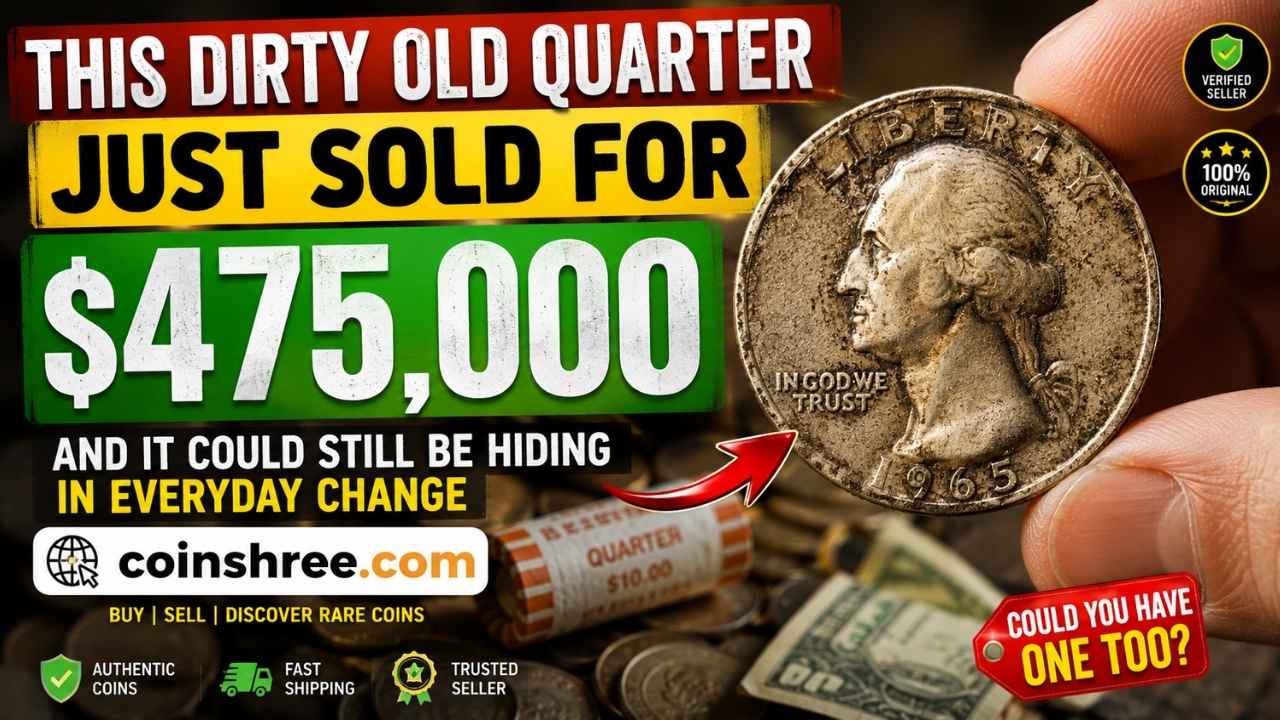
Most people never think twice before tossing a quarter into a jar, vending machine, or cup holder. But one old and worn looking quarter recently shocked collectors after selling for an incredible $475,000 at a rare coin auction. What makes this story even more exciting is the fact that similar coins could still be circulating quietly in everyday pocket change across the United States.
Coin experts say rare error coins and limited production quarters often go unnoticed for years because they look ordinary to the average person. In many cases, valuable coins are spent accidentally, mixed into cash registers, or forgotten inside old drawers and piggy banks. That is exactly why collectors are now encouraging people to check their loose change carefully.
This quarter may appear dirty and old on the surface, but its unique minting mistake and historical rarity turned it into one of the most talked about coins in recent months.
Why This Quarter Became So Valuable
The quarter that sold for $475,000 was not made from gold or silver. Its value came from a rare minting error combined with its extremely limited availability. According to coin specialists, only a handful of similar examples are known to exist.
Rare coins become valuable for several reasons:
- Low production numbers
- Minting mistakes
- Historical significance
- High collector demand
- Excellent preservation condition
In this case, the coin reportedly featured a rare striking error that occurred during the manufacturing process at the mint. These types of mistakes are difficult to replicate, making them highly desirable among collectors.
Some rare quarters contain double die errors, off center strikes, missing mint marks, or unusual metal compositions. Even a tiny design variation can increase a coin’s value dramatically.
The Growing Popularity of Rare Coin Collecting
Coin collecting has exploded in popularity over the last few years. Social media videos, online auctions, and viral news stories have encouraged millions of people to start checking old coins stored at home.
Collectors are especially interested in quarters because they remain one of the most commonly circulated coins in America. Unlike ancient rare coins locked away in museums, valuable quarters can still appear in everyday transactions.
Experts believe many people unknowingly spend collectible coins because they do not recognize the signs of rarity. A scratched or dirty appearance does not always reduce value. In fact, some highly valuable coins look heavily used after decades in circulation.
The possibility of finding a life changing coin in ordinary pocket change is exactly what keeps collectors searching every day.
Rare Quarters That Could Be Worth Big Money
Several quarters have become legendary among collectors because of their rarity and high auction prices. Some examples include:
1969 D quarters with striking errors
1970 S proof quarters with design variations
1976 Bicentennial quarters with rare mint mistakes
1983 Washington quarters in exceptional condition
1999 state quarters featuring production errors

Certain quarters have sold for thousands while others crossed the six figure mark depending on rarity and collector demand.
Even modern quarters can become valuable if they contain unusual minting defects. That is why experts recommend checking both old and newer coins carefully.
How to Check If Your Quarter Is Valuable
You do not need professional equipment to begin searching for rare coins. A simple magnifying glass and good lighting can help identify important details.
Here are a few things to look for:
Mint marks
Check small letters near George Washington’s portrait. Rare mint locations can increase value.
Double lettering
If letters or numbers appear duplicated, the coin may contain a double die error.
Off center designs
Coins with misaligned images can be extremely collectible.
Unusual coloring
Some quarters were accidentally struck on the wrong metal planchet.
Missing details
Weak or missing design elements may signal minting issues.
Collectors also recommend comparing coins with verified examples listed by trusted coin grading organizations.
Why Dirty Coins Should Never Be Ignored
Many people assume valuable coins must look shiny and brand new. That is not always true. Some of the most expensive coins ever sold were discovered in poor condition.
Cleaning old coins is also considered a major mistake by collectors because harsh cleaning can damage the surface and lower the value significantly.
A naturally aged appearance is often preferred because it preserves authenticity. If you believe you found a rare quarter, experts recommend storing it safely without polishing or scrubbing it.
Even a dirty quarter sitting inside an old coin jar could potentially be worth thousands of dollars.
Could Rare Coins Still Be in Circulation
Yes, experts believe many collectible coins remain in circulation today. Every year, valuable coins are accidentally spent by people unaware of their worth.
Some rare quarters enter circulation through estate sales, inherited collections, old cash boxes, and forgotten coin jars. Banks also unknowingly distribute collectible coins mixed with standard currency.
Because millions of quarters change hands daily, the chances of discovering a hidden treasure are still real.
That possibility continues to attract new collectors and casual treasure hunters across the country.
What Experts Say About Coin Values
Professional coin appraisers explain that rarity alone does not guarantee a massive payout. Market demand plays a major role in determining final auction prices.
Coins connected to historical events or unusual mint errors often generate intense bidding competition among collectors.
Condition is another major factor. Coins graded by professional organizations usually command higher prices because authenticity and quality are verified.
Still, even moderately worn quarters with rare features can carry impressive value.
Where to Verify Rare Coins
If you believe you discovered a valuable quarter, it is best to consult a certified coin dealer or professional grading service. Experts can determine authenticity, rarity, and estimated market value.
You can also learn more about coin history and minting directly from the official United States Mint website:
United States Mint Official Website
Avoid selling potentially valuable coins immediately without proper evaluation. Some people unknowingly accept a few dollars for coins later worth thousands.

Why Stories Like This Go Viral
The idea that a simple quarter could be worth nearly half a million dollars captures public attention instantly. Unlike lottery tickets or risky investments, coin collecting feels accessible to everyone.
Almost anyone can participate simply by checking spare change already sitting at home.
That excitement fuels viral headlines and growing interest in treasure hunting through everyday currency. For many people, the search itself becomes fun even if they never discover a jackpot coin.
And occasionally, someone really does uncover a hidden fortune in their pocket.
Final Thoughts
The dirty old quarter that sold for $475,000 proves that extraordinary value can hide in ordinary places. Rare minting mistakes, historical significance, and collector demand continue to turn everyday coins into major auction headlines.
Whether you are a serious collector or simply curious about the coins in your wallet, now may be the perfect time to start paying closer attention to your change.
That old quarter sitting unnoticed in a drawer could be far more valuable than anyone realizes.
FAQ
What type of quarter sold for $475,000?
The coin was reportedly a rare error quarter with unique minting characteristics that made it extremely collectible.
Can valuable quarters still be found in circulation?
Yes. Experts believe rare and collectible quarters are still occasionally discovered in everyday pocket change.
Should I clean an old coin before selling it?
No. Cleaning can damage the coin and reduce its value significantly.
How can I identify a rare quarter?
Look for minting errors, unusual markings, doubled text, off center designs, or rare mint years.
Where can I verify my coin’s value?
You can consult certified coin dealers, professional grading services, or visit the official United States Mint website for educational resources.