
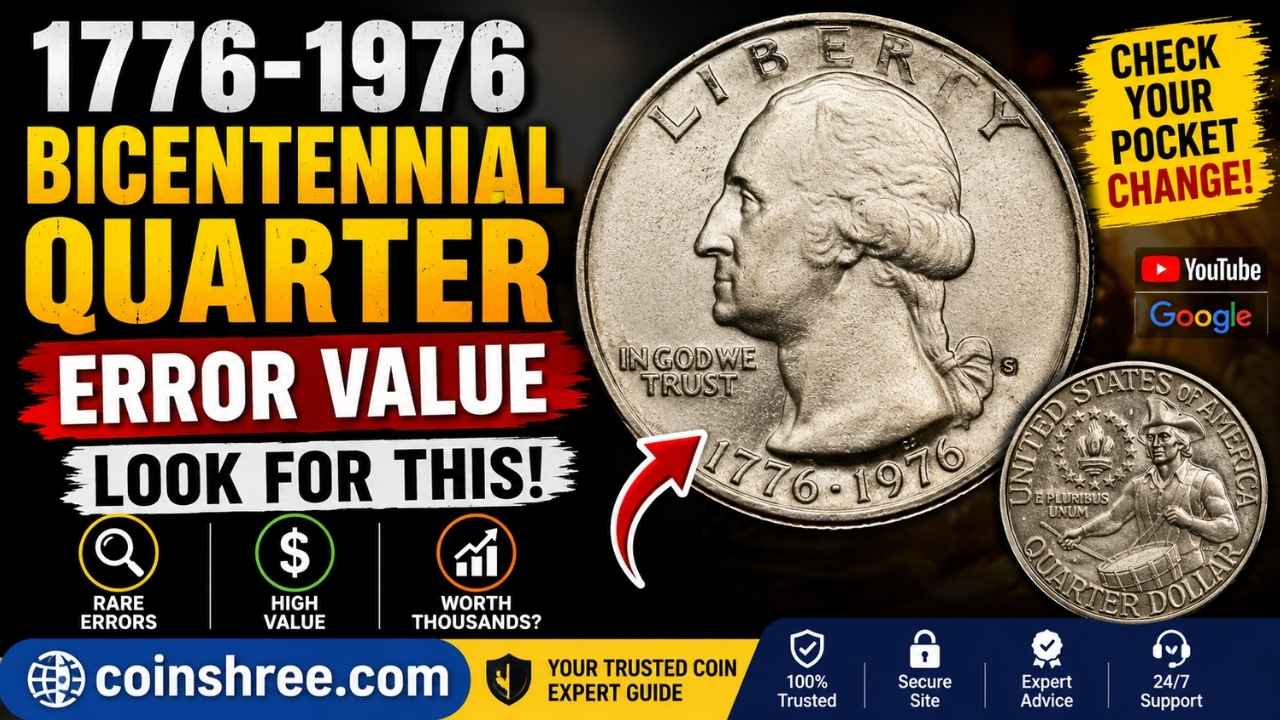
The 1776 to 1976 Bicentennial Quarter is one of the most collected coins in American history. Released to celebrate 200 years of American independence, this special quarter carries a unique dual date and a patriotic reverse design. While millions were produced, certain rare error versions of this coin can be worth far more than face value. Some collectors have paid hundreds and even thousands of dollars for the right specimen.
If you have a Bicentennial Quarter in your pocket, coin jar, or inherited collection, this guide will help you understand what to look for, how to identify valuable errors, and what your coin could potentially be worth.
History of the Bicentennial Quarter
In 1975 and 1976, the United States Mint produced special commemorative coins to honor the 200th anniversary of the Declaration of Independence. Instead of the traditional eagle design on the reverse, the Bicentennial Quarter features a Colonial drummer with a torch surrounded by thirteen stars. The obverse still shows George Washington, but the date reads 1776 to 1976.
These quarters were minted in Philadelphia, Denver, and San Francisco. The San Francisco Mint also produced special silver clad proof versions for collectors.
Because of the high production numbers, most Bicentennial Quarters are common. However, error coins and high grade specimens are a completely different story.
Why Some Bicentennial Quarters Are Valuable
Most circulated Bicentennial Quarters are worth 25 cents. However, certain factors can dramatically increase their value:
Minting errors
Silver composition
Proof versions
High grade condition
Rare varieties
Collectors are always searching for unusual or rare minting mistakes. When a coin leaves the mint with an error, it becomes unique, and uniqueness drives value.
Most Valuable Bicentennial Quarter Errors
Here are the key errors that can significantly increase the value of your coin.
Double Die Errors
A double die error occurs when the design is accidentally struck twice at slightly different angles. This results in visible doubling in the lettering or date.
On Bicentennial Quarters, look closely at:
The words Liberty
In God We Trust
The dual date 1776 to 1976

Clear doubling can increase a coin’s value to several hundred dollars depending on condition.
Off Center Strikes
An off center strike happens when the coin blank is not properly aligned during minting. Part of the design may be missing, and the coin may look uneven.
The more dramatic the misalignment while still showing the full date, the more valuable it can be. Some off center Bicentennial Quarters have sold for 100 to 500 dollars or more.
Clipped Planchet Errors
A clipped planchet error occurs when part of the metal blank is missing before striking. The result is a quarter with a curved or straight missing section.
These errors are easily visible and are popular among collectors. Values can range from 50 dollars to several hundred dollars.
Wrong Planchet Errors
One of the rarest and most valuable errors is when a Bicentennial Quarter is struck on the wrong metal planchet. For example, being struck on a nickel or foreign coin blank.
These error coins are extremely rare and can sell for thousands of dollars at auction.
Silver Composition Versions
The San Francisco Mint produced 40 percent silver Bicentennial Quarters for collectors. These are different from the regular copper nickel clad coins.
If you have a silver version in uncirculated or proof condition, it may be worth 5 to 20 dollars or more depending on grade. High grade silver proof errors can reach much higher values.
How to Identify a Valuable Bicentennial Quarter
Start by checking the mint mark. Look below Washington’s ponytail on the obverse side.
No mint mark means Philadelphia
D means Denver
S means San Francisco
Next, examine the coin carefully under bright light or magnification. Look for:
Doubling in letters or numbers
Unusual thickness or weight
Missing details
Off center design
Odd color or metal
Weighing the coin can also help. A standard clad quarter weighs about 5.67 grams. A silver version weighs about 5.75 grams. Significant variation could indicate an error.
Condition is equally important. Coins with little to no wear are far more valuable than heavily circulated ones.
Record Sales and Auction Highlights
While most Bicentennial Quarters are common, rare error examples have made headlines in the coin collecting community.
High grade double die errors have sold for over 1000 dollars. Wrong planchet strikes have brought several thousand dollars at major auctions. Even minor errors in mint state condition can command impressive premiums.
The key factor is authentication. Serious collectors rely on professional grading services to verify authenticity and condition.
Are Bicentennial Quarters Still in Circulation
Yes, many Bicentennial Quarters are still in circulation today. Because they were produced in large numbers, you can still find them in pocket change. However, finding an error coin in circulation is rare but not impossible.
Searching through bank rolls or inherited collections increases your chances of discovering a valuable piece.
Should You Get Your Coin Graded
If you believe you have a significant error or an uncirculated high grade coin, professional grading may be worth considering. Grading services authenticate the coin, assign a condition grade, and encapsulate it for protection.
Authentication increases buyer confidence and can significantly raise resale value.
Before sending a coin for grading, compare it with verified examples and consult official resources.
Tips for Storing Bicentennial Quarters
Proper storage preserves value. Follow these tips:

Avoid touching the surface with bare hands
Store in coin holders or capsules
Keep away from humidity
Do not clean the coin
Cleaning can drastically reduce collector value. Even if a coin appears dirty, leave it untouched.
Frequently Asked Questions
How much is a 1776 to 1976 Bicentennial Quarter worth today
Most circulated coins are worth face value. Silver versions may be worth 5 to 20 dollars. Error coins can range from 50 dollars to several thousand dollars depending on rarity and condition.
How do I know if my Bicentennial Quarter is silver
Check for an S mint mark and examine the coin’s edge. Silver coins do not show the copper colored stripe seen on clad coins. You can also weigh the coin for confirmation.
Are all 1776 to 1976 quarters rare
No. Millions were produced. Only specific error varieties or high grade specimens are considered rare.
What is the most valuable Bicentennial Quarter error
Wrong planchet errors and dramatic double die strikes are among the most valuable, especially in uncirculated condition.
Where can I verify my coin
You can review official mint specifications and historical information directly from the United States Mint.
Official Source and Reference
For official coin specifications and historical background, visit:
Final Thoughts
The 1776 to 1976 Bicentennial Quarter remains one of America’s most iconic modern coins. While most examples are common, rare error varieties can hold surprising value. Careful inspection, proper identification, and professional authentication are the keys to unlocking a coin’s true worth.
If you have one sitting in a drawer, now is the perfect time to take a closer look. You might just discover that your ordinary looking quarter is an extraordinary treasure.