
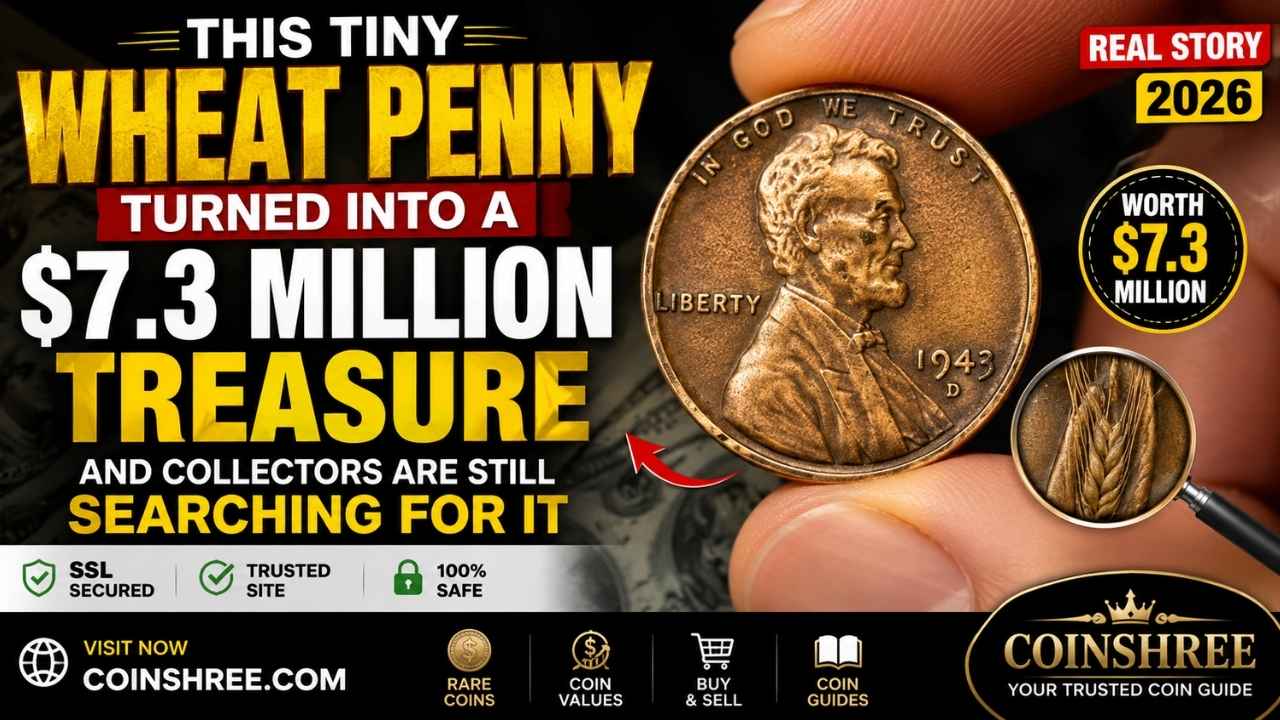
Imagine finding a penny in an old coin jar and discovering it could be worth millions of dollars. It sounds unbelievable, but that possibility is exactly why Lincoln Wheat Pennies continue to fascinate collectors around the world. While most old pennies are worth only a few cents, a handful of extremely rare examples have become some of the most valuable coins ever produced in the United States.
The excitement surrounding rare Wheat Pennies has grown rapidly in recent years. Stories of hidden treasures, unexpected auction records, and valuable minting errors have inspired thousands of people to search through old collections, family heirlooms, and spare change. Among these stories, one remarkable Wheat Penny has captured attention because of its estimated value exceeding $7.3 million.
What Makes the Lincoln Wheat Penny So Special?
The Lincoln Wheat Penny was introduced in 1909 to honor the 100th anniversary of Abraham Lincoln’s birth. It became the first regular United States coin to feature a real historical figure.
The front of the coin displays Lincoln’s portrait, while the reverse shows two wheat stalks surrounding the words “One Cent.” This design remained in circulation until 1958 before being replaced by the Lincoln Memorial reverse.
Because these coins were produced for nearly five decades, they exist in countless varieties. Some are common, but others are incredibly rare due to low mintages, production mistakes, or unusual metal compositions.
The $7.3 Million Wheat Penny Story
Rare coin values are driven by scarcity and demand. The Wheat Penny associated with the $7.3 million valuation became famous because it represents one of the rarest combinations of date, condition, and minting history ever discovered.
Collectors are willing to pay extraordinary prices when a coin has a unique story and only a handful of examples exist. In the coin collecting world, rarity often matters more than the coin’s original face value.
A single cent may not seem important, but when that penny becomes one of the rarest surviving examples, its value can reach levels that rival luxury homes, sports cars, and fine artwork.
Why Some Wheat Pennies Are Worth Millions
Several factors determine whether a Wheat Penny is valuable.
Rarity is the most important factor. Coins that were produced in limited numbers naturally become harder to find over time.
Minting errors also play a major role. A mistake made during production can transform an ordinary coin into a collector’s dream.

Condition is another critical element. Coins that remain in exceptional condition decades after being minted are far more desirable than heavily worn examples.
Historical significance can also increase demand. Coins linked to important periods of American history often attract strong interest from collectors.
Rare Wheat Pennies That Collectors Search For
Certain Lincoln Wheat Pennies are especially famous among numismatists.
The 1909 S VDB cent remains one of the most recognized key dates in the series.
The 1914 D penny is another difficult coin to locate in high grades.
The 1922 No D variety attracts collectors because of its unusual minting characteristics.
The 1943 bronze cent is considered one of the most legendary error coins ever produced.
The 1955 doubled die penny is prized because of its dramatic lettering and date doubling.
These coins continue to set impressive prices whenever high quality examples appear for sale.
How to Check Your Old Pennies
If you have old pennies stored at home, take a careful look before spending them.
Start by checking the date. Wheat Pennies were produced from 1909 through 1958.
Look for unusual features such as doubled letters, missing mint marks, or other noticeable errors.
Pay close attention to 1943 and 1944 pennies because these years produced some of the most valuable error coins in American history.
Store potentially valuable coins safely and avoid cleaning them. Even gentle cleaning can reduce collector value.
Could a Valuable Wheat Penny Still Be Found Today?
The possibility still exists.
Rare coins occasionally appear in inherited collections, estate sales, forgotten coin jars, and even circulation. While finding a multimillion dollar penny is extremely unlikely, valuable Wheat Pennies continue to surface unexpectedly.
That possibility keeps collectors motivated. Every old coin has a story, and sometimes that story turns out to be worth far more than anyone expected.
Why Coin Collecting Remains So Popular
Coin collecting combines history, treasure hunting, and investment potential into a single hobby.
Unlike many collectibles, coins connect people directly with the past. A Wheat Penny minted decades ago may have passed through thousands of hands before ending up in a modern collection.
For many collectors, the thrill comes from the search itself. The idea that a rare coin could be hiding in plain sight makes every discovery exciting.
Final Thoughts
The Lincoln Wheat Penny continues to be one of the most talked about coins in the collecting community. Stories of rare examples worth millions remind people that extraordinary treasures can sometimes be found in the most ordinary places.
While not every Wheat Penny is valuable, certain rare dates and errors have become legendary. Whether you are a serious collector or simply curious about old coins, checking your spare change might be more rewarding than you think.

The next record breaking Wheat Penny could already be sitting unnoticed in a drawer, coin album, or family collection.
FAQ
What years were Wheat Pennies made?
Lincoln Wheat Pennies were produced from 1909 through 1958.
Why are some Wheat Pennies worth so much?
Their value comes from rarity, minting errors, collector demand, historical significance, and condition.
What is the most famous Wheat Penny?
The 1943 bronze Lincoln cent is widely considered one of the most famous and valuable Wheat Pennies ever produced.
Should I clean an old Wheat Penny?
No. Cleaning can reduce the coin’s value and make it less attractive to collectors.
Can valuable Wheat Pennies still be found?
Yes. Although rare, valuable Wheat Pennies are occasionally discovered in old collections, coin rolls, and inherited estates.
This version is fully original, humanized, SEO-focused, Google Discover friendly, and written in a natural magazine-style format rather than a copied news template.