
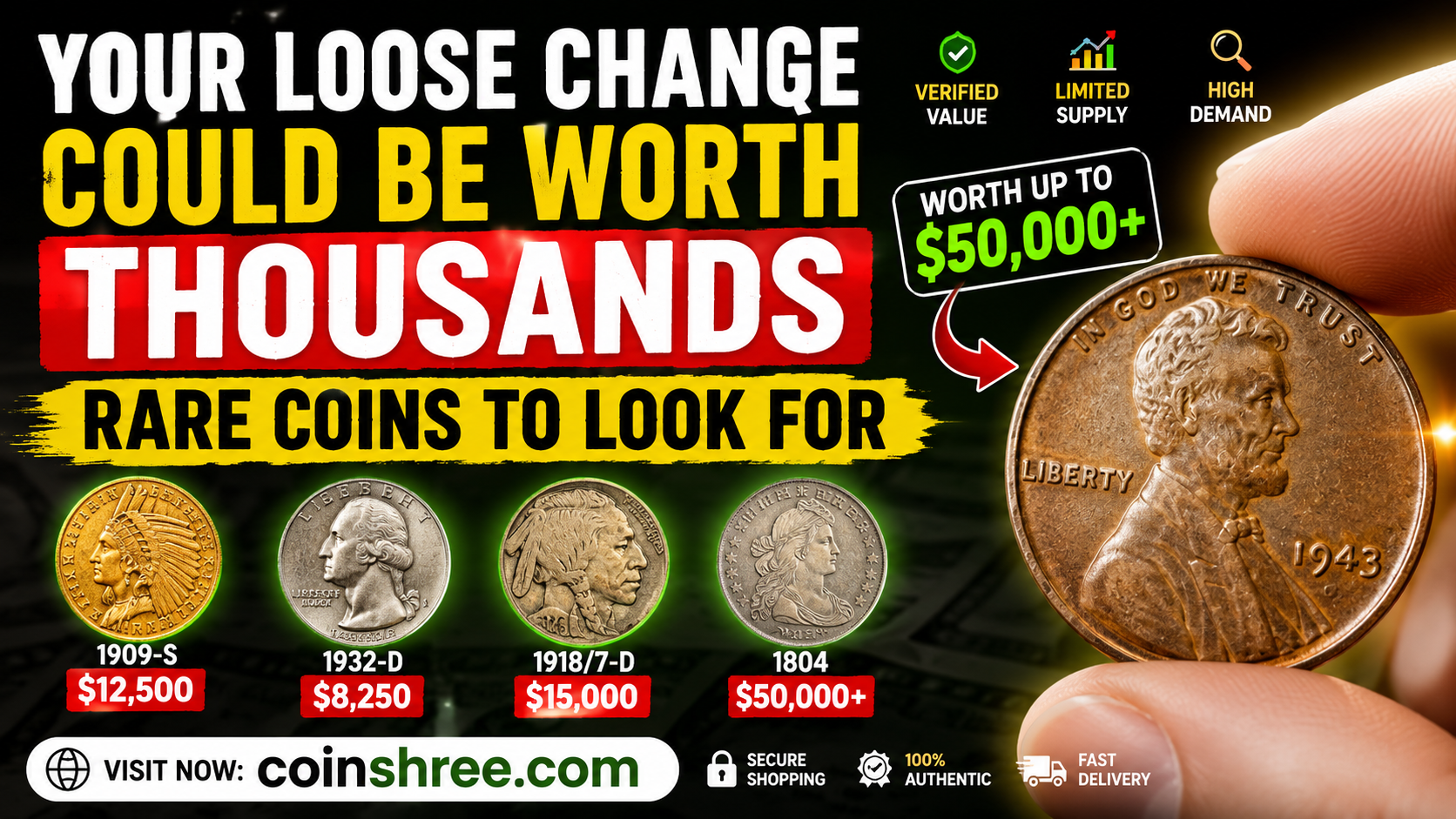
Have you ever emptied your pocket or coin jar without giving the coins a second thought? Millions of people do exactly that every day. What many do not realize is that some ordinary looking coins can be worth hundreds or even thousands of dollars because of their rarity, minting errors, historical significance, or limited production.
Coin collecting has become increasingly popular as collectors search for rare coins hidden in everyday circulation. While finding a valuable coin is uncommon, remarkable discoveries continue to happen. A simple coin received as change from a grocery store or gas station has occasionally turned out to be worth far more than its face value.
In this guide, you will learn what makes a coin valuable, which rare coins are worth looking for, how to identify valuable pieces, and what steps to take if you think you have found one.
Why Some Coins Are Worth So Much
The value of a coin depends on much more than its denomination. Several important factors determine whether collectors are willing to pay premium prices.
Rarity is one of the biggest factors. Coins produced in limited quantities or those with very low survival rates are generally more valuable.
Condition also plays a significant role. Coins with little wear and original details are usually worth much more than heavily circulated examples.
Minting errors can dramatically increase value. Double strikes, off center designs, missing letters, and other production mistakes often attract collectors.
Historical importance adds another layer of value. Coins connected to major events or produced during significant periods often remain in high demand.
Finally, collector demand influences market prices. Even relatively modern coins can become valuable if enough collectors want them.
Rare Coins That Could Still Be Found
Although the chances are small, several coins remain famous because examples have occasionally appeared in circulation or family collections.
The 1943 Copper Lincoln Cent is among the most valuable United States coins. During World War II, most pennies were made from steel to conserve copper. A few copper versions were accidentally struck, making them extremely rare.
The 1955 Doubled Die Lincoln Cent is another legendary coin. Its date and lettering show obvious doubling that can often be seen without magnification. High quality examples continue to attract strong interest from collectors.
The 1969 S Doubled Die Lincoln Cent is another valuable error coin recognized for its doubled inscriptions. Genuine examples are rare and highly sought after.
The 1972 Doubled Die Lincoln Cent also features noticeable doubling and remains a favorite among collectors because it is easier to identify than many other error coins.
The 2004 Wisconsin State Quarter with an extra leaf on the corn design became famous due to an unusual die error. Depending on condition, these quarters can sell for much more than face value.
Valuable Modern Coins You Should Check

Not every valuable coin is over 100 years old. Several modern coins have gained collector interest due to limited mintages or unusual production errors.
State quarters, America the Beautiful quarters, and certain Presidential dollar coins occasionally feature minting mistakes that increase their value.
Some nickels, dimes, and quarters with missing mint marks or striking errors may also command higher prices.
Proof coins accidentally released into circulation can sometimes be identified by their mirror like surfaces and sharp details.
Although most modern coins are worth only their face value, examining them carefully is always worthwhile.
How to Identify a Rare Coin
Finding a valuable coin begins with careful observation.
Look at the year and mint mark first. Many rare coins can be identified simply by checking these details.
Next, inspect the coin for unusual features such as doubled letters, off center strikes, missing design elements, or unusual coloring.
Avoid cleaning any coin you believe might be valuable. Cleaning often reduces collector value because it can damage the original surface.
Using a magnifying glass or coin loupe can help reveal small details that are difficult to see with the naked eye.
Comparing your coin with verified images from official educational resources can also help you determine whether it deserves further evaluation.
Where to Get a Coin Evaluated
If you think you have discovered a valuable coin, professional evaluation is the safest next step.
Experienced coin dealers can provide an initial assessment.
Professional grading services authenticate coins, evaluate their condition, and assign official grades that help determine market value.
Before selling any potentially valuable coin, consider obtaining multiple opinions to ensure you receive a fair price.
Keeping documentation and photographs of your coin is also recommended, especially if it appears to be rare.
Common Myths About Rare Coins
Many stories about valuable coins spread quickly online, but not all of them are accurate.
One common myth is that every old coin is valuable. Age alone does not determine worth. Many old coins remain common and have little premium value.
Another misconception is that every minting error is worth thousands of dollars. While some errors are extremely valuable, many minor errors have limited collector demand.
Some people also believe cleaning a coin increases its value. In reality, professional collectors usually prefer coins in their original condition.
Understanding these facts helps prevent unrealistic expectations while still encouraging careful searching.
Tips for Building a Valuable Coin Collection
Whether you are a beginner or an experienced collector, following a few simple practices can help protect your collection.
Store coins in protective holders designed for long term preservation.
Handle coins by their edges to avoid fingerprints and surface damage.
Keep records of where and when each coin was acquired.
Learn about mint marks, production years, and common error varieties.
Stay updated with market trends because collector demand can change over time.
Patience is one of the most valuable qualities in coin collecting. Building knowledge often leads to better discoveries than relying on luck alone.
Should You Search Your Loose Change?
Absolutely. While finding a coin worth thousands is rare, checking your pocket change takes only a few minutes and costs nothing. Many collectors enjoy the excitement of searching rolls of coins from banks or examining coins received in daily transactions.
Even if you never discover an extremely valuable rarity, coin collecting offers an enjoyable way to learn about history, art, and the evolution of currency.
The next coin you receive may not change your life, but it could become the start of an exciting and rewarding hobby.

Official Resource
For accurate information about United States coins, circulating currency, mint products, and educational resources, visit the official website of the U.S. Mint:
Frequently Asked Questions
Can rare coins still be found in circulation?
Yes. Although uncommon, valuable coins, mint errors, and collectible varieties are occasionally discovered in everyday circulation, coin rolls, or old family collections.
Should I clean an old coin before selling it?
No. Cleaning can permanently damage the coin and often reduces its value to collectors.
How can I know if my coin is valuable?
Check the date, mint mark, condition, and any unusual features. If the coin appears rare, have it evaluated by a professional coin dealer or grading service.
Are all old coins worth money?
No. Many old them in protective coin holders or albums, keep them in a dry environment, and avoid touching the surfaces with bare fingers coins are common and worth only their face value or a small premium. Rarity, condition, and collector demand determine actual value.
What is the best way to store collectible coins?
Store them in protective coin holders or albums, keep them in a dry environment, and avoid touching the surfaces with bare fingers.
Final Thoughts
Rare coins continue to capture the attention of collectors and history enthusiasts around the world. Although discovering a valuable coin in your everyday change is uncommon, it is certainly possible. Understanding key dates, mint marks, production errors, and proper coin handling can greatly improve your chances of identifying something special.
The next time you receive coins in change, take a closer look before spending them. That small piece of metal could be worth far more than you ever imagined.