
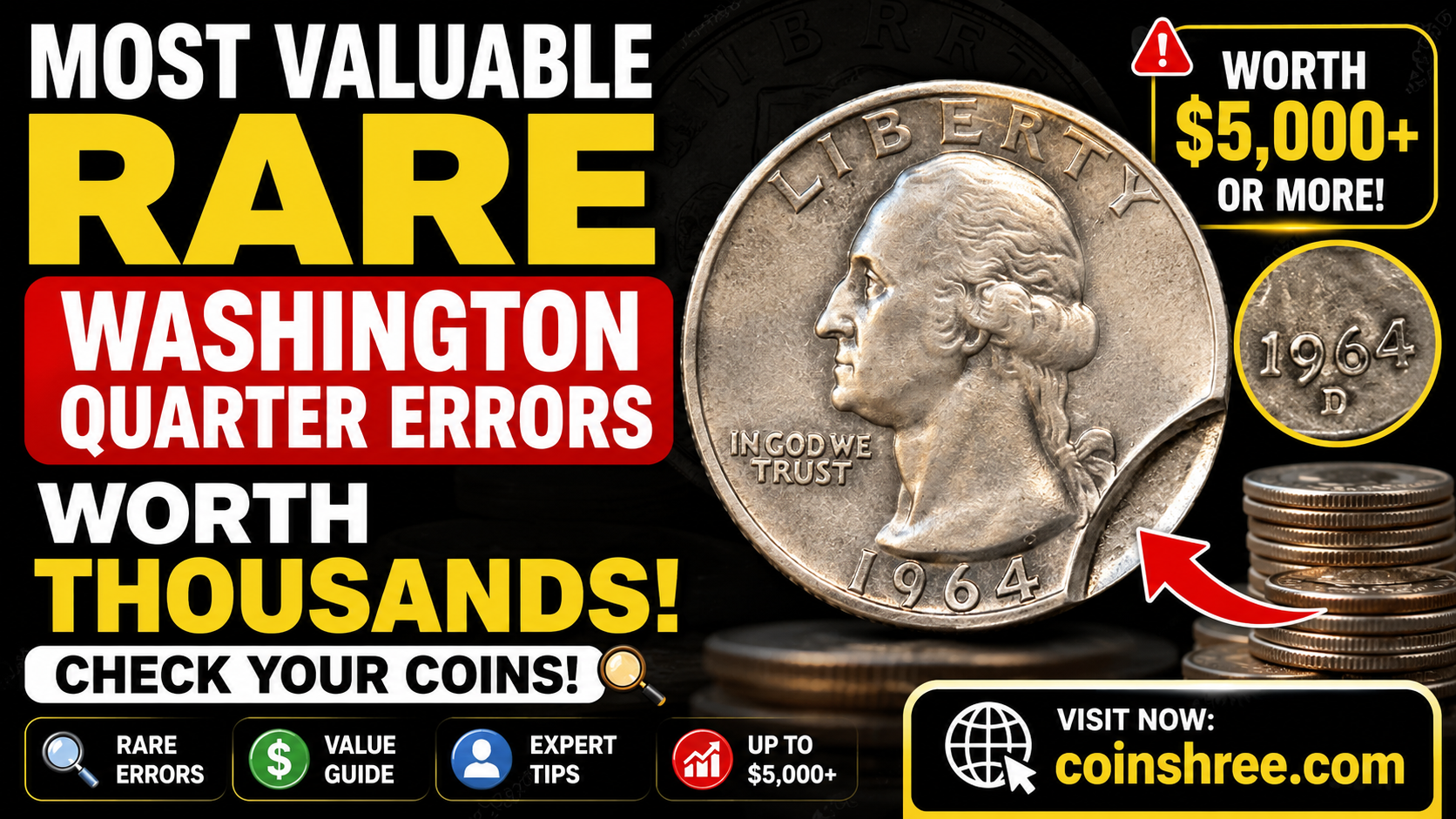
If you have a jar of old quarters sitting at home, now is the perfect time to take a closer look. Some rare Washington quarter error coins have sold for hundreds, thousands, and in exceptional cases even tens of thousands of dollars. While most quarters are worth only their face value, a small number contain minting mistakes or rare varieties interest from collectors around the world. While most quarters in circulation are worth only their face value, genuine mint errors and key date coins can sometimes be worth your quarter is an ordinary coin or a hidden collectible. If you have older Washington quarters stored away, it may be worth taking a few minutes to inspect them carefully. You never know when a small minting mistake could turn an that make them highly desirable among collectors.
Coin collecting has become increasingly popular because of stories about everyday people discovering valuable coins in pocket change, inherited collections, or forgotten coin jars. Although these finds are uncommon, knowing what to look for can help you identify a potentially valuable Washington quarter.
In this guide, you’ll learn about the most valuable Washington quarter errors, how to identify them, what affects their value, and where to verify your coin.
Why Washington Quarter Error Coins Are Valuable
Washington quarters have been minted since 1932 to honor the first President of the United States, George Washington. Over the decades, billions of these coins have entered circulation.
During the minting process, however, mistakes occasionally occur. These production errors are usually caught before the coins leave the mint, but a small number escape into circulation. Because these coins are both rare and unique, collectors are often willing to pay significant premiums for them.
The value of an error coin depends on several important factors including rarity, condition, demand, historical significance, and certification by a professional grading service.
Most Valuable Washington Quarter Errors
Several Washington quarter errors have become legendary in the coin collecting community.
1932 D Washington Quarter
Although not technically a mint error, the 1932 D Washington Quarter is one of the rarest regular circulation issues in the entire series. With a relatively low mintage, high grade examples regularly sell for thousands of dollars.
1932 S Washington Quarter
Similar to the Denver issue, the San Francisco version is another key date that collectors actively seek. Well preserved coins command strong prices in today’s market.
Double Die Errors
Double die errors occur when the coin design is impressed more than once during the die creation process. These coins may show noticeable doubling on letters, numbers, or Washington’s portrait.
The stronger the doubling, the greater the collector demand.
Off Center Strike Errors
An off center strike happens when the blank coin is not properly aligned during striking.

Depending on how far off center the strike is while still showing the date, these quarters can be worth anywhere from several hundred dollars to several thousand dollars.
Broadstrike Errors
Broadstrike quarters are produced without the retaining collar that normally shapes the coin. The result is a coin with a larger diameter and unusual appearance.
Collectors appreciate these dramatic mint errors because they are easy to recognize.
Clipped Planchet Errors
A clipped planchet error occurs when a coin blank is improperly cut from the metal sheet before striking.
These coins have a distinctive missing section along the edge, making them one of the easiest mint errors to identify.
Wrong Planchet Errors
Occasionally a Washington quarter is struck on a planchet intended for another denomination.
These unusual mistakes are extremely rare and can sell for several thousand dollars depending on the type of planchet and overall condition.
Bicentennial Washington Quarter Errors
The 1976 Bicentennial Quarter is among the most searched U.S. coins online. While most examples remain worth only 25 cents, certain error versions have attracted significant collector interest.
Some valuable Bicentennial Quarter errors include:
Double die varieties
Off center strikes
Filled die errors
Clipped planchets
Wrong planchet strikes
Collectors should remember that ordinary Bicentennial quarters are extremely common. Only genuine error coins or exceptionally preserved examples typically command premium prices.
How to Check if Your Quarter Is Valuable
Before assuming your quarter is worth thousands, carefully inspect it using proper lighting and a magnifying glass.
Look for the following features:
Unusual doubling on letters or numbers.
Missing design elements.
Off center designs.
Irregular coin shape.
Incorrect metal color or weight.
Rare mint marks such as D or S on older issues.
Exceptional uncirculated condition.
Avoid cleaning the coin because cleaning can significantly reduce its collector value.
What Determines the Value of an Error Quarter
Not every mint error has the same value.
Professional collectors consider several factors before determining a coin’s market price.
These include:
Rarity of the error.
Visibility of the mistake.
Overall condition.
Historical demand.
Professional grading and authentication.
Recent auction sales.
A certified error coin generally attracts more buyers than an uncertified example.
Where to Verify Your Coin
If you believe you’ve discovered a rare Washington quarter, professional authentication is highly recommended.
Trusted organizations can confirm whether the coin is genuine, identify the specific error, and assign a professional grade that helps establish its market value.
You can also compare your coin with official mint information to better understand its design specifications and production history.
Official U.S. Mint website:
United States Mint
Tips Before Selling a Rare Quarter
Many people unknowingly sell valuable coins for far less than their actual worth.
Before selling:
Do not clean or polish the coin.
Store it in a protective holder.
Obtain a professional opinion.
Compare recent auction results.
Sell through reputable coin dealers or major auction platforms if the coin proves valuable.

Taking these simple steps can make a significant difference in the final selling price.
Final Thoughts
Rare Washington quarter errors continue to attract strong interest from collectors around the world. While most quarters in circulation are worth only their face value, genuine mint errors and key date coins can sometimes be worth hundreds or even thousands of dollars.
Learning how to identify error coins, understanding what influences their value, and seeking professional authentication are the best ways to determine whether your quarter is an ordinary coin or a hidden collectible. If you have older Washington quarters stored away, it may be worth taking a few minutes to inspect them carefully. You never know when a small minting mistake could turn an ordinary coin into an extraordinary find.
Frequently Asked Questions (FAQ)
Can a Washington quarter really be worth thousands of dollars?
Yes. Certain rare mint errors, wrong planchet strikes, major off center errors, and key date Washington quarters have sold for thousands of dollars at auctions.
Is every 1976 Bicentennial Quarter valuable?
No. Most Bicentennial quarters are common and worth only face value. Only verified error coins or exceptionally high grade examples typically have significant collector value.
Should I clean an old quarter before getting it appraised?
No. Cleaning a coin can damage its surface and reduce its value. Collectors generally prefer coins in their original condition.
How can I tell if my quarter has a mint error?
Use a magnifying glass to inspect the coin for doubling, off center strikes, clipped edges, unusual metal appearance, or other production abnormalities. If you suspect an error, seek professional authentication.
Where can I verify information about U.S. coins?
The best official source is the United States Mint website, which provides accurate information about U.S. coin designs, specifications, and mint history.