
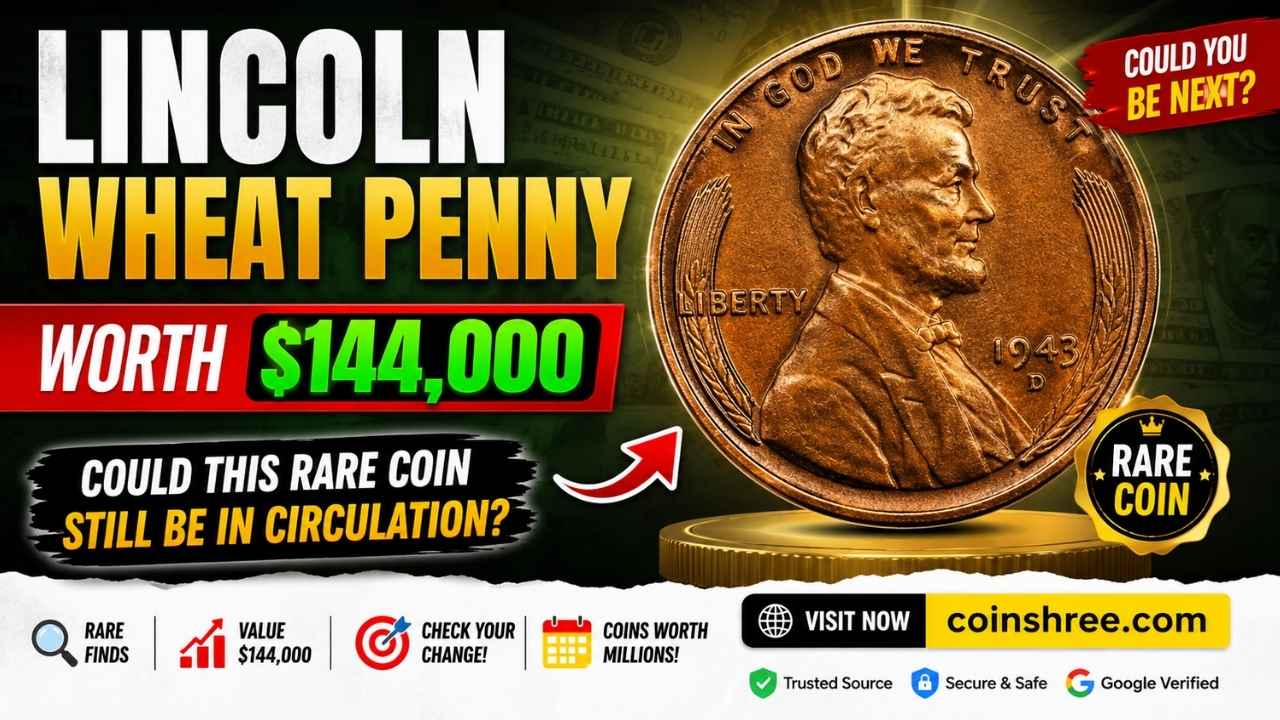
The idea of finding a coin worth thousands of dollars in everyday pocket change sounds unbelievable. Yet collectors across the United States continue searching for one legendary coin that has captured national attention: the Lincoln Wheat Penny. Some rare versions of this historic penny have sold for as much as $144,000 at auctions, making it one of the most talked about coins among collectors and treasure hunters alike.
What makes this story even more exciting is the possibility that a valuable Lincoln Wheat Penny could still be hiding in circulation. Many people unknowingly spend rare coins every year because they do not realize their true value. A simple penny sitting inside an old jar, piggy bank, or wallet could potentially be worth a fortune.
In this article, you will learn everything about the Lincoln Wheat Penny, why certain versions are so valuable, how to identify one, and whether you might still find one in circulation today.
What Is the Lincoln Wheat Penny?
The Lincoln Wheat Penny was first introduced in 1909 to honor the 100th birthday of President Abraham Lincoln. It became the first regular U.S. coin to feature a real historical figure instead of symbolic imagery.
The front side of the coin displays Abraham Lincoln’s portrait, while the reverse side features two wheat stalks surrounding the words “One Cent.” Because of this design, collectors commonly call it the Wheat Penny.
The coin remained in production until 1958 before being replaced by the Lincoln Memorial design in 1959.
Although millions of Wheat Pennies were produced, only a few rare versions are considered highly valuable today.
Why Is One Lincoln Wheat Penny Worth $144,000?
Not every Wheat Penny is valuable. Most are worth only a few cents to a few dollars depending on condition. However, certain rare minting errors and limited production coins have become extremely desirable among collectors.
One of the most famous examples is the 1943 bronze Lincoln Wheat Penny.
During World War II, the United States Mint switched from copper to steel pennies to conserve copper for wartime manufacturing. As a result, most 1943 pennies were made from zinc coated steel.
However, a few bronze planchets from 1942 accidentally remained in the minting machines and were struck with the 1943 date. These rare bronze pennies became one of the biggest minting mistakes in American coin history.
Because only a tiny number are known to exist, collectors are willing to pay enormous amounts for authentic examples. Some have sold for over $100,000, while top quality specimens have reportedly reached values around $144,000.

How to Identify a Rare 1943 Bronze Wheat Penny
If you want to check whether you own a valuable Lincoln Wheat Penny, here are the key details to examine carefully:
- Check the Date
Look for a penny dated 1943. - Test the Color
Most 1943 pennies are silver gray because they were made from steel. Rare bronze versions appear brown or copper colored. - Use a Magnet
Steel pennies stick to magnets. Bronze pennies do not. If your 1943 penny does not stick to a magnet, it may deserve further inspection. - Look for Mint Marks
Check below the date for mint marks such as D for Denver or S for San Francisco. Rare combinations can increase value significantly. - Verify Weight
A genuine bronze penny weighs approximately 3.11 grams, while steel versions weigh around 2.7 grams. - Get Professional Authentication
Counterfeit coins exist, so professional grading and authentication are essential before assuming your coin is valuable.
Can Rare Wheat Pennies Still Be Found in Circulation?
Yes, although the chances are extremely small.
Rare coins continue appearing in circulation because many people inherit old collections or unknowingly spend collectible coins. Coin roll hunters frequently search through bank rolls hoping to discover hidden treasures.
Over the years, several valuable Wheat Pennies have reportedly been found in unexpected places such as:
- Old piggy banks
- Estate collections
- Garage sales
- Antique stores
- Coin jars
- Bank coin rolls
Since pennies remain one of the most widely circulated coins in America, there is always a possibility that a rare example could still surface.
That possibility keeps collectors excited and continuously searching.
Other Valuable Lincoln Wheat Pennies
While the 1943 bronze penny gets most of the attention, several other Lincoln Wheat Pennies are also worth significant money.
1909 S VDB Penny
This was among the first Wheat Pennies ever produced and includes the initials of designer Victor David Brenner. Low mintage makes it highly collectible.
1914 D Penny
This Denver minted penny is another key rarity valued by collectors.
1922 No D Penny
Some 1922 pennies were struck without the Denver mint mark due to die issues, making them extremely valuable.
1955 Doubled Die Penny
This famous error coin shows noticeable doubling in the lettering and date.
Depending on condition, these coins can sell for hundreds or even thousands of dollars.
Why Coin Collecting Is Growing Rapidly
Coin collecting has become increasingly popular in recent years because it combines history, treasure hunting, and investment potential.
Many collectors enjoy the thrill of discovering hidden rarities in ordinary change. Social media and online marketplaces have also increased public awareness about valuable coins.
The Lincoln Wheat Penny especially attracts attention because it is affordable for beginners while still offering the excitement of potentially life changing discoveries.
Unlike many hobbies, coin collecting also preserves pieces of national history. Each coin tells a story about the era in which it was produced.
Tips for Beginners Interested in Wheat Pennies
If you are new to coin collecting, these tips can help you start wisely:
Learn Coin Basics
Study mint marks, coin grades, and common errors.
Handle Coins Carefully
Always hold coins by the edges to avoid damage.
Use Proper Storage
Store valuable coins in protective holders to preserve condition.
Avoid Cleaning Coins
Cleaning can reduce a coin’s value dramatically.
Research Before Selling
Always compare market prices and seek expert opinions.
Join Collector Communities
Coin forums and local clubs can provide valuable knowledge and support.
Could Your Penny Be Worth a Fortune?
Most people ignore pennies because they seem insignificant. However, history has proven that certain rare coins can become incredibly valuable over time.

The Lincoln Wheat Penny valued at $144,000 serves as a reminder that hidden treasures can still exist in everyday life. Whether inside a forgotten drawer or mixed with loose change, rare coins continue appearing when least expected.
Although finding one is rare, checking your pennies costs almost nothing and could potentially lead to an extraordinary discovery.
That possibility alone keeps millions of collectors searching every single day.
FAQ
What makes the 1943 Lincoln Wheat Penny rare?
The rare 1943 version was mistakenly made using bronze instead of steel during World War II. Only a small number were produced accidentally.
How can I tell if my 1943 penny is valuable?
Check if it is copper colored and does not stick to a magnet. Genuine bronze versions may be highly valuable.
Are all Wheat Pennies valuable?
No. Most Wheat Pennies are common, but certain dates, mint marks, and error coins can be worth large amounts.
Where can I sell a rare penny?
Rare coins can be sold through coin dealers, auction houses, and certified online marketplaces after professional authentication.
Is it possible to still find valuable pennies in circulation?
Yes. While uncommon, rare Wheat Pennies occasionally appear in pocket change, old collections, and bank coin rolls.
Official Source for U.S. Coin Information
For official information about U.S. coins and coin history, visit the U.S. Mint website: