
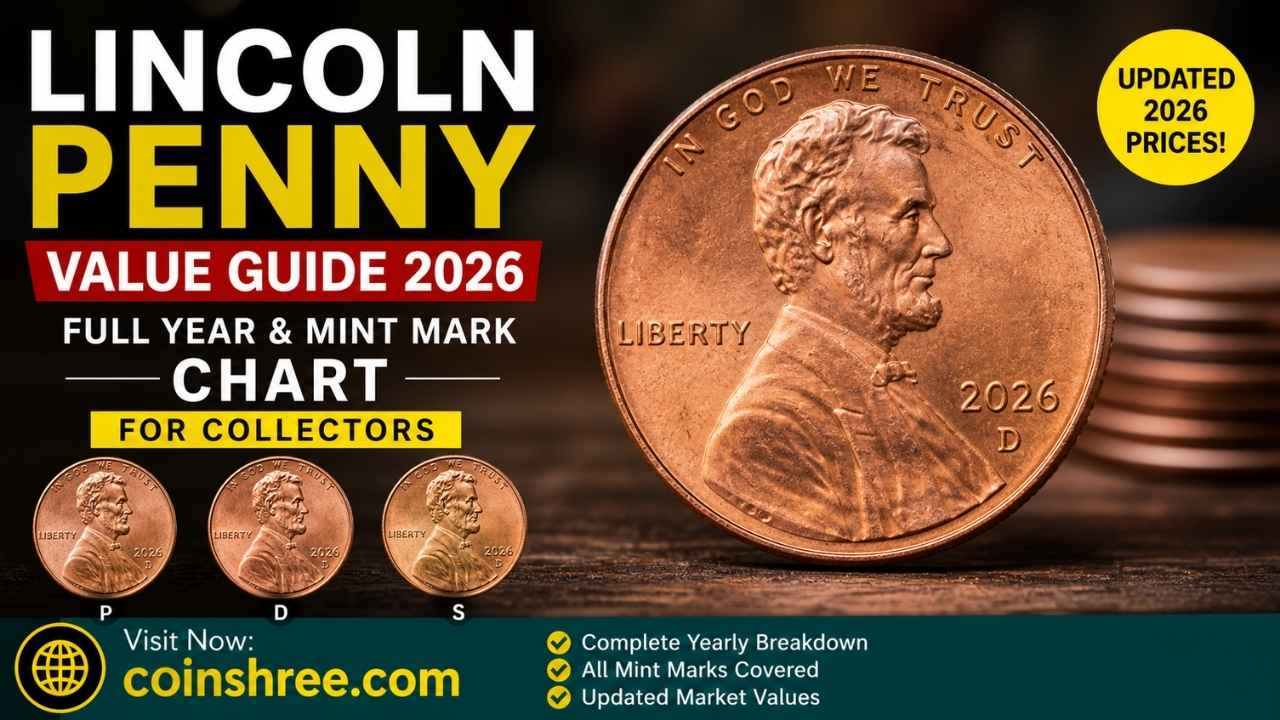
Collecting Lincoln pennies is one of the most popular and beginner-friendly hobbies in the world of coin collecting. In 2026, these small copper coins continue to attract attention not only for their historical value but also for the possibility of finding rare and valuable pieces in everyday circulation. Understanding how year, mint mark, and condition affect a penny’s value is essential for any collector who wants to build a meaningful collection.
What Determines Lincoln Penny Value
The value of a Lincoln penny depends on several important factors. The first is rarity. Coins that were produced in smaller quantities or have fewer surviving examples tend to be more valuable. The second factor is condition. A well-preserved coin with minimal wear can be worth significantly more than a heavily circulated one.
Another key factor is demand. Some coins are more popular among collectors due to their history or unique features. In addition, minting errors such as doubled designs or off-center strikes can greatly increase a coin’s value, sometimes making it worth hundreds or even thousands of dollars.
Understanding Mint Marks
Mint marks play a major role in identifying where a Lincoln penny was produced. You can usually find the mint mark just below the date on the front side of the coin.
Philadelphia coins typically have no mint mark on older issues
Denver coins are marked with a D
San Francisco coins carry an S
Coins from San Francisco are often more valuable, especially older ones or proof coins. These were usually made in smaller numbers and often have a sharper, more detailed appearance.
Lincoln Penny Design Eras
Lincoln pennies have gone through several design changes over the years. Each era has its own value range and collector interest.

Wheat Pennies (1909–1958)
These are among the most collected Lincoln pennies. The reverse side features two wheat stalks, giving them their name. Early coins from this era, especially from the 1909 to 1915 period, can be quite valuable. Key dates and low-mintage coins are highly sought after.
Memorial Pennies (1959–2008)
The wheat design was replaced by the Lincoln Memorial. While most of these coins are common, certain years and error coins still hold value. Collectors often look for high-grade examples or unusual mint errors.
Shield Pennies (2010–Present)
Modern Lincoln pennies feature a shield on the reverse side. These coins are generally worth face value, but uncirculated coins or special mint issues may carry a small premium.
Full Year and Mint Mark Value Chart Overview
Here is a simplified breakdown of Lincoln penny values based on year ranges and mint marks in 2026. Actual prices may vary depending on condition.
1909–1919
Philadelphia coins in average condition range from $2 to $20
Denver and San Francisco coins can range from $10 to over $200 depending on rarity
1920–1939
Common coins range from $0.50 to $5
Better dates like 1931-S can exceed $100 in higher grades
1940–1958
Most coins fall between $0.10 and $1
High-quality examples or rare mint marks can reach $10 to $50
1959–1982
Usually valued from face value to around $0.50
Copper content gives some coins a slight premium
1983–2008
Typically face value unless found in uncirculated condition
2010–2026
Modern coins are mostly worth one cent, though error coins and collector sets may be worth more
Importance of Coin Condition
Condition is one of the biggest factors in determining value. Coins are graded on a scale from Poor to Mint State. Circulated coins show visible wear and are generally less valuable, while uncirculated coins retain their original shine and detail.
Even a common Lincoln penny can become valuable if it is found in near-perfect condition. Many collectors prefer coins that have not been cleaned or altered, as cleaning can reduce value.
Rare Errors to Look For
Error coins are highly desirable because they are unique and often rare. Some of the most famous Lincoln penny errors include doubled die coins, where the design appears duplicated, and off-center strikes.
The 1955 doubled die penny is one of the most well-known examples and can be extremely valuable. Other errors from the 1970s and 1990s are also worth checking for. Even modern coins can have minting mistakes, so it is always a good idea to inspect coins closely.

Collecting Tips for 2026
Start by organizing your coins by year and mint mark. This makes it easier to identify valuable pieces. Use a magnifying glass to check for small details and possible errors.
Proper storage is important. Keep coins in protective holders or albums to avoid damage. Avoid cleaning coins, as this can lower their value.
Stay updated with market trends and collector demand. Joining coin collecting communities can help you learn faster and discover what coins are currently popular.
Why Lincoln Pennies Are Still Popular
Lincoln pennies remain a favorite among collectors because they are easy to find and rich in history. They offer a perfect mix of affordability and excitement, especially for beginners.
Each coin represents a piece of history, and the possibility of finding a rare coin in everyday change keeps collectors engaged. The wide range of dates, mint marks, and designs ensures that there is always something new to explore.
Conclusion
Lincoln penny collecting in 2026 continues to be both enjoyable and potentially rewarding. While many pennies are only worth their face value, certain years, mint marks, and conditions can significantly increase their worth. By understanding the different design eras, paying attention to mint marks, and carefully evaluating condition, collectors can build a valuable and meaningful collection. Whether you are just starting out or expanding your collection, Lincoln pennies offer endless opportunities to learn, explore, and discover hidden value.