
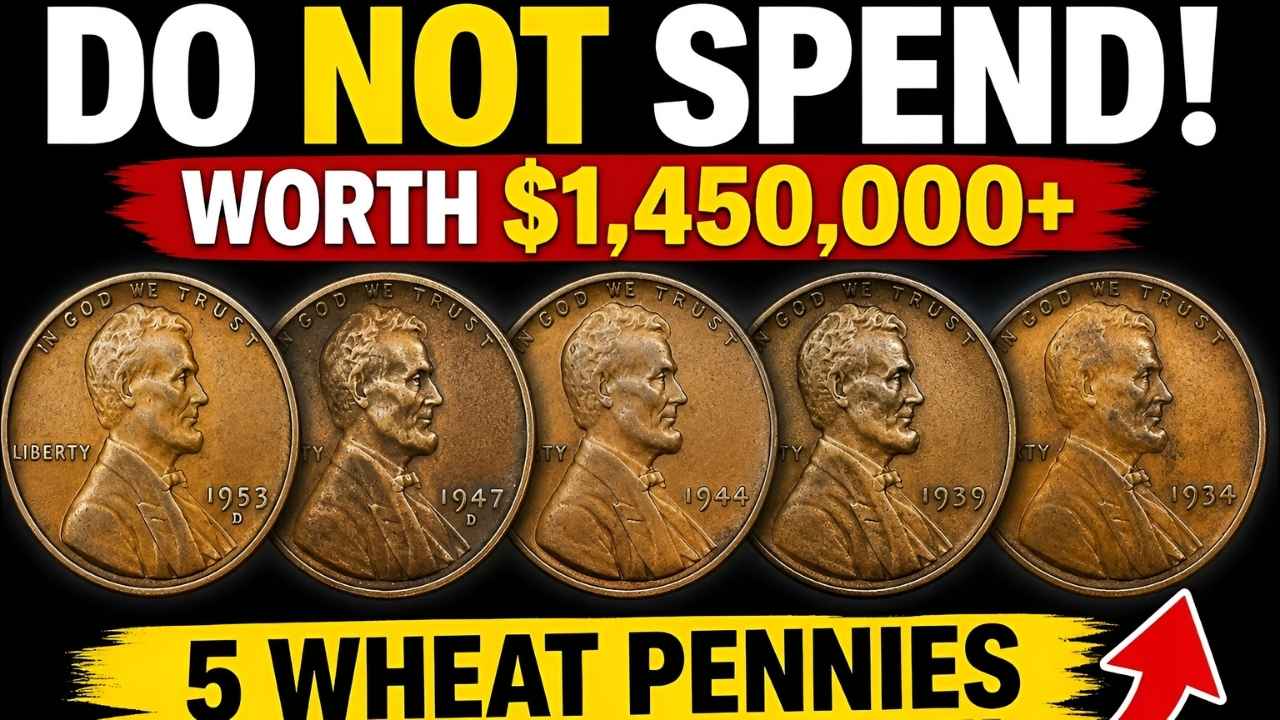
If you have ever glanced at the loose change in your pocket and wondered if it might be worth more than its face value, you are not alone. Coin collecting has fascinated people for generations, and among the most intriguing coins in American history are Wheat Pennies. These small copper coins, minted between 1909 and 1958, often look ordinary at first glance. However, a few rare variations have become legendary among collectors, with some valued at astonishing prices. In fact, certain Wheat Pennies have sold for over 1.4 million dollars, turning simple pocket change into hidden treasure.
This article explores five of the rarest and most valuable Wheat Pennies you should watch out for. You might already have one sitting unnoticed in a jar or old collection.
The Story Behind Wheat Pennies
Wheat Pennies, officially known as Lincoln Wheat Cents, were first introduced in 1909 to honor the 100th birthday of Abraham Lincoln. Designed by Victor David Brenner, these coins feature Lincoln’s portrait on the front and two wheat stalks on the back. While millions were produced over nearly five decades, certain years and minting errors have made some coins extremely rare and valuable.
Collectors value these coins not just for their age, but for unique characteristics such as mint marks, metal composition, and production mistakes. These small details can turn a one-cent coin into something worth thousands or even millions.
1943 Copper Wheat Penny
The 1943 Copper Wheat Penny is one of the most famous error coins in history. During World War II, copper was needed for military equipment, so the U.S. Mint switched to steel pennies coated with zinc. However, a few copper blanks from 1942 accidentally remained in the minting machines and were struck with the 1943 design.
These rare copper pennies are incredibly valuable because they were never meant to exist. Only a handful are known today. One example sold for over 1.4 million dollars at auction, making it one of the most valuable pennies ever.
To identify this coin, you can use a simple magnet test. Steel pennies stick to magnets, but copper ones do not. If you find a 1943 penny that does not stick, it could be worth a fortune.

1909-S VDB Wheat Penny
The 1909-S VDB Wheat Penny is another highly sought-after coin. It was part of the very first batch of Lincoln cents minted in San Francisco. The initials VDB, representing the designer Victor David Brenner, were placed prominently on the reverse side.
However, these initials caused controversy at the time, leading to their removal shortly after production began. As a result, only a limited number of these coins were minted before the change, making them extremely rare today.
Collectors value this coin not only for its scarcity but also for its historical significance. Depending on its condition, it can be worth anywhere from several thousand dollars to over 100,000 dollars.
1955 Double Die Wheat Penny
The 1955 Double Die Wheat Penny is famous for its dramatic minting error. In this case, the coin’s design was stamped twice slightly out of alignment, creating a noticeable doubling effect on the date and lettering.
Unlike many errors that require magnification to detect, this one is visible to the naked eye. The words “Liberty” and “In God We Trust” appear clearly doubled, making it one of the most recognizable error coins.
Because of its unique appearance and popularity among collectors, this penny can fetch tens of thousands of dollars, especially in well-preserved condition.
1944 Steel Wheat Penny
While 1943 pennies were supposed to be made of steel, the opposite mistake occurred in 1944. The Mint returned to using copper, but a few leftover steel blanks were accidentally used.
This resulted in the rare 1944 Steel Wheat Penny. Like the 1943 copper version, this coin is highly valuable due to its unusual composition and limited quantity.
Collectors often test these coins with a magnet. If a 1944 penny sticks to a magnet, it could be a rare steel version worth a significant amount of money, sometimes exceeding 100,000 dollars depending on its condition.
1922 No D Wheat Penny
The 1922 No D Wheat Penny is another fascinating rarity. That year, all pennies were minted in Denver, which means they should carry a “D” mint mark. However, due to a worn die or minting issue, some coins were produced without the mint mark.
This missing “D” makes the coin extremely desirable among collectors. It is not just a simple error but a piece of minting history that reflects the challenges of early coin production.
Depending on its condition, a 1922 No D penny can be worth thousands to tens of thousands of dollars.
How to Check Your Coins
If you are curious about whether you might own one of these valuable pennies, there are a few simple steps you can follow. Start by examining the date and mint mark under good lighting. Look for unusual features such as doubling, missing letters, or unexpected colors.
Using a magnifying glass can help you spot small details that are easy to miss. You can also weigh the coin, as differences in metal composition often affect weight. For example, steel pennies are lighter than copper ones.

If you believe you have found a rare coin, consider having it professionally evaluated by a reputable coin dealer or grading service. This ensures you get an accurate assessment of its value.
Why These Pennies Are So Valuable
The value of these coins comes from a combination of rarity, historical significance, and collector demand. Coins with minting errors or limited production runs are especially prized because they are difficult to find.
Additionally, the story behind each coin adds to its appeal. Whether it is a wartime mistake or a design controversy, these details make each piece unique.
Collectors are often willing to pay high prices to own a piece of history, especially when it is as rare as these Wheat Pennies.
Conclusion
Wheat Pennies may seem like ordinary coins, but some of them hold extraordinary value. From the legendary 1943 Copper Penny to the eye-catching 1955 Double Die, these coins prove that hidden treasures can exist in the most unexpected places.
Before you spend your next penny, take a closer look. That small copper coin in your hand could be worth far more than you imagine. With a bit of curiosity and attention to detail, you might just discover a piece of history worth thousands or even millions.