
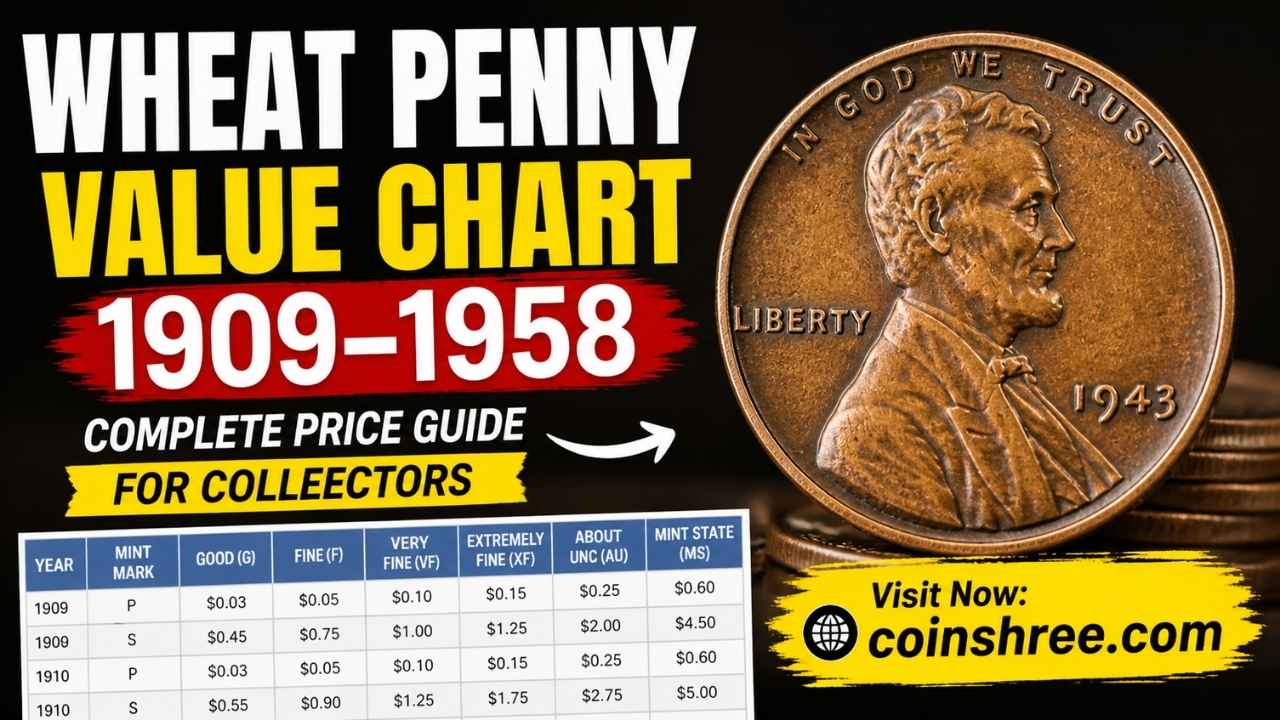
Wheat pennies hold a special place in the world of coin collecting. Minted between 1909 and 1958, these coins are often the first step for beginners and a lifelong passion for seasoned collectors. Their classic design, historical background, and the possibility of finding rare dates make them incredibly appealing. In 2026, wheat pennies continue to attract attention not only for their nostalgic value but also for their potential worth in the collector market.
History of Wheat Pennies
The wheat penny was first introduced in 1909 to commemorate the 100th birthday of Abraham Lincoln. It was the first U.S. coin to feature a real historical figure. The obverse shows Lincoln’s profile, while the reverse features two wheat stalks, giving the coin its popular nickname.
These pennies were produced until 1958, after which the design was replaced by the Lincoln Memorial. Over nearly five decades, billions of wheat pennies were minted, but not all of them are common today. Some years and mint marks are far rarer than others.
Understanding Mint Marks
Mint marks are essential when determining the value of a wheat penny. They indicate where the coin was produced and can significantly affect its rarity.
Philadelphia coins typically have no mint mark
Denver coins are marked with a D
San Francisco coins carry an S
In many cases, coins from Denver and San Francisco are more valuable because they were produced in smaller numbers. However, this is not always the case, so it is important to check each coin individually.
What Determines Wheat Penny Value
Several factors influence how much a wheat penny is worth. The most important is rarity. Coins with lower mintage numbers or limited survival rates are generally more valuable.
Condition is another major factor. Coins are graded based on their level of wear, from heavily circulated to mint state. A coin with sharp details and original shine can be worth significantly more than a worn example.

Demand also plays a role. Some coins are popular due to their history or well-known rarity, which can drive prices higher over time.
Wheat Penny Value Chart Overview
Below is a general value guide based on typical market trends in 2026. Prices can vary depending on condition and demand.
1909–1915
Common Philadelphia coins range from $5 to $30
Denver and San Francisco issues can range from $20 to several hundred dollars
The famous 1909-S VDB is one of the most valuable and can reach thousands in high grades
1916–1929
Average coins range from $1 to $10
Better dates like 1914-D and 1922 No D can exceed $100 or more depending on condition
1930–1939
Most coins range from $0.50 to $5
The 1931-S is a key date and can be worth $50 to $150 in good condition
1940–1949
Common coins are valued between $0.10 and $1
High-grade examples can reach $10 to $30
The 1943 steel penny is unique and widely collected
1950–1958
Typically worth $0.05 to $0.50
Uncirculated coins can range from $1 to $5
The 1955 doubled die penny is highly valuable and can reach thousands
Key Rare Wheat Pennies to Look For
Certain wheat pennies are especially valuable due to their rarity or unique features. The 1909-S VDB is one of the most famous coins in the series. With a limited mintage and historical significance, it is a top target for collectors.
The 1914-D is another key date known for its scarcity. Even in worn condition, it can command a high price. The 1922 No D penny is also notable because it lacks a visible mint mark due to a production error.
The 1955 doubled die penny is one of the most dramatic error coins ever produced. The doubling is clearly visible, making it easy to identify and highly desirable.
The Unique Case of 1943 Steel Pennies
During World War II, copper was needed for military use, so pennies in 1943 were made from steel coated with zinc. These coins have a silver appearance and are quite different from traditional copper pennies.
While most 1943 steel pennies are common, they are still collected for their historical importance. However, rare copper versions of the 1943 penny exist and are extremely valuable, often selling for large amounts at auctions.
How Condition Affects Price
The condition of a wheat penny can dramatically impact its value. Coins are graded on a scale that ranges from Poor to Mint State. A heavily worn coin may only be worth a small amount, while a nearly perfect coin can be worth much more.
Collectors often look for coins with strong details, minimal scratches, and original color. Red-colored copper coins are generally more valuable than brown or heavily toned ones.
Proper storage is essential to maintaining a coin’s condition. Exposure to air, moisture, and handling can reduce a coin’s quality over time.
Tips for Collectors
Start by sorting your wheat pennies by year and mint mark. This helps identify valuable coins quickly. Using a magnifying glass can help you spot small details and potential errors.

Avoid cleaning your coins, as this can reduce their value. Even if a coin appears dirty, it is better to leave it in its natural state.
Invest in proper storage solutions such as coin holders or albums. This will protect your collection and keep it organized.
Staying informed about market trends and recent sales can also help you understand which coins are in demand.
Why Wheat Pennies Remain Popular
Wheat pennies continue to be a favorite among collectors because they are both historical and accessible. Many people still find them in old collections, coin jars, or inherited items.
The series offers a mix of common coins and rare treasures, making it exciting for collectors at all levels. Each coin represents a piece of American history, adding depth and meaning to any collection.
Conclusion
Wheat pennies from 1909 to 1958 offer a fascinating journey through history and coin collecting. While many are common and affordable, certain dates and mint marks can be highly valuable. By understanding the importance of rarity, condition, and demand, collectors can make informed decisions and potentially discover hidden gems. Whether you are just starting out or expanding an existing collection, wheat pennies provide a rewarding and engaging experience that continues to captivate collectors in 2026.