
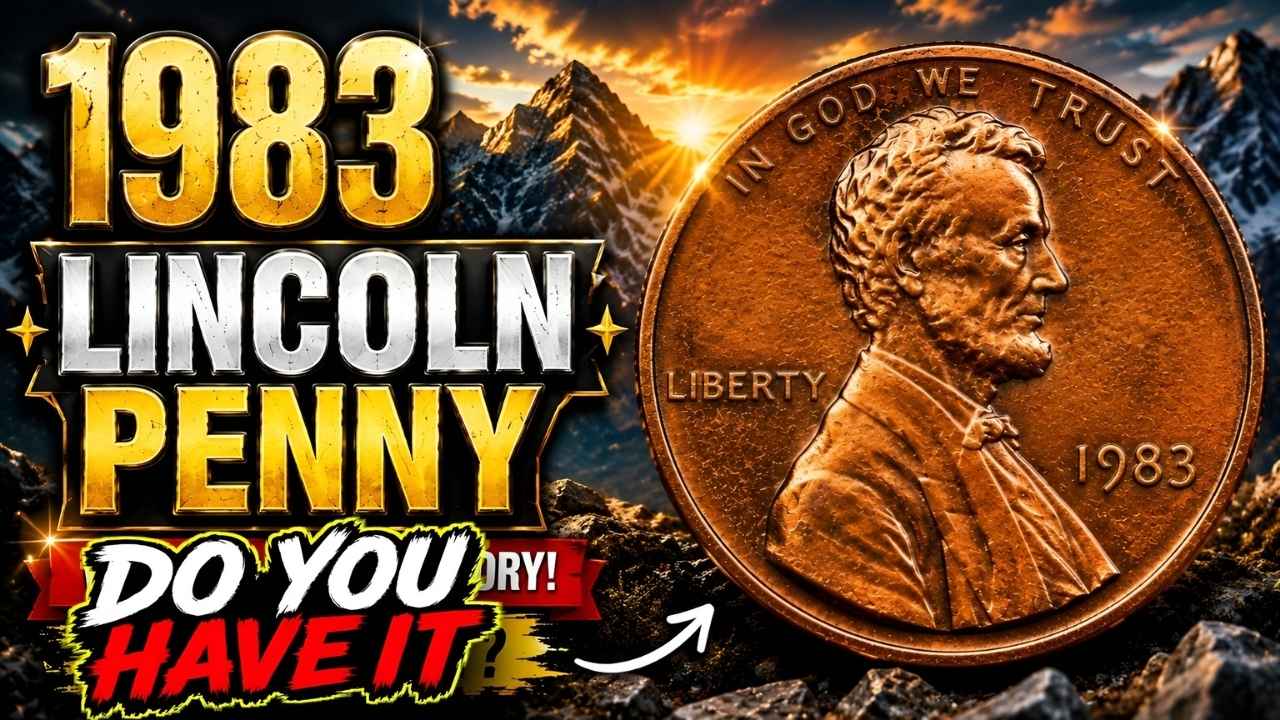
Most people never think twice about the pennies sitting in their pockets, old jars, or coin collections. However, one rare 1983 Lincoln penny has shocked collectors because a tiny mistake during production turned it into one of the most valuable modern coins in the United States. Some versions of this coin have sold for thousands of dollars, while experts believe an extremely rare error variation could someday reach life changing value levels.
Coin collectors across America are now checking every old penny they can find. The reason is simple. A rare 1983 penny with a special minting error has become one of the hottest topics in the numismatic world. If you own old coins from the early 1980s, you may want to look carefully before spending them.
Why the 1983 Penny Is So Special
The year 1983 was important for the United States Mint because the composition of pennies had recently changed. Before 1982, most pennies were made primarily from copper. Starting in 1982, the Mint switched to zinc coated coins to reduce production costs.
This transition created confusion at the minting facilities and led to several rare error coins. One of the most famous examples is the 1983 bronze penny. Officially, all regular 1983 pennies were supposed to be made from zinc. However, a few bronze planchets from previous years accidentally entered the production process.
As a result, a very small number of 1983 pennies were struck using the old bronze composition instead of zinc. These coins are incredibly rare and highly valuable today.
How to Identify a Rare 1983 Bronze Penny
Finding a rare 1983 bronze penny requires attention to detail. At first glance, it looks similar to an ordinary one cent coin. However, there are a few important differences collectors use to identify it.
The biggest clue is the coin’s weight.
A standard 1983 zinc penny weighs about 2.5 grams.
A rare 1983 bronze penny weighs approximately 3.11 grams.
This small difference is extremely important. Coin collectors often use precise digital scales to check old pennies.
Another clue is the sound. Bronze pennies produce a slightly different ringing tone compared to zinc coins when dropped gently on a surface.
Collectors should also look carefully at the coin’s condition, mint mark, and overall appearance. Even small details can significantly affect value.
The Rare Doubled Die Error Adds Huge Value
Another famous version of the 1983 penny is the 1983 Doubled Die Reverse penny. This coin became legendary among collectors because of visible doubling on the reverse side.
The doubling is especially noticeable in words like:
ONE CENT
E PLURIBUS UNUM

UNITED STATES OF AMERICA
This happened because of a mistake during the die creation process. The result was a coin with duplicated lettering and design details.
A high grade 1983 Doubled Die Reverse penny has sold for thousands of dollars at auction. Some experts believe values could continue rising as collector demand increases.
Could a 1983 Penny Really Be Worth Millions?
Headlines often claim that a certain penny could make someone a millionaire. While not every rare penny reaches that level, some extremely unique coins have sold for astonishing amounts.
The value of a coin depends on several major factors:
Rarity
Condition
Historical importance
Collector demand
Authentication
If an undiscovered ultra rare 1983 bronze error penny in near perfect condition appeared at auction, experts believe it could potentially command an enormous price due to intense collector competition.
Although becoming a millionaire from one penny is extremely rare, finding a coin worth thousands or even hundreds of thousands of dollars is absolutely possible in the world of coin collecting.
Where These Rare Pennies Are Usually Found
Many valuable coins are discovered in everyday places. People have found rare pennies inside:
Old piggy banks
Inherited coin collections
Garage sale boxes
Bank coin rolls
Forgotten drawers
Loose pocket change
Because millions of pennies were produced in 1983, most people never bothered checking them carefully. That is exactly why rare examples can still occasionally surface decades later.
Collectors recommend examining every old penny before spending it.
What To Do If You Think You Found One
If you believe you have a rare 1983 penny, avoid cleaning it. Cleaning can damage the surface and reduce the coin’s value dramatically.
Instead, follow these steps:
Use a digital gram scale to check the weight
Inspect the reverse lettering carefully
Store the coin safely in a protective holder
Get professional authentication
Professional grading companies can verify whether the coin is genuine. Certified coins usually sell for much higher prices because buyers trust authenticated pieces.
Why Coin Collecting Is Growing Again
Coin collecting has become extremely popular again in recent years. Social media videos about rare coins regularly go viral, encouraging people to search through old change.
Many younger collectors are entering the hobby because of stories involving hidden treasures found in ordinary places.
The 1983 penny has become one of the biggest examples of how a simple one cent coin can suddenly become a highly valuable collectible.
Unlike expensive investments, coin hunting is accessible to almost everyone. Anyone with spare change can potentially discover something rare.

Historical Importance of the Lincoln Penny
The Lincoln cent is one of the most iconic coins in American history. First introduced in 1909, it honored President Abraham Lincoln and became the first regular U.S. coin to feature a real person.
Over the decades, different minting errors, metal changes, and low mintage years have created valuable collector items.
The 1983 bronze penny represents an important transitional error tied directly to changes in U.S. coin production history.
That historical connection makes the coin even more attractive to serious collectors.
Official U.S. Mint Information
Collectors can learn more about official coin production and U.S. currency history through the United States Mint website:
United States Mint Official Website
Final Thoughts
The story of the rare 1983 penny proves that valuable treasures can still hide in everyday places. While most pennies are worth only one cent, a small number carry extraordinary value because of minting mistakes and historical significance.
Checking old coins may seem simple, but collectors know that tiny details can change everything. A coin that looks ordinary to most people could actually be worth thousands of dollars.
As interest in rare coins continues growing, the legendary 1983 penny remains one of the most talked about treasures in modern coin collecting. Before tossing spare change aside, it may be worth taking a closer look.
FAQ
What makes the 1983 penny valuable?
Certain rare versions, including the 1983 bronze penny and the 1983 Doubled Die Reverse penny, are valuable because of minting errors and extremely low rarity.
How much is a 1983 bronze penny worth?
Depending on condition and authenticity, a genuine 1983 bronze penny can sell for thousands of dollars. Exceptional examples may reach even higher values.
How can I tell if my 1983 penny is bronze?
Check the weight using a digital scale. A bronze penny weighs around 3.11 grams, while a normal zinc penny weighs about 2.5 grams.
Should I clean my old penny before selling it?
No. Cleaning a coin can damage its surface and lower its collector value significantly.
Where can I authenticate a rare coin?
Professional coin grading services and experienced numismatic experts can verify authenticity and estimate market value.