
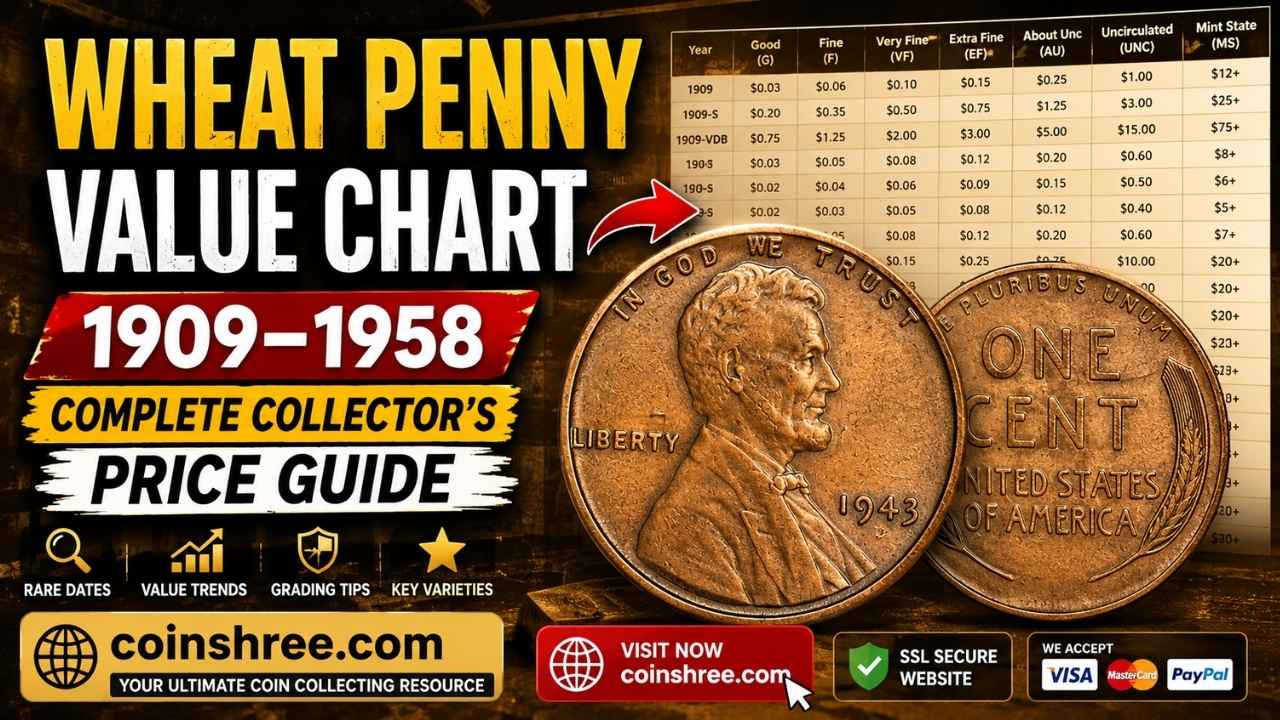
Wheat pennies are among the most loved and widely collected coins in American history. Even people who are not serious coin collectors often keep old wheat pennies in jars, drawers, or family collections because of their nostalgic design and historical value. Minted from 1909 to 1958, these coins feature two wheat stalks on the reverse side, which is why they are commonly called Wheat Pennies or Wheat Cents.
Today, many collectors search for rare wheat pennies that can be worth hundreds or even thousands of dollars depending on their year, mint mark, rarity, and condition. Some extremely rare versions have sold for massive prices at auctions, making these small copper coins highly desirable among coin enthusiasts.
If you want to know how much your wheat penny is worth, this complete collector’s price guide covers everything from the history of the coin to key dates, rare errors, grading factors, and updated value estimates.
History of the Wheat Penny
The Wheat Penny was first introduced in 1909 to celebrate the 100th birth anniversary of Abraham Lincoln. It became the first regular United States coin to feature a real historical figure instead of symbolic imagery.
The coin was designed by Victor David Brenner. The front side displays Lincoln’s portrait, while the reverse side shows two wheat ears surrounding the words “ONE CENT.” The design remained in circulation until 1958 before being replaced by the Lincoln Memorial reverse in 1959.
Most wheat pennies were made from 95 percent copper. However, during World War II in 1943, the U.S. Mint temporarily switched to zinc coated steel to save copper for wartime production. These steel cents are now some of the most recognizable coins in American numismatic history.
Wheat Penny Value Chart 1909–1958
Here is a general value chart for common wheat pennies based on average circulated and uncirculated conditions.
| Year | Average Circulated Value | Uncirculated Value |
|---|---|---|
| 1909 VDB | $10 to $40 | $100+ |
| 1909 S VDB | $700 to $2500+ | $4000+ |
| 1914 D | $150 to $3000+ | $5000+ |
| 1922 No D | $500 to $5000+ | $10000+ |
| 1931 S | $80 to $250 | $500+ |
| 1943 Steel Cent | $0.50 to $20 | $50+ |
| 1943 Copper Penny | $100000+ | Extremely Rare |
| 1955 Doubled Die | $1000 to $15000+ | $25000+ |
| 1958 Doubled Die | $50000+ | Extremely Rare |
These values are approximate and may change depending on market demand, coin grading, and auction results.
Most Valuable Wheat Pennies
Certain wheat pennies are considered legendary because of their rarity and collector demand. These coins can command huge prices in the coin market.
The 1909 S VDB penny is one of the most famous wheat cents ever produced. Only a small number were minted before the designer’s initials were removed, making it extremely collectible.
The 1914 D wheat penny is another highly valuable issue because very few survived in high grades.
The 1922 No D penny became famous due to a minting error where the Denver mint mark disappeared. Collectors consider it one of the key Lincoln cent varieties.
The 1943 Copper Penny is among the rarest American coins. While most pennies that year were struck on steel planchets, a few copper blanks accidentally entered production. Genuine examples are worth six figures or more.

The 1955 Doubled Die penny is popular because the date and lettering appear dramatically doubled. It is one of the most recognizable error coins in U.S. history.
How Coin Condition Affects Wheat Penny Value
Condition plays a huge role in determining wheat penny prices. Two coins from the same year can have completely different values depending on wear and preservation.
Coins are generally graded using the following categories:
Good condition coins have heavy wear but visible details.
Fine condition coins show moderate wear with clearer lettering and wheat lines.
Extremely Fine coins retain strong detail with light wear.
Mint State coins appear nearly perfect and may have original mint luster.
Professional grading services can authenticate and grade valuable wheat pennies. Certified coins usually sell for higher prices because buyers trust their authenticity and condition.
Rare Wheat Penny Errors to Look For
Error coins are extremely popular among collectors because they are unusual and often scarce. Some wheat penny errors can be surprisingly valuable.
Double die errors show duplicated letters or numbers caused by a misaligned die during minting.
Off center strikes occur when the coin blank is not properly aligned, leaving part of the design missing.
Repunched mint marks happen when mint marks were stamped multiple times in slightly different positions.
Wrong planchet errors occur when a coin is struck on the incorrect metal blank.
Collectors should carefully inspect old wheat pennies because even small minting mistakes can increase value significantly.
Tips for Identifying Valuable Wheat Pennies
If you have a collection of old pennies, there are a few important things you should check.
Look at the date carefully because key years are often worth much more.
Check for mint marks below the date. Coins from San Francisco marked with “S” and Denver marked with “D” can be more valuable than Philadelphia issues.
Use a magnifying glass to inspect lettering and details for doubling or unusual features.
Avoid cleaning coins because cleaning can reduce collector value dramatically.
Store coins in protective holders to prevent scratches and environmental damage.
Why Wheat Pennies Remain Popular
Wheat pennies continue to attract collectors because they combine history, affordability, and the thrill of discovery. Many people enjoy searching through old coin jars hoping to find a rare date or valuable error coin.
Unlike modern coins, wheat pennies were produced during important moments in American history including the Great Depression and World War II. This historical connection makes them appealing to collectors of all ages.
Their classic design also adds to their popularity. Even after more than a century, the wheat reverse remains one of the most iconic coin designs ever created.
Are Wheat Pennies Still Found in Circulation?
Although rare, wheat pennies can still occasionally be found in circulation, coin rolls, estate sales, and old collections. Many collectors enjoy coin roll hunting because valuable wheat cents sometimes appear unexpectedly.
Most circulated wheat pennies are worth only a few cents above face value, but key dates and rare errors can still bring significant money. That possibility keeps the hobby exciting for collectors worldwide.
How to Sell Valuable Wheat Pennies
If you believe you own a valuable wheat penny, consider getting it professionally evaluated before selling.

You can sell coins through local coin shops, online marketplaces, auctions, or professional dealers. Rare and authenticated coins generally achieve the highest prices at major coin auctions.
Research current market trends before accepting offers because coin values can fluctuate based on collector demand and metal prices.
FAQ
What is the rarest wheat penny?
The 1943 Copper Wheat Penny is considered one of the rarest and most valuable wheat cents ever produced.
Are all wheat pennies valuable?
No. Many common wheat pennies are worth only a few cents, but rare dates, mint marks, and error coins can be worth thousands of dollars.
How can I tell if my wheat penny is valuable?
Check the date, mint mark, condition, and possible mint errors. Rare varieties usually have much higher collector demand.
Should I clean my old wheat pennies?
No. Cleaning coins can damage their surface and reduce their value significantly.
Where can I verify coin information officially?
Collectors can explore official U.S. Mint resources here:
United States Mint Official Website
Final Thoughts
Wheat pennies remain one of the most exciting areas of coin collecting because they offer a mix of history, rarity, and potential value. Whether you are a beginner collector or an experienced numismatist, understanding wheat penny values can help you identify hidden treasures in your collection.
From the famous 1909 S VDB to the legendary 1943 Copper Penny, these coins continue to capture attention across the collector world. By learning about key dates, grading, and mint errors, you can better determine whether your wheat penny is an ordinary coin or a valuable collectible worth preserving for the future.