
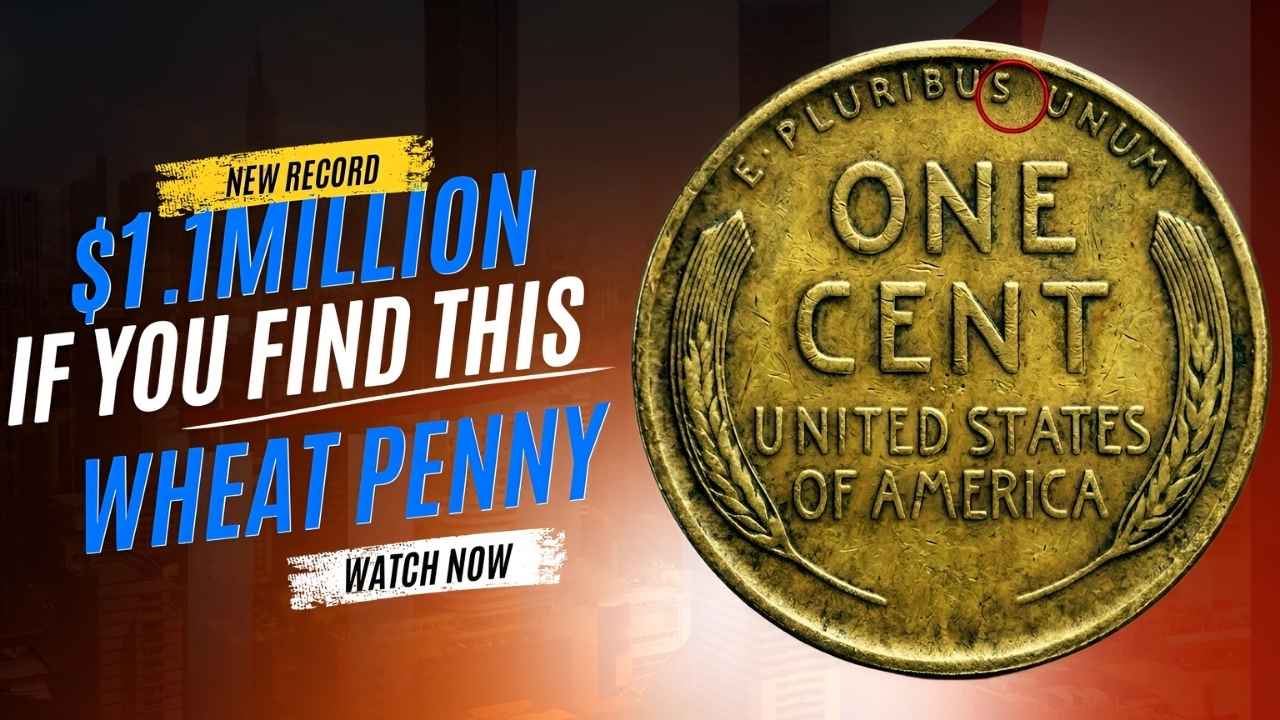
The Hardest Wheat Penny to Find in 2026: Coin collecting continues to grow rapidly in 2026, and few coins attract more attention than the legendary Lincoln Wheat Penny. For decades, collectors have searched through old jars, estate collections, antique stores, and bank rolls hoping to uncover one rare penny that could completely change their lives. While millions of Wheat Pennies were produced between 1909 and 1958, only a tiny number have become truly legendary because of their rarity, historical importance, and massive market value.
Among all Wheat Pennies ever produced, certain ultra rare coins continue to shock collectors with their scarcity and auction prices. Some examples are so difficult to locate that many experienced numismatists spend their entire lives searching for them without success.
As coin values continue rising in 2026, rare Wheat Pennies remain some of the most desirable collectibles in the numismatic market.
The History Behind Lincoln Wheat Pennies
The Lincoln Wheat Penny first appeared in 1909 to honor the 100th birthday of President Abraham Lincoln. It was designed by Victor David Brenner and became the first regular United States coin to feature a real historical figure.
The front side displays Lincoln’s portrait, while the reverse side shows two wheat stalks surrounding the words “One Cent.” This simple but elegant design remained in use until 1958 before the Lincoln Memorial reverse replaced it in 1959.
Over the years, billions of Wheat Pennies entered circulation. Most are common today, but a few rare varieties became famous because of low mintages, mint errors, or unusual production mistakes.
These rare coins continue attracting collectors because they combine history, mystery, and extraordinary value.
Why Rare Wheat Pennies Are Worth Huge Money
Several important factors determine the value of a Wheat Penny. Rarity is the biggest reason certain coins become extremely valuable.
Coins with low production numbers are naturally harder to find, especially in excellent condition. Minting errors also increase value dramatically because they create unique coins that stand out from normal examples.
Condition is another major factor. A rare Wheat Penny in mint condition may be worth many times more than the same coin in worn condition.
Historical significance also influences demand. Coins connected to important events in American history often attract serious collectors willing to pay premium prices.
In 2026, the growing popularity of coin collecting and online auctions continues driving demand for ultra rare Wheat Pennies.
The Legendary 1943 Copper Wheat Penny
The 1943 Copper Wheat Penny remains the hardest and most famous Wheat Penny collectors search for in 2026.
During World War II, the United States Mint stopped using copper for pennies because the metal was needed for wartime production. Instead, pennies were made using zinc coated steel.
However, a few leftover copper blanks from 1942 accidentally remained inside minting machines. These blanks were mistakenly struck with the 1943 design, creating one of the rarest error coins in American history.
Only a small number of authentic 1943 copper pennies are known to exist today.

Because of their extreme rarity, these coins have sold for astonishing prices at auctions. Some verified examples have been valued at hundreds of thousands of dollars, while exceptional specimens crossed the million dollar mark.
Collectors continue searching for this legendary coin because new discoveries remain possible, although extremely rare.
Why Collectors Were Shocked in 2026
Interest in rare Wheat Pennies exploded again in 2026 after reports surfaced about newly discovered high grade examples appearing in private collections and estate sales.
Collectors were especially shocked by the increasing auction prices for authenticated 1943 copper pennies and other key date Wheat Pennies.
The coin market experienced renewed excitement as social media videos and online coin hunting communities brought attention to rare pennies still potentially hidden in circulation or forgotten collections.
Many younger collectors entered the hobby hoping to discover valuable coins, creating even stronger demand for ultra rare Wheat Pennies.
This renewed interest pushed prices higher and made key date Lincoln cents even more difficult to obtain.
Other Extremely Rare Wheat Pennies
While the 1943 Copper Penny receives most of the attention, several other Wheat Pennies are also considered extremely valuable and difficult to find.
The 1909 S VDB Wheat Penny remains one of the most famous key date coins in the series. Produced in limited numbers at the San Francisco Mint, this coin became legendary because the designer’s initials were quickly removed from later versions.
The 1914 D Wheat Penny is another major rarity. Many examples circulated heavily, making high grade coins especially scarce today.
Collectors also aggressively pursue the 1922 No D Wheat Penny, a fascinating error created when the Denver Mint accidentally produced coins without visible mint marks.
The 1955 Doubled Die Wheat Penny remains one of the most dramatic and popular mint error coins ever created because of its obvious doubled lettering and date.
Each of these coins commands strong prices in 2026 due to increasing collector demand and limited availability.
The Importance of Mint Errors
Mint errors play a major role in the value of Wheat Pennies. These mistakes happen during the coin production process and create unusual varieties that collectors love.
Double die errors occur when the coin design is impressed incorrectly, causing visible doubling.
Off center strikes happen when the coin blank is misaligned during minting.
Wrong planchet errors occur when coins are struck using incorrect metal blanks.
Because mint errors are accidental and often rare, they can dramatically increase a coin’s value.
Collectors carefully inspect Wheat Pennies using magnification tools in hopes of discovering previously unnoticed errors.
How to Identify Valuable Wheat Pennies
Learning how to identify valuable Wheat Pennies is important for both beginners and experienced collectors.
The first step is checking the date and mint mark located beneath the year on the front side of the coin.
Collectors should pay close attention to key dates such as 1909 S VDB, 1914 D, 1922 No D, 1931 S, and 1943 copper pennies.
Using a magnifying glass can help reveal doubling, unusual surfaces, or small minting errors.
Steel pennies from 1943 are magnetic, while genuine copper versions are not. This simple test helps identify potentially valuable coins.
Weight is another important factor because copper and steel pennies weigh differently.
Careful examination can sometimes reveal hidden treasures overlooked by others.
The Role of Coin Grading in Value
Professional coin grading significantly impacts the market value of rare Wheat Pennies.
Grading companies evaluate coins based on condition, strike quality, luster, and preservation. Coins receiving high mint state grades are much rarer and more valuable.
Authentication is especially important for famous rarities like the 1943 Copper Penny because counterfeit versions are common.
Certified coins generally sell for higher prices because buyers trust professionally authenticated examples.
In 2026, graded Wheat Pennies continue dominating major auctions and private sales.
Where Collectors Still Find Rare Wheat Pennies
Surprisingly, valuable Wheat Pennies are still occasionally discovered today.

Collectors search through bank coin rolls, flea markets, estate sales, old piggy banks, inherited collections, and antique shops.
Some people unknowingly spend old coins without realizing their value, creating opportunities for sharp eyed collectors.
Metal detector hobbyists also occasionally uncover Wheat Pennies buried for decades.
Although finding an ultra rare coin is unlikely, stories of major discoveries continue inspiring collectors worldwide.
Why Wheat Pennies Remain So Popular
Wheat Pennies continue holding a special place in the coin collecting world because they combine history, affordability, rarity, and excitement.
Many collectors enjoy the challenge of building complete Lincoln cent collections, while others focus only on rare dates and error coins.
The possibility of discovering a hidden fortune in ordinary looking pennies keeps the hobby exciting for both beginners and experts.
In 2026, online communities, auctions, and social media continue increasing public interest in rare Wheat Pennies.
Final Thoughts
The hardest Wheat Penny to find in 2026 remains the legendary 1943 Copper Lincoln Cent, a coin that continues shocking collectors with its rarity and incredible value.
Alongside other famous Wheat Pennies like the 1909 S VDB, 1914 D, and 1955 Doubled Die, these coins remain among the most desirable collectibles in American numismatic history.
As collector demand grows and auction prices continue rising, Wheat Pennies remain a fascinating part of the coin collecting world.
For collectors, every old penny holds the possibility of becoming a life changing discovery.