
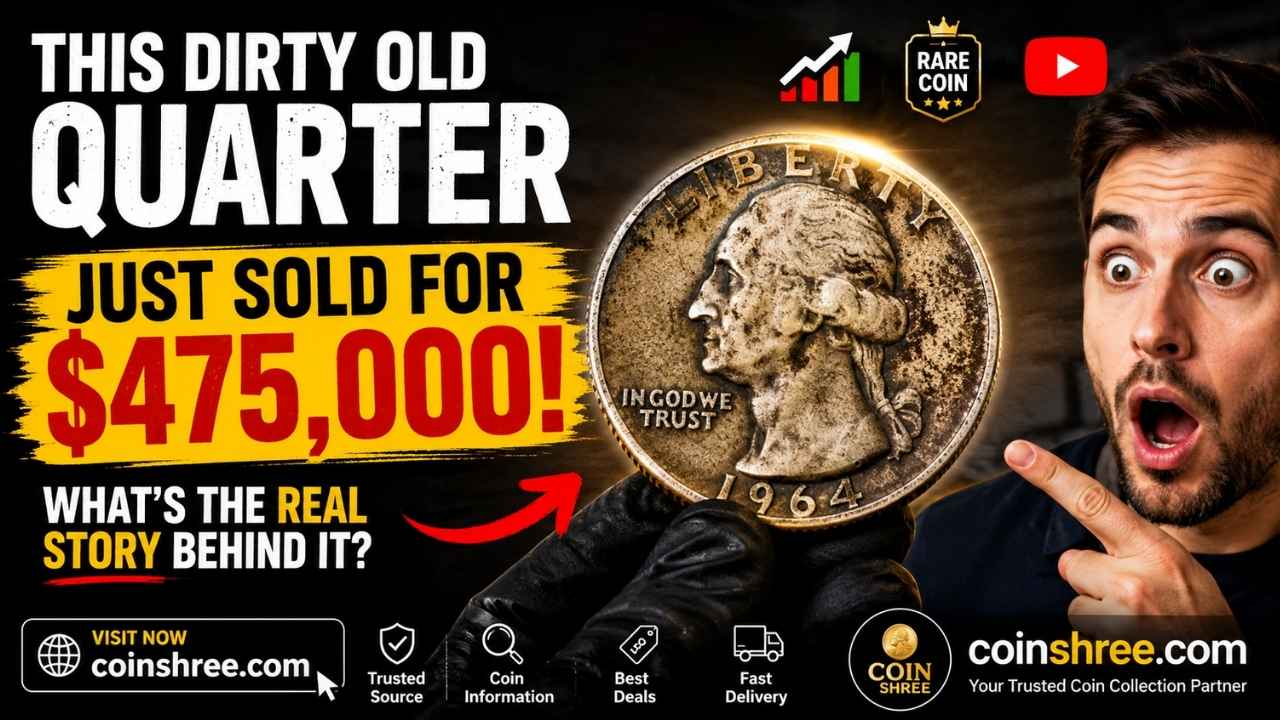
In recent days, a surprising headline has been circulating online claiming that a “dirty old quarter” or an old coin was sold for a staggering $475,000. At first glance, it sounds unbelievable. Why would something as ordinary as a small, worn-out coin be worth nearly half a million dollars?
The answer lies in a fascinating world where history, rarity, condition, and collector demand collide. While most coins in your pocket are worth exactly their face value, a tiny number of them can turn into life-changing treasures under the right circumstances.
This article breaks down the truth behind such viral stories, how coin valuation really works, what makes certain coins extremely valuable, and whether you should start checking your spare change more carefully.
Why a “Dirty Old Quarter” Can Be Worth a Fortune
The idea that a simple coin could sell for hundreds of thousands of dollars may sound like internet hype, but in the world of numismatics, it is not entirely impossible.
Coin collectors value pieces based on rarity, minting errors, historical importance, and condition. A coin that looks “dirty” or “old” to an average person might actually be a rare mint error, a limited edition release, or a surviving specimen from a significant historical period.
In rare cases, coins have sold for even more than $475,000 at auctions when multiple collectors compete for ownership. However, such prices are almost always tied to highly specific coins, not regular everyday currency.
How Coin Value Is Actually Determined
To understand why certain coins become extremely valuable, it is important to know the key factors that experts look at.
Rarity is the most important factor. If only a few coins of a specific type exist, collectors are willing to pay a premium.
Condition also plays a major role. Coins that are well preserved, even if old, can be significantly more valuable than damaged ones.
Mint errors are another major driver of value. Coins that were misprinted, double stamped, or struck incorrectly often become collector’s items.
Historical significance also adds value. Coins linked to important events, discontinued designs, or rare mint years often attract strong demand.

Finally, market demand determines the final price. Even a rare coin will not reach extreme values unless multiple buyers are actively competing for it.
The Truth Behind Viral “Cash Found Treasure” Stories
Many online stories about valuable coins or cash discoveries are exaggerated or simplified for attention. Headlines like “This dirty coin sold for $475,000” are often designed to go viral rather than provide detailed factual reporting.
In reality, most coins found in pockets, old jars, or drawers are only worth their face value. A quarter remains a quarter unless it has extraordinary characteristics that make it unique in the collector’s market.
However, these viral stories are not entirely baseless. There have been real cases where rare coins discovered in circulation or old collections have sold for extremely high prices at auctions.
Real Examples of High Value Coin Sales
The numismatic world has seen several jaw dropping sales over the years.
Some rare U.S. coins, such as early mint silver dollars or error coins, have sold for hundreds of thousands of dollars. In extremely rare cases, certain coins have crossed the million dollar mark.
These coins usually share common traits such as limited production, historical significance, and perfect or near perfect condition.
While not every old coin is valuable, these examples show that hidden treasures do exist, but they are extremely rare.
Should You Check Your Pocket Change
After reading such headlines, many people wonder if they should start checking every coin they receive in change. The short answer is yes, but with realistic expectations.
It is worth taking a closer look at unusual coins, especially those with strange markings, misprints, or unfamiliar dates. However, the chances of finding a life changing coin in everyday circulation are extremely low.
Still, coin collecting can be an enjoyable hobby. Many collectors start by examining pocket change before gradually learning about rare coins and building small collections.

How to Identify Potentially Valuable Coins
If you are curious about whether a coin might be valuable, there are a few basic signs to look for.
Unusual design features or printing mistakes can be a strong indicator. Coins that look different from standard versions may deserve further research.
Older coins, especially those no longer in circulation, can sometimes hold value depending on their rarity.
Limited edition mint releases are also worth paying attention to, as they are often produced in small numbers.
Finally, coins in excellent condition, even if common, may still have collector interest if demand is high.
Why These Stories Go Viral So Quickly
Stories about hidden wealth are incredibly powerful on the internet. The idea that someone could unknowingly carry a valuable coin in their pocket taps into curiosity and excitement.
Social media platforms amplify such content because it generates strong engagement. People love the idea of discovering unexpected treasure in everyday life.
However, it is important to separate entertainment from reality. While some stories are true, many are exaggerated or lack proper context.
Expert Opinion from the Numismatic World
Experts in coin collecting consistently emphasize caution when interpreting viral claims. According to numismatics professionals, most modern coins in circulation are not valuable beyond their face value.
They also note that serious valuations require authentication, grading, and auction history analysis. Without professional verification, it is easy to overestimate a coin’s worth based on appearance alone.
FAQ
Is it really possible for a quarter to be worth $475,000
Yes, but only under extremely rare conditions such as unique mint errors or historical significance. Ordinary quarters are not worth anywhere near that amount.

How do I know if my coin is valuable
Look for unusual features, mint errors, rare years, or consult a certified coin grading expert for proper evaluation.
Can dirty or old coins still be valuable
Yes, but condition alone does not determine value. Rarity and demand are far more important factors.
Where can I sell rare coins
Rare coins are typically sold through auctions, certified dealers, or specialized numismatic marketplaces after proper authentication.
Should I start collecting coins
Coin collecting can be a rewarding hobby, especially if you enjoy history and rare finds. However, it should not be seen as a guaranteed way to make money.
Conclusion
The viral claim about a “dirty old quarter” selling for $475,000 captures attention because it plays into the dream of hidden wealth. While such extreme cases do exist in the numismatic world, they are incredibly rare and usually involve highly specific coins with verified historical or minting significance.
For most people, pocket change remains just that. Still, the world of coin collecting is full of fascinating history and occasional surprises, making it a hobby worth exploring with realistic expectations.
Official Source Link
Official auction and verification details for such rare coin sales are typically recorded through certified numismatic auction houses and grading services. No single universal official listing exists for this viral claim.