
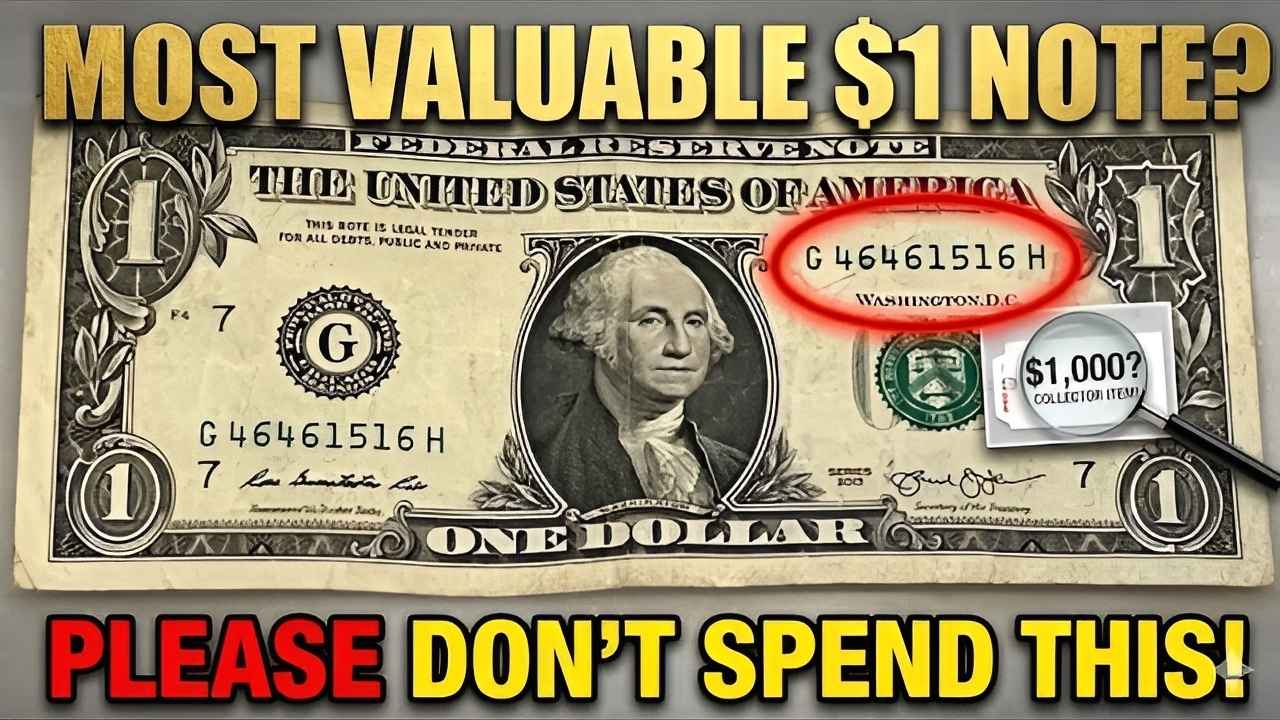
Most people treat one dollar bills as ordinary cash without ever checking the tiny details printed on them. But hidden among millions of regular notes are rare “Star Notes” that can be worth far more than their face value. Some collectors are willing to pay hundreds or even thousands of dollars for certain rare U.S. one dollar star notes depending on their condition, rarity, and serial number patterns.
Many valuable star notes are still circulating today, meaning an ordinary looking one dollar bill in your wallet could actually be a highly collectible piece of currency history.
Before spending your next dollar bill, it may be worth taking a closer look.
What Is A Star Note
A Star Note is a replacement banknote issued by the United States Bureau of Engraving and Printing. When a regular bill is damaged or misprinted during production, it is removed and replaced with a new note carrying a special serial number ending in a star symbol.
Instead of printing another bill with the exact same serial number, the government adds a star at the end to indicate it is a replacement note.
For example:
B12345678★
That small star symbol is what makes the note unique and collectible.
Because fewer star notes are printed compared to regular notes, collectors actively search for them.
Why Some Star Notes Are Worth Big Money
Not every star note is valuable, but certain factors can make them highly desirable among collectors.
The biggest factor is rarity. Some star notes were printed in very small batches, making them extremely difficult to find.
Condition is another major factor. Crisp, uncirculated notes usually sell for significantly more than heavily used bills.
Collectors also pay premium prices for unusual serial numbers such as:
Low serial numbers
Repeating numbers
Radar numbers
Ladder numbers
Binary patterns
Solid numbers
When a rare star note also contains a unique serial number pattern, its value can increase dramatically.
The Most Valuable One Dollar Star Notes
Several U.S. one dollar star notes have become famous in the currency collecting world.
Certain 2013 Series Star Notes from duplicate print runs created massive excitement among collectors. Some matching pairs sold for thousands of dollars because duplicate serial numbers were accidentally printed during production.

Older silver certificate star notes are also highly collectible, especially those issued in the early 1900s.
Rare Federal Reserve districts with limited print runs can command strong auction prices as well.
Collectors constantly search online marketplaces, auctions, and local currency shops hoping to discover overlooked star notes with hidden value.
How To Identify A Star Note
Identifying a star note is very easy.
Simply look at the serial number printed on the front of the bill.
If there is a star symbol at the end of the serial number instead of a regular letter, the bill is a star note.
The star may appear either before or after the serial number depending on the series year.
You should also check:
Series year
Federal Reserve district
Print quality
Condition
Serial number uniqueness
Even modern star notes from recent years can sometimes be valuable if their print runs were small.
What Makes Serial Numbers Special
Collectors love fancy serial numbers because they make bills more visually unique and rare.
Here are some examples of highly collectible serial patterns:
00000001
12345678
88888888
77777777
10000001
12222221
Notes with repeating or perfectly ordered digits are extremely popular among currency enthusiasts.
If a bill has both a star symbol and an unusual serial number, collectors may pay substantial premiums for it.
Can Star Notes Still Be Found In Circulation
Yes, absolutely.
Many people spend star notes without realizing they are collectible. Since they look almost identical to normal bills, they regularly circulate through stores, banks, vending machines, and ATMs.
Collectors often search through bank straps and cash withdrawals looking for rare replacement notes.
Some lucky individuals have discovered valuable star notes in everyday transactions including grocery stores, gas stations, restaurants, and retail shops.
That is why checking every dollar bill carefully can sometimes pay off.
The Importance Of Condition
Condition is critical in the paper money collecting market.
A crisp note with sharp corners, bright color, and no folds is considered far more valuable than a worn note with stains or tears.
Currency grading companies evaluate notes using professional standards similar to coin grading systems.
Uncirculated star notes usually attract the strongest buyer interest because they are harder to preserve over time.
If you think your note may be valuable, avoid folding, writing on, or damaging it further.
Where Collectors Buy And Sell Star Notes
Star notes are commonly traded through:
Currency dealers
Collector conventions
Online auctions
Paper money marketplaces
Coin and currency shops
Some extremely rare notes are sold at major auctions where competitive bidding can push prices surprisingly high.
Professional authentication is important for expensive notes because counterfeit currency and altered serial numbers do exist.
Why Star Notes Have Become So Popular
Interest in collectible currency has grown rapidly in recent years.
Social media videos showing rare bills worth thousands of dollars have encouraged more people to inspect their cash carefully. Younger collectors are especially interested in modern collectible currency because it feels more accessible than expensive rare coins.
Star notes combine history, rarity, and the excitement of treasure hunting. Since they can still occasionally appear in circulation, many people enjoy the thrill of searching through ordinary cash for hidden collectibles.
For beginners, one dollar star notes are often the easiest entry point into paper money collecting.
Should You Keep Or Sell A Rare Star Note
If you find a potentially valuable note, research its rarity before spending or selling it.

Collectors often recommend checking print run data and recent auction sales to estimate market value.
Rare notes with excellent condition may increase in value over time, especially if collector demand continues growing.
Some people keep valuable notes as long term collectibles, while others choose to sell them immediately for profit.
Getting the note professionally graded can help maximize buyer confidence and improve resale value.
Official Currency Information
For official information about U.S. currency and paper money production, visit the Bureau of Engraving and Printing
Final Thoughts
Most people never notice the tiny star symbol hidden within a dollar bill’s serial number. Yet that small detail can completely change the value of an otherwise ordinary piece of currency.
Rare U.S. one dollar star notes continue attracting collectors because of their limited production, fascinating history, and unique serial numbers. Some notes that originally entered circulation worth just one dollar are now selling for hundreds or even thousands in collector markets.
The next time you receive cash, take a moment to inspect your bills carefully. One small star could turn an ordinary dollar into an unexpected treasure.
FAQ
What is a U.S. star note?
A star note is a replacement banknote issued when a regular note is damaged or misprinted during production.
Are all star notes valuable?
No. Some star notes are common, while others are rare and highly collectible depending on print run and condition.
How do I know if my dollar bill is a star note?
Look at the serial number on the front of the bill. If it ends with a star symbol, it is a star note.
Can modern star notes be valuable?
Yes. Some modern star notes with low print runs or unusual serial numbers can be worth significant amounts.
Should I spend a star note?
If the note appears rare or has a fancy serial number, it may be worth researching before spending it.
Where can I check the value of my star note?
Collectors usually compare auction sales, currency dealer listings, and professional grading evaluations to estimate value.