
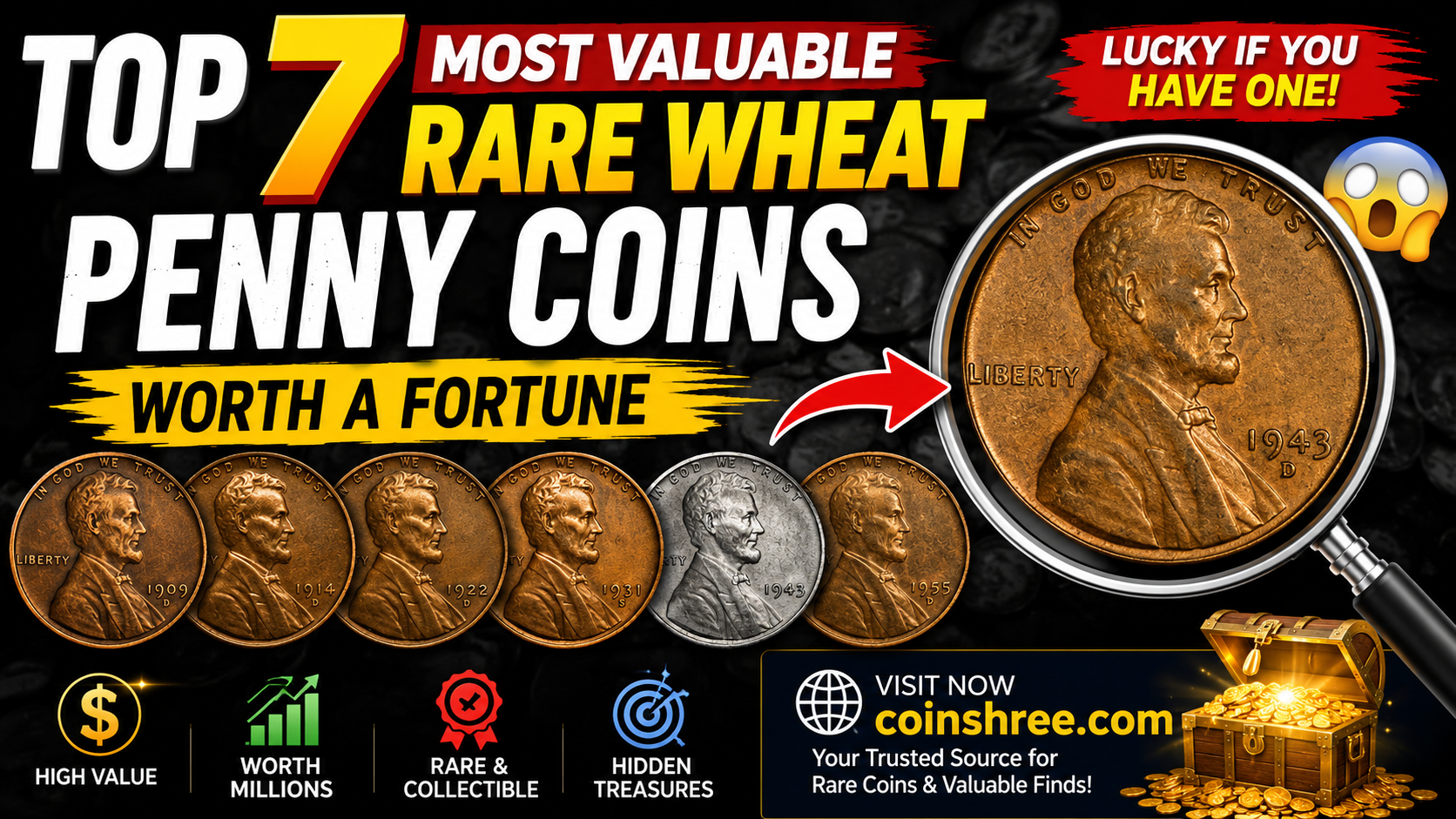
Wheat pennies are among the most collected coins in American history. While millions were produced over several decades, a few rare varieties have become legendary among collectors and investors. Some of these coins have sold for tens of thousands of dollars, while others have crossed the million dollar mark at major auctions.
What makes these coins so valuable is a combination of rarity, historical significance, minting errors, and collector demand. Many people still search through old coin jars, inherited collections, and forgotten piggy banks hoping to discover one of these hidden treasures.
If you own old Wheat pennies, it may be worth taking a closer look. One small coin could potentially be worth far more than its face value.
What Are Wheat Pennies?
Wheat pennies, officially known as Lincoln Wheat Cents, were minted in the United States from 1909 through 1958. The front of the coin features Abraham Lincoln, while the reverse displays two wheat stalks surrounding the words “One Cent.”
These coins were designed by Victor David Brenner and remain one of the most iconic coin series ever produced by the United States Mint. Although most Wheat pennies are worth only a few cents to a few dollars, certain rare dates and error coins are highly sought after.
1943 Bronze Wheat Penny
The 1943 Bronze Wheat Penny is widely considered the king of rare Lincoln cents.
During World War II, pennies were supposed to be struck on steel planchets to conserve copper for military purposes. However, a few bronze planchets from 1942 accidentally remained in the presses and were struck with the 1943 design.
Only a small number of genuine examples are known to exist today. Because of their extreme rarity, these coins have sold for hundreds of thousands of dollars, with some specimens reaching over one million dollars in auction sales.
If you find a 1943 penny that does not stick to a magnet, it may deserve professional authentication.
1909 S VDB Wheat Penny
The 1909 S VDB Wheat Penny is one of the most famous coins in American numismatics.
The initials “VDB” represent designer Victor David Brenner and appear on the reverse of the coin. Public criticism of the prominent initials led the Mint to remove them shortly after production began.
Only a limited number of 1909 S VDB pennies were minted in San Francisco, making them highly desirable among collectors.

Well preserved examples can easily sell for thousands of dollars, while top condition pieces command significantly higher prices.
1914 D Wheat Penny
Another key date that collectors constantly search for is the 1914 D Wheat Penny.
Produced at the Denver Mint, this coin had a relatively low mintage compared to other Lincoln cents of the era. Many entered circulation and experienced heavy wear, making high grade examples particularly rare.
Even moderately circulated specimens can be worth hundreds or thousands of dollars depending on condition and authenticity.
1922 No D Wheat Penny
The 1922 No D Wheat Penny is famous because of a unique minting error.
All Lincoln cents produced in 1922 were struck at the Denver Mint and should have carried a D mint mark. Due to worn dies and production issues, some coins were struck without a visible mint mark.
These error coins became highly collectible because they represent an unusual mistake from the Mint.
Authentic examples can sell for substantial amounts, especially when preserved in strong condition.
1931 S Wheat Penny
The 1931 S Wheat Penny is another coin that attracts serious collector interest.
During the Great Depression, demand for new coins declined dramatically. As a result, the San Francisco Mint produced a relatively small number of pennies that year.
Many collectors recognized the low mintage early and saved examples, but demand remains strong today. High quality specimens often bring impressive premiums in the collector market.
1955 Doubled Die Wheat Penny
The 1955 Doubled Die Wheat Penny is one of the most dramatic and recognizable error coins ever produced.
The doubling is clearly visible on the date and lettering, making it easy to identify even without specialized equipment.
Because the error is so obvious, this coin quickly became famous among collectors. Authentic examples remain in high demand and can sell for thousands of dollars depending on condition.
It is often considered one of the most exciting coins a collector can discover in circulation.
1944 Steel Wheat Penny
The 1944 Steel Wheat Penny resulted from another wartime minting mistake.
In 1944, pennies returned to copper based compositions. However, a small number of leftover steel planchets from 1943 accidentally entered production and received the 1944 design.
These rare error coins are extremely valuable due to their scarcity.
Collectors are willing to pay significant sums for authenticated examples, making this one of the most desirable Wheat pennies ever created.
How to Check If Your Wheat Penny Is Valuable
Start by examining the coin’s date and mint mark. Rare dates and unusual varieties often command the highest prices.
Look for signs of minting errors such as doubling, missing mint marks, or unusual metal compositions. A magnifying glass can help reveal important details.
Avoid cleaning old coins, as cleaning can significantly reduce collector value.
For potentially valuable finds, consider professional grading and authentication from a reputable coin grading service.
Why Rare Wheat Pennies Continue to Increase in Value
Rare Wheat pennies remain popular because they combine history, scarcity, and collector appeal. Every year, new collectors enter the hobby while the supply of high quality coins remains limited.

Auction records continue to demonstrate strong demand for key dates and rare error varieties. As a result, many experts believe that the most desirable Wheat pennies will remain highly sought after for years to come.
For collectors, these coins are more than just currency. They are pieces of American history that tell fascinating stories about different eras and minting processes.
Frequently Asked Questions
Are all Wheat pennies valuable?
No. Most Wheat pennies are worth only a small premium above face value. However, certain rare dates, mint marks, and error coins can be worth hundreds, thousands, or even millions of dollars.
How can I identify a rare Wheat penny?
Check the date, mint mark, and overall condition. Look for famous varieties such as the 1909 S VDB, 1914 D, 1922 No D, 1943 Bronze, and 1955 Doubled Die.
Should I clean an old Wheat penny?
No. Cleaning can damage the coin’s surface and significantly reduce its value to collectors.
Where can I verify a potentially valuable coin?
You can consult professional coin grading services or visit the official United States Mint website for educational resources and coin information.
Official Website: https://www.usmint.gov
Final Thoughts
Finding a rare Wheat penny may seem unlikely, but valuable discoveries still happen. Many collectors have uncovered important coins in inherited collections, old jars, and forgotten boxes. By learning which dates and varieties matter most, you can quickly identify coins that may be worth far more than one cent.
Before spending any old Wheat pennies, take a moment to inspect them carefully. One small coin could turn out to be a remarkable piece of history and a surprisingly valuable treasure.