
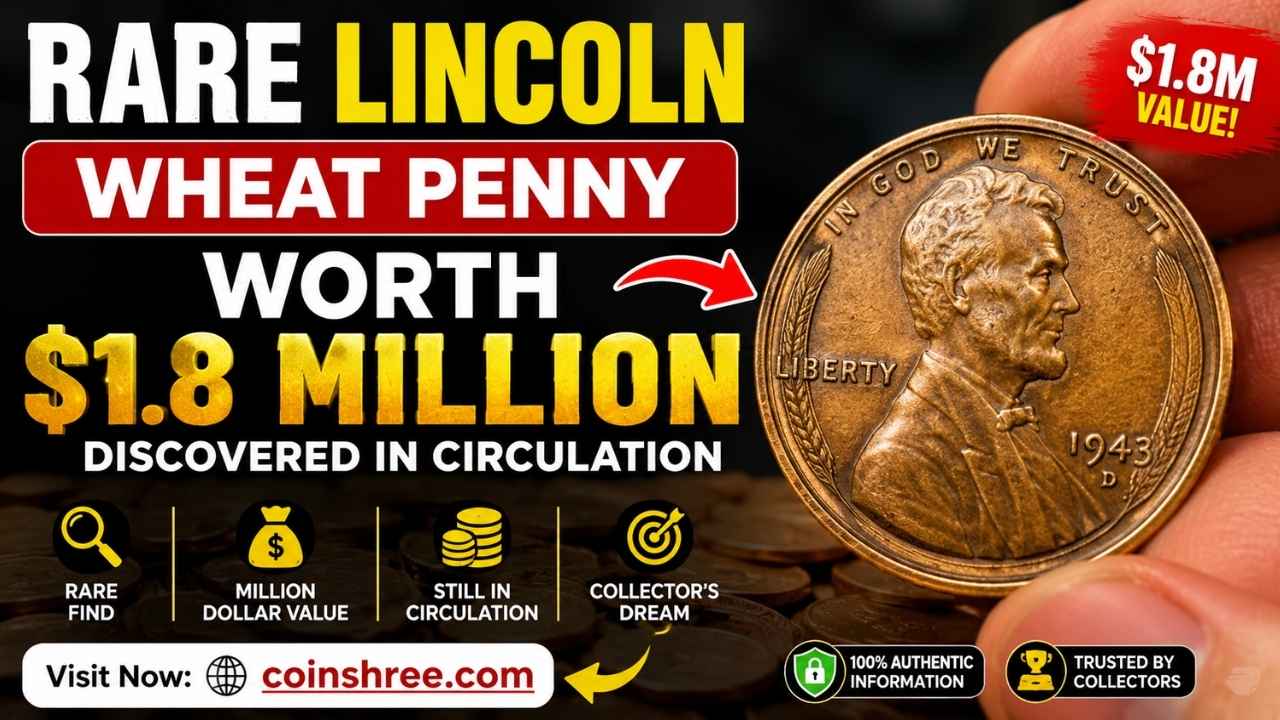
Coin collecting has once again captured global attention after reports surfaced about a rare Lincoln Wheat Penny allegedly worth an astonishing $1.8 million being discovered in everyday circulation. The story has shocked collectors, inspired treasure hunters, and encouraged ordinary people to inspect the loose change sitting in their pockets, drawers, and piggy banks.
What makes this coin so valuable is not just its age. Experts believe the penny may belong to one of the rarest minting errors ever produced in American coin history. While millions of Lincoln Wheat Pennies were minted between 1909 and 1958, only a handful carry the unique features that can turn a one cent coin into a life changing discovery.
The growing popularity of rare coin hunting on social media and online marketplaces has further increased public curiosity. Many collectors now believe that valuable coins could still be hiding in circulation, unnoticed for decades.
What Is a Lincoln Wheat Penny
The Lincoln Wheat Penny was first introduced in 1909 to honor the 100th birth anniversary of President Abraham Lincoln. It became the first American coin to feature a real historical figure instead of symbolic artwork.
The front side of the coin displays Lincoln’s portrait, while the reverse side features two wheat stalks surrounding the words “One Cent.” This design remained in use until 1958 before being replaced by the Lincoln Memorial design in 1959.
Because these coins were produced for nearly five decades, they are extremely common in the United States. However, certain rare years, mint marks, and minting mistakes make a few versions exceptionally valuable.
Why This Penny Is Worth $1.8 Million
The rumored $1.8 million valuation is believed to be connected to a highly rare minting error combined with historical rarity and collector demand.
Several Lincoln Wheat Pennies have sold for hundreds of thousands of dollars in the past, especially the famous 1943 bronze penny. During World War II, the United States Mint switched from copper to steel pennies to conserve copper for wartime production. However, a very small number of bronze blanks accidentally entered the minting process in 1943.
These rare bronze pennies became legendary among collectors. Some authenticated examples have sold for massive amounts at auctions due to their scarcity.
Experts suggest the recently discovered coin may be one of these rare 1943 bronze pennies or another extremely limited variation featuring unusual minting characteristics.
Factors that increase a coin’s value include:
Rare mint year
Minting errors
Metal composition mistakes
Excellent condition

Historical importance
Collector demand
Professional authentication
If all these elements combine in a single coin, the value can rise dramatically.
How Rare Coins End Up in Circulation
Many people assume million dollar coins are locked away in museums or private vaults. Surprisingly, valuable coins sometimes return to circulation through inherited collections, estate sales, forgotten jars, or accidental spending.
In several documented cases, rare pennies have been found in ordinary bank rolls, vending machine returns, and cash transactions. Older family members may unknowingly spend collectible coins without understanding their true market value.
This possibility is exactly why collectors continue searching through everyday change. Even though the chances are small, the excitement of discovering a hidden treasure keeps the hobby alive.
Key Lincoln Wheat Pennies Collectors Search For
Some Lincoln Wheat Pennies are far more valuable than others. Here are a few highly sought after versions collectors actively hunt for:
1909 S VDB Penny
This is one of the most famous Wheat Pennies ever made. It features the initials of designer Victor David Brenner and was minted in very limited numbers in San Francisco.
1914 D Penny
The Denver minted 1914 penny is another major rarity with high collector demand.
1922 No D Penny
A minting issue caused some 1922 pennies to appear without the Denver mint mark, creating an important error coin.
1943 Bronze Penny
Perhaps the most legendary Wheat Penny of all, this coin was mistakenly struck on bronze instead of steel.
1955 Double Die Penny
This error coin shows dramatic doubling in the lettering and date, making it highly collectible.
How To Check If Your Penny Is Valuable
If you believe you may own a rare Lincoln Wheat Penny, there are several important details to inspect carefully.
Start by checking the date and mint mark. Mint marks appear below the date and indicate where the coin was produced.
Next, examine the color and material. A genuine 1943 bronze penny will appear copper colored instead of silver steel.
You can also use a simple magnet test. Steel pennies stick to magnets, while bronze pennies do not.
Look closely for doubling, unusual lettering, off center strikes, or other visible errors. Condition also matters significantly. Coins with minimal wear generally command much higher prices.
Avoid cleaning old coins because cleaning can reduce collector value dramatically.
Importance Of Professional Authentication
Before assuming a coin is worth thousands or millions, professional authentication is essential. Counterfeit rare pennies exist, and many altered coins attempt to imitate valuable versions.
Professional grading services analyze factors such as weight, metal composition, strike quality, and authenticity. Once verified, the coin receives an official grade that helps determine its market value.
Collectors and auction houses rely heavily on certified grading because it provides trust and transparency in high value transactions.
Growing Interest In Coin Collecting Worldwide
Stories like this continue fueling global interest in coin collecting. Younger audiences are now entering the hobby through social media videos, online auctions, and viral discovery stories.
Coin collecting combines history, art, economics, and treasure hunting into one fascinating hobby. For many people, the possibility of finding a valuable coin in circulation adds real excitement to everyday life.
Even common Wheat Pennies can hold sentimental and historical value. Each coin represents a specific era of American history and reflects the economic conditions of its time.

Could More Rare Pennies Still Be Out There
Many experts believe undiscovered rare pennies may still exist in circulation or forgotten collections. Because billions of coins have been produced over the decades, tracking every rare piece is impossible.
Collectors regularly search coin rolls from banks hoping to uncover hidden rarities. Estate sales, antique shops, and inherited collections also remain important sources for rare coin discoveries.
Although finding a million dollar penny is incredibly rare, history has shown it is not impossible.
Official Source For Coin Information
For official information about American coins and mint history, visit the official website of the United States Mint
FAQ
What is the rarest Lincoln Wheat Penny
The 1943 bronze Lincoln Wheat Penny is considered one of the rarest and most valuable versions ever produced.
How can I identify a valuable Wheat Penny
Check the coin’s year, mint mark, color, condition, and possible minting errors. Rare dates and unusual features often increase value.
Are valuable pennies still found in circulation
Yes, although extremely rare, valuable pennies have occasionally been discovered in ordinary circulation and old collections.
Should I clean an old penny before selling it
No. Cleaning a coin can damage its surface and significantly reduce collector value.
Where can I get my coin authenticated
Professional coin grading companies and certified coin dealers can verify authenticity and estimate market value.
Final Thoughts
The story of a Lincoln Wheat Penny potentially worth $1.8 million proves that extraordinary treasures can sometimes hide in plain sight. Whether the discovery becomes one of the greatest coin finds in modern history or simply reignites interest in numismatics, it has already inspired millions of people to take a second look at their spare change.
For collectors, the excitement lies not only in the value of rare coins but also in the thrill of discovery. Every old penny carries a story, and somewhere out there, another forgotten treasure may still be waiting to be found.